Materials
MeaTech Files Patent For Novel Bioprinting Method Used to Create Premium Cuts of Meat
MeaTech has filed a provisional patent application in the United States Patent Office for their bioprinting method to make chicken and steak products using cells. The company has dedicated itself to clean farming through the development of an industrial process…
- 3 min read
- Materials
- Six more stories

MeaTech has filed a provisional patent application in the United States Patent Office for their bioprinting method to make chicken and steak products using cells. The company has dedicated itself to clean farming through the development of an industrial process for growing cultured meat using 3D printing technology. According to MeaTech, this novel bioprinting method could allow for higher control of bioink printing during the multi-layered process. As a result, the company believes that it will be able to achieve premium, thick meat emulating products while allowing for increased printing speeds and the use of varied inks with greater viscosity.
This is certainly not the first time that we have seen bioprinting used to create meat. Though often associated with the medical sector (bioprinting organs, etc), bioinks have grown in popularity in recent years for meat products. This is because increasingly people are looking for more sustainable and cruelty-free ways to consume meat. This is a valid concern as according to the WWF, “25% of global land use, land-use change and forestry emission are driven by beef production, including conversion of forests in the Brazilian Amazon.”
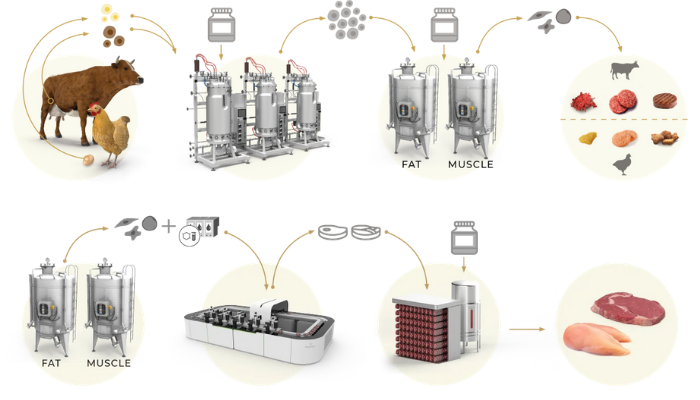
MeaTech’s process for bioprinting. The top shows the cell-based process vision wherein cell collection is followed by cell growth then differentiating between fat and muscle to get ground products. On the bottom is the process for cultured steak with bioinks being used for bioprinting, before the printed product is incubated to mature and form tissue. The result is structure meat in a fraction of the time. (Photo Credits: MeaTech)
This is certainly one of the main drivers for MeaTech. On their website they note that they are looking to address the fact that the meat industry is highly pollutive. They note that currently 8% of the world’s water is used for raising livestock for meat and leather, at least 18% of the greenhouse gases entering the atmosphere are from the livestock industry and 33% of croplands are used for animal feed production. By creating meat from cells, not only would people be able to continue eating meat (as it has become such a central part of so many cultures’ meals) though in a more sustainable manner.
More from the desk
Six other notes from the rest of the bench.
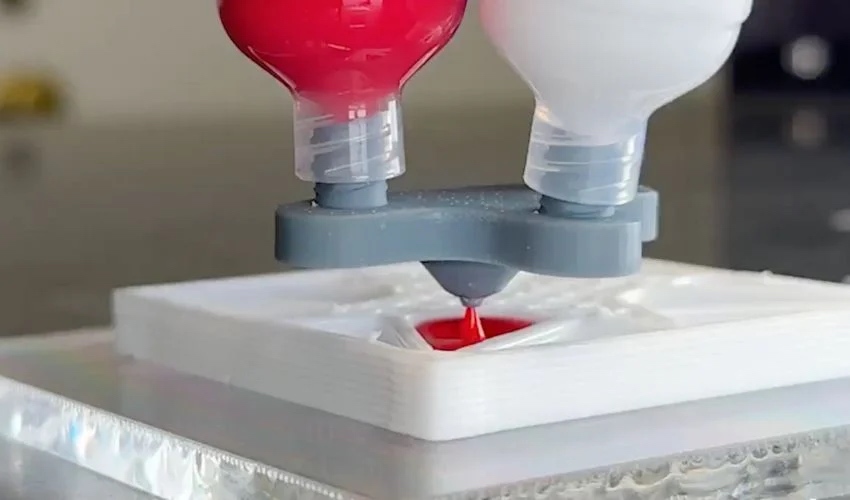 NewsHyFAM Combines Additive and Formative Manufacturing to Create Complex Parts 20 Times FasterWhat if it were possible to combine additive and formative manufacturing in a single system? While many machines can change tool heads, offering hybrid production, a team of researchers from the Johns Hopkins Whiting School of Engineering has developed a…
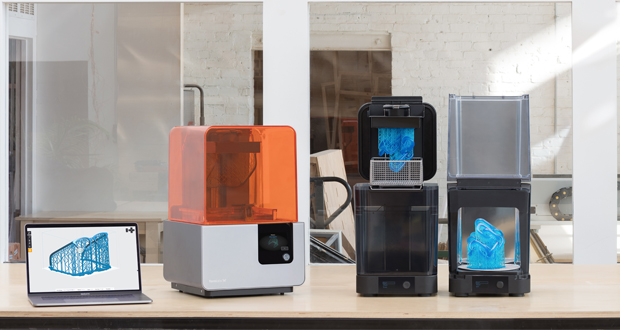 PrintersFormlabs debutes two new machines: The FormWash and The FormCureFormlabs, the SLA 3D printer manufacturers who have brought us machines, such as the Form 1+ and 2, have made quite an announcement this morning at the RAPID + TCT conference in Pittsburgh, Pennsylvania; announcing two new machines that will…
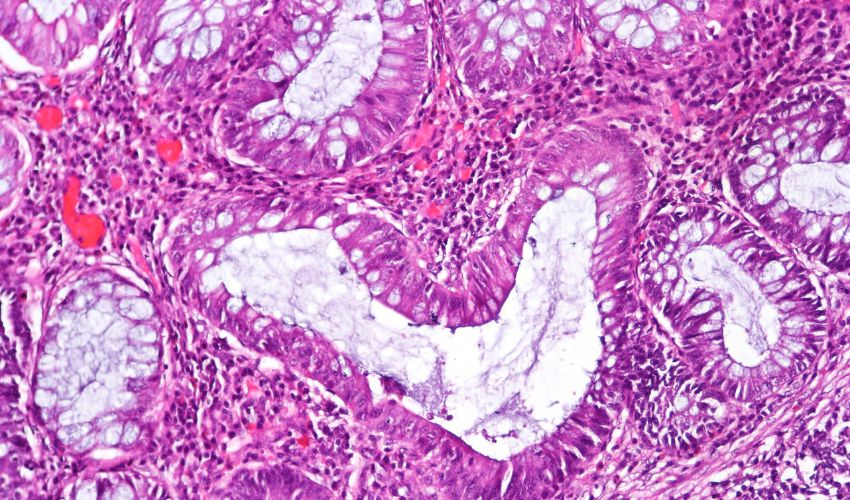 ApplicationsTriastek’s Latest 3D Printed Drug for Ulcerative Colitis Can Target the Colon Directly3D printing is increasingly making its way into healthcare, including in pharmaceuticals. Indeed, a few different companies are exploring the use of additive manufacturing to create custom drugs for better treatment of diseases. Now one of the largest, Chinese manufacturer&hellip
 ApplicationsAML3D Expands its Presence in 3D Printing in Aeronautics Through Boeing PartnershipAustralian metal 3D printing specialist AML3D has announced a renewed partnership with aircraft manufacturer Boeing. Earlier this year, Boeing commissioned AML3D to 3D print prototype aluminum aircraft parts. The parts must match AS9100D quality assurance requirements for “
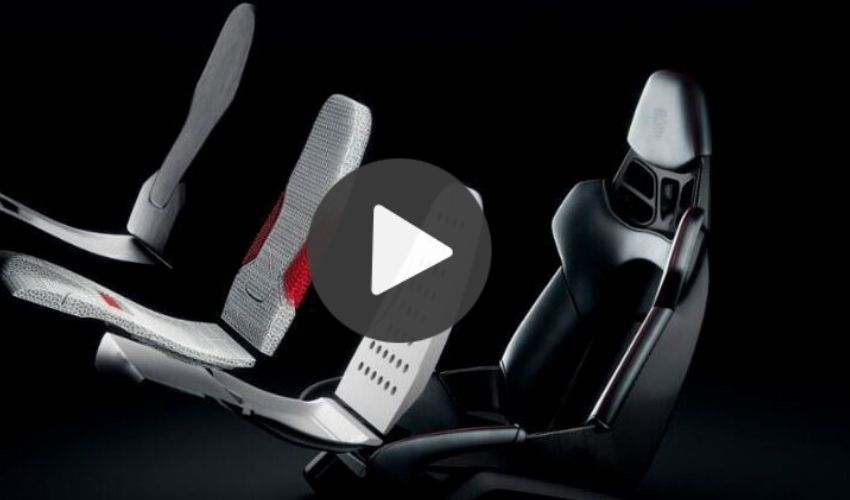 ApplicationsTop 5 Videos: Porsche’s 3D-Printed Bucket SeatsIn this weekly video compilation, we will get to see how Porsche is using 3D printing to manufacture full-shell bodyform seats to improve driver comfort. Next, we invite you to discover the role 3D printing plays in the Hyperloop capsule…
 Guides3D Printed Jewelry: by Diana Law3D printing has been making waves across many sectors, and 3D printed jewelry is no exception! Thanks to 3D printing technology, creating original, one of a kind pieces is now possible. Diana Law is an artist who has embarked on…