Applications
Why is dental additive manufacturing growing?
In its latest report, the Chinese consulting and market research firm, QY Research revealed the trends to expect in the dental 3D printing industry for 2025. The report, entitled “Global Dental 3D Printing Market Analysis, 2014 – 2025” suggests that…
- 3 min read
- Applications
- Six more stories
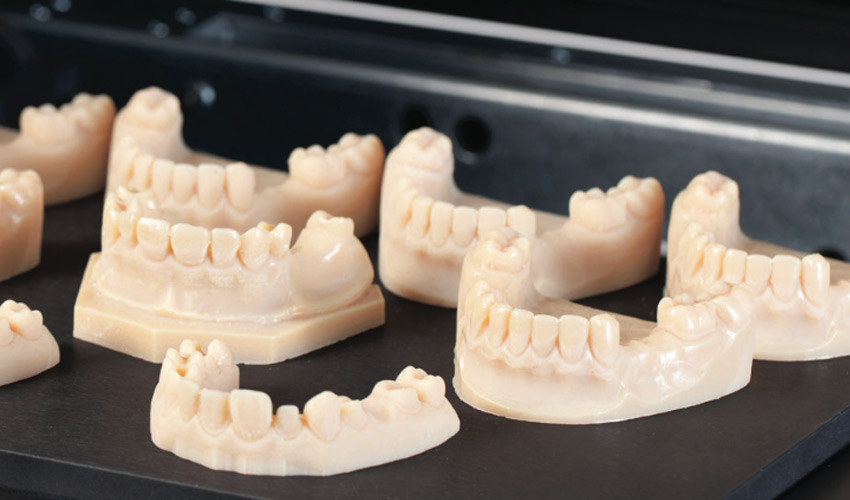
In its latest report, the Chinese consulting and market research firm, QY Research revealed the trends to expect in the dental 3D printing industry for 2025. The report, entitled “Global Dental 3D Printing Market Analysis, 2014 – 2025” suggests that the market estimated at $260 million in 2018 is expected to reach $930 million by the end of 2025. According to the firm, dental additive manufacturing experienced a 17% increase in the last 6 years.
The medical market is without doubt one of the most responsive to additive manufacturing technologies. Compared to traditional applications, additive manufacturing offers many customisation advantages to this market. In terms of the dental market, the applications are very diverse, ranging from 3D printed implants, prostheses, crowns, etc. Additionally, another consulting firm, SmarTech Publishing had already pointed to the growth dental 3D printing was experiencing last year. In fact, a growth rate estimated at 35% from 2017 to 2018. How come 3D technologies are so highly demanded by this industry?
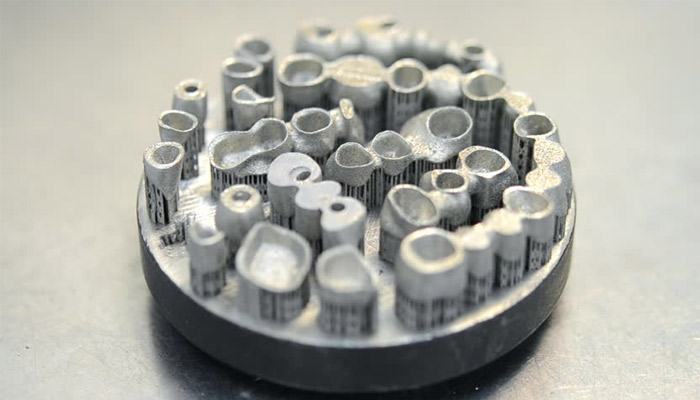
The dental sector uses many 3D printing technologies
What are the drivers of growth?
According to QY Research’s report, a number of companies are currently focusing on possible technological improvements in the sector to reduce costs and improve the quality of end devices. Competition in the 3D dental printing market is expected to be more intense which will actually create more growth opportunities. It is the personalization capabilities of 3D printing which are driving the growth according to the consulting firm. In addition, the materials used in the manufacture of dental additives apparently meet all the necessary requirements and are made according to medical standards.
More from the desk
Six other notes from the rest of the bench.
 ApplicationsMade In Space will send first commercially-developed plastic recycling facility to ISSIn November, Made In Space plans to send the first commercially-developed plastic recycling facility to the International Space Station (ISS). More precisely, it plans to send it on Northrop Grumman’s commercial cargo resupply flight. This plastic recycling facility, named Braske
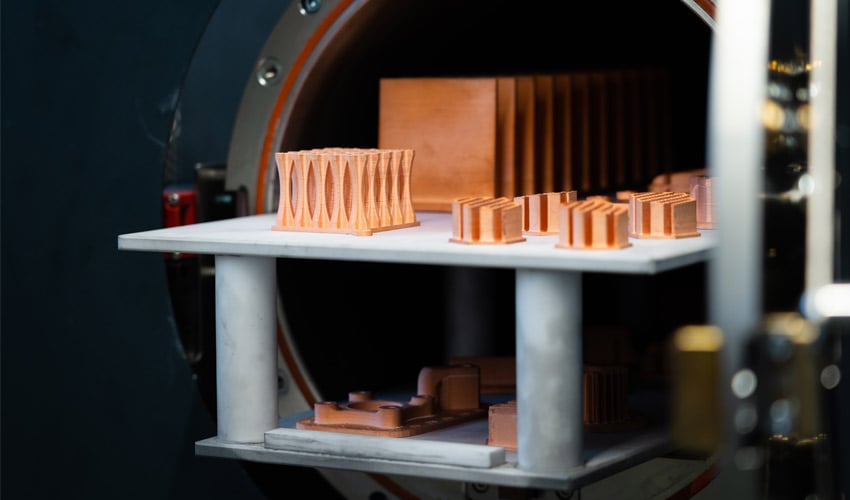 MaterialsMetal X can now 3D print pure copper partsThe US manufacturer Markforged announced last week that it would be possible to 3D print pure copper parts on its Metal X machine – a metal additive manufacturing solution that is relatively more accessible than competing systems. This is interesting…
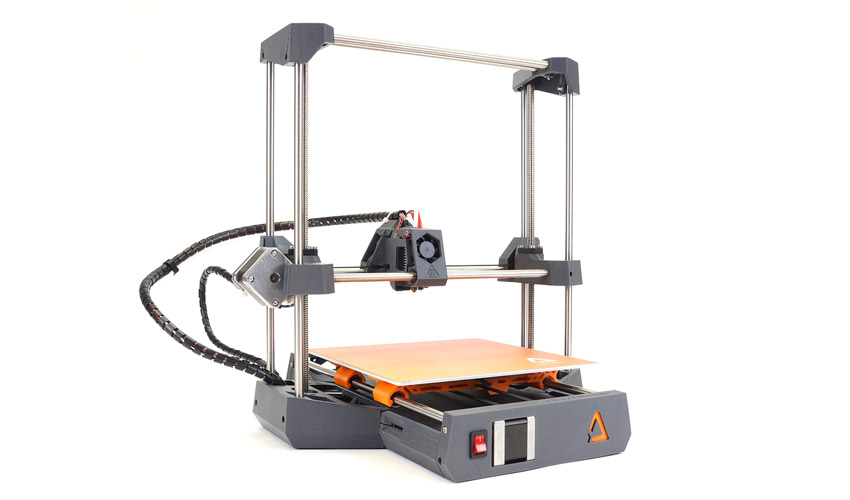 PrintersDisco Ultimate; the new generation of 3D printers from DagomaFrench manufacturer Dagoma revealed its new generation of FDM 3D printers, the Disco Ultimate. 4 years after the creation of the Discovery200 which later evolved into DiscoEasy200, the company presents a new kit that should attract the attention of more than one. The…
 NewsAspect Biosystems to leverage its bioprinting technology for cancer screeningWe interviewed Aspect Biosystems back in 2017, for our startup of the month. The startup is a Canadian specialist in bioprinting that has developed a unique technology that allows the creation of customised human tissues for different applications such as…
 NewsUTA Researchers Print 2D Materials Able to Morph into Complex 3D ShapesResearchers from the University of Texas at Arlington (UTA) have found a way to create synthetic 2D materials that are able to transform into complex 3D shapes. These materials have the ability to mimic the way that living organisms expand…
 Printers3Dnatives Lab: Testing the Dagoma Disco Ultimate 3D PrinterBased in Roubaix, Dagoma is one of the most successful companies amongst the French manufacturers, well-known for its DiscoEasy 200 DIY 3D printer, sold at a price of less than 300€ ($333). Four years after its debut on the market,…