News
Makino and Fraunhofer ILT Advance Additive Manufacturing with EHLA3D
The collaboration between Makino and the Fraunhofer Institute for Laser Technology ILT has yielded a significant advancement in additive manufacturing: EHLA3D. This process, resulting from the integration of high-speed laser cladding technology with advanced five-axis CNC machine
- 3 min read
- News
- Six more stories
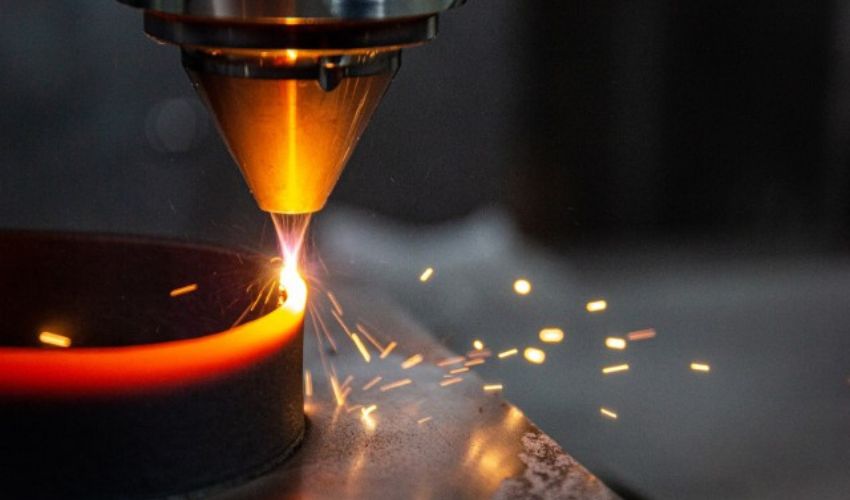
The collaboration between Makino and the Fraunhofer Institute for Laser Technology ILT has yielded a significant advancement in additive manufacturing: EHLA3D. This process, resulting from the integration of high-speed laser cladding technology with advanced five-axis CNC machinery, is transforming the production, coating, and repair of complex geometries using high-strength materials. EHLA3D not only substantially reduces production times but also significantly extends component lifespans across a diverse range of industries, while simultaneously promoting sustainable practices within the circular economy.
Laser technology continues to be a cornerstone of the manufacturing sector, particularly in additive manufacturing. Recognizing this, the Fraunhofer ILT, a leader in laser technology research, partnered with Makino, a globally renowned Japanese machine tool manufacturer. They aimed to alter the extremely high-speed laser cladding EHLA for use on a five-axis CNC platform. This would involve the development of new kinematics that would allow rapid and dynamic movements of the machining head, facilitating the flexible processing of a wide range of geometrical shapes and materials.
Initially focused on AM, the project soon expanded to include repair applications. “Repairs are extremely exciting,” said Min-Uh Ko, Group Leader for Additive Manufacturing and Repair LMD at Fraunhofer ILT. “Many expensive components must be replaced even for minor defects. A flexible system like the one from Makino, with its rotary and tilting table, offers excellent repair options. This approach reduces costs associated with new production, eliminates transportation and delivery delays, and minimizes downtimes. Moreover, repair is a fundamental aspect of the future circular economy.”
More from the desk
Six other notes from the rest of the bench.
 SoftwareLeopoly: A Modeling Software for 3D Design and Virtual RealityLeopoly offers a range of cloud-based 3D modeling tools, suitable for both beginners and advanced users. Tailored to cater to the demands of the 3D printing market, it also meets the needs of the virtual reality and augmented reality space,…
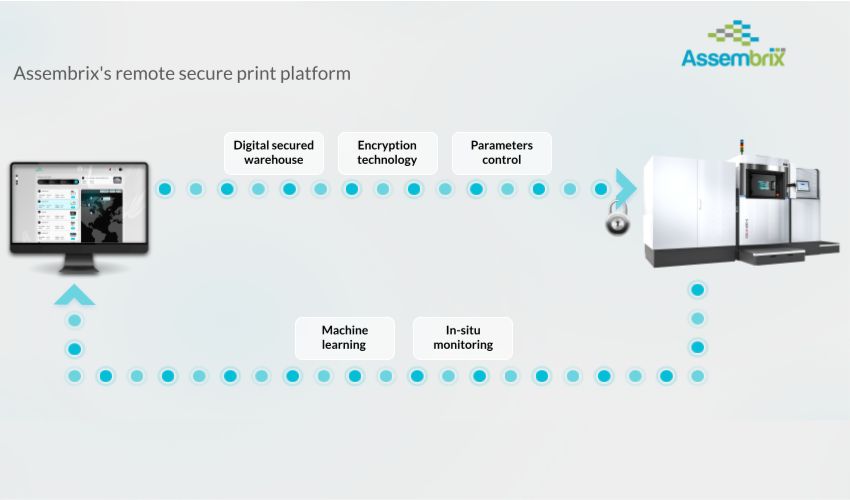 SoftwareAssembrix’s Software for Secure and Scalable Additive ManufacturingIn recent years, 3D printing hardware has advanced rapidly. However, 3D software hasn’t kept pace with this development. As a result, there has been a lack of solutions that meet growing demands for security, scalability, and network integration. This is…
 PrintersYoav Zeif Talks About the Current State of the AM Market, U.S. Tariffs and the Launch of Stratasys’ Neo®800+ 3D PrinterWhat does 2025 hold for the world of additive manufacturing? Amid geopolitical challenges, technological evolutions and new market balances, the 3D printing industry is gearing up for what is likely to be a critical year. To analyze emerging trends and…
 NewsWhat Can You Expect at ADDITIV Polymers World?The 2nd edition of ADDITIV Polymers World is only a week and a half away! The high-anticipated virtual event delving into the worlds of polymers and 3D printing will be taking place on Thursday, October 10th at 9:00AM – 1:30…
 PrintersAnycubic Launches Two New Ranges of FDM and LCD 3D PrintersWe are not far into 2022, and already we have seen the 3D printing market flourish. Between mergers and acquisitions and a number of exciting launches, the additive manufacturing sector seems healthier than ever. Now, in the latest news, Anycubic…
 NewsPart 1: How are AM companies responding to the COVID-19 outbreak?The COVID-19 crisis has introduced a lot of uncertainty for many industries around the world. Whilst the crisis is resolving in China, where it started, in other parts of the world this is far from being the case. Governments have…