News
Magnet-Activated 3D Printed Wings Replicate Monarch Butterfly Flight
Researchers at the Technical University of Darmstadt and the Helmholtz Center Dresden-Rossendorf have developed robotic wings inspired by the structure and flight dynamics of the monarch butterfly. Using 3D printing, they created wings that operate without batteries and with a&he
- 3 min read
- News
- Six more stories
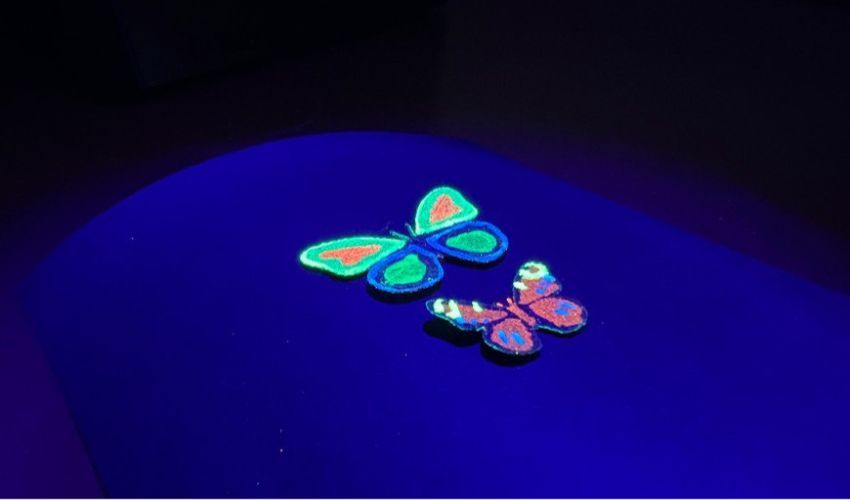
Researchers at the Technical University of Darmstadt and the Helmholtz Center Dresden-Rossendorf have developed robotic wings inspired by the structure and flight dynamics of the monarch butterfly. Using 3D printing, they created wings that operate without batteries and with a passive bending system to generate efficient motion. According to the researchers, some of the applications for these flexible robots include environmental research, search and rescue operations and medical applications.
The wings of real butterflies have great strength and flight efficiency. Monarch butterflies, which inspired this research, travel thousands of miles each year between Mexico and Canada, demonstrating great energetic and mechanical efficiency. This motivated the researchers to take these characteristics, using a 3D printed replica of the wing structure, and integrate them into a new robotic device. The flapping of the 3D robotic wings is activated when they are exposed to a magnetic field because they are printed with a thermoplastic polyurethane composite and microscopic magnetic particles.
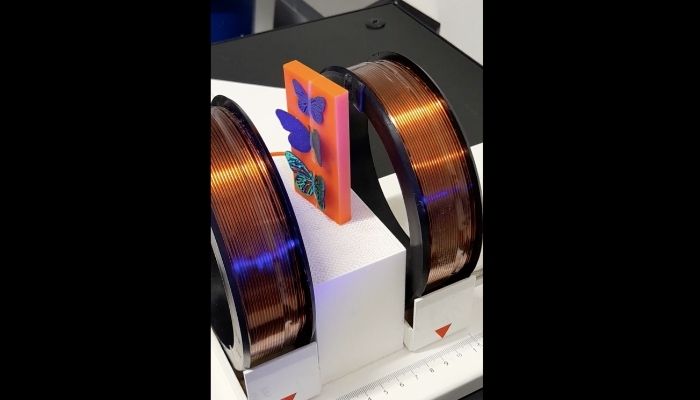
The fluttering of the 3D robotic butterflies is activated when exposed to a magnetic field (Credits: screenshot of the demonstration video, Technical University of Darmstadt).
The team, led by Professor Oliver Gutfleisch and Dr. Denys Makarov, fabricated twelve wing models. Although different structures were replicated, the ones that showed the best results were the venous structures inspired by monarch butterflies. Through finite element analysis simulations and experimentation, the researchers evaluated the influence of these patterns on the aerodynamics and maneuverability of the wings. The results, published in Advanced Intelligent Systems, indicate that designs with veined structures improve material strength and adaptability without compromising flexibility. To replicate such a design, the models were printed using laser powder bed fusion (L-PBF).
More from the desk
Six other notes from the rest of the bench.
 News3D Printing in Golf: Where Are We Now?Formula 1, basketball, hockey, American football…golf? What do these things have in common? They are all using additive manufacturing in some capacity. Golf especially has been adopting 3D printing in various ways in recent years. Golf may be one of…
 News3D Hubs helps Fillauer Composites create carbon-fiber prosthetic feet3D Hubs, based in the Netherlands, is a leading online manufacturing platform that leverages its global network of manufacturing partners to respond to customers’ production needs. More precisely, it provides industrial 3D printing, CNC machining, injection molding and sheet meta
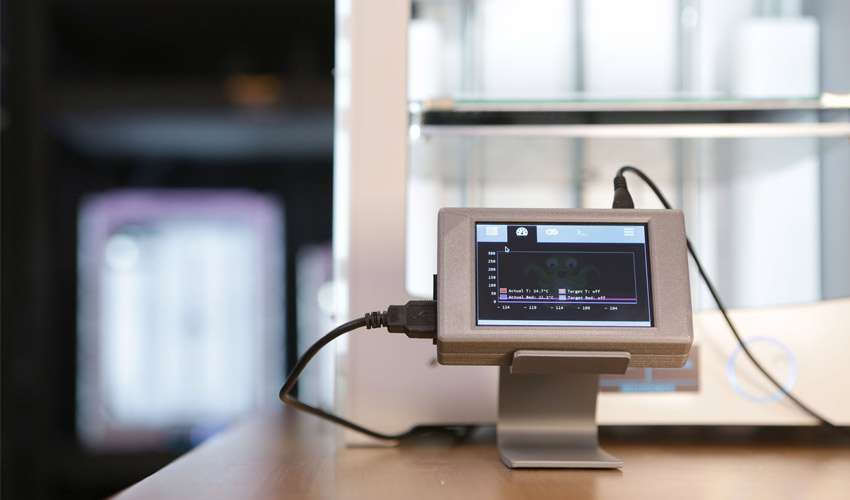 SoftwareOctoPrint, the application to control your 3D printerOctoPrint is a controller application for 3D printers: open-source and free, it allows you to manage all your prints remotely and to control your machines with peace of mind. It works directly on your web interface, you just need to…
 GuidesThe Faces of Additive Manufacturing: Avi ReichentalAs additive manufacturing grows daily and finds more and more users in the industry, we have decided to focus on a few players who have had a profound impact on the market, contributed to its growth and followed its evolution…
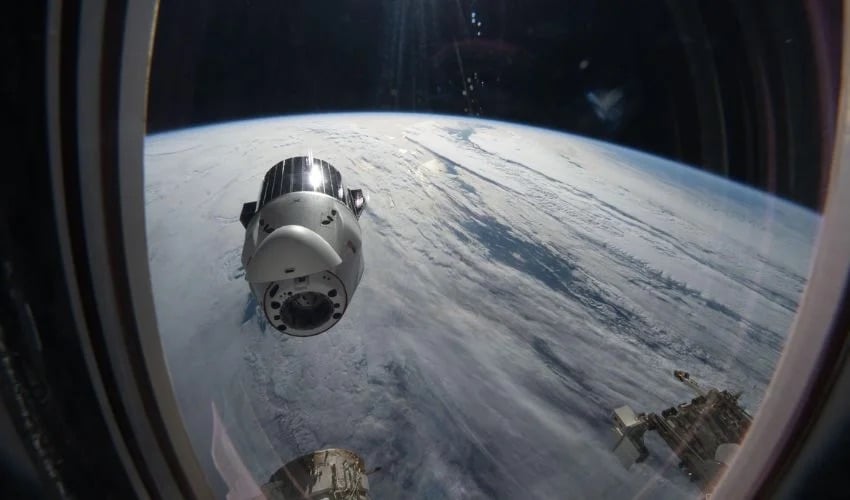 ApplicationsFirst-Ever Kidney and Liver Tissue Bioprinted in Space Aboard the ISSThe American company Auxilium Biotechnologies has successfully 3D-printed kidney and liver tissue in space for the first time. The experiment was conducted aboard the International Space Station (ISS) using its AMP-1 orbital bioprinter. The samples returned to Earth on June&helli
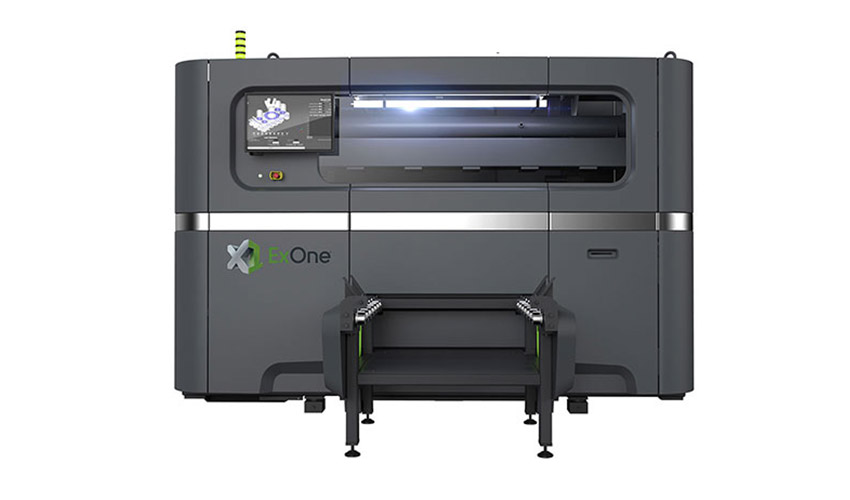 PrintersExOne launches new metal X1 160PRO 3D printerExOne, the manufacturer of sand and metal binder jetting 3D printers, just announced it has launched a new metal 3D printer, the X1 160PRO. This new system is meant for high-volume production of quality parts, and is actually the tenth…