Guides
How to adopt large format 3D printing: Experts give their advice!
Large format 3D printing has found use in a wide range of applications. From making true to scale car panels, aerospace prototypes or billboards, many companies are interested in this type of 3D printing. Naturally, one of the key components…
- 3 min read
- Guides
- Six more stories
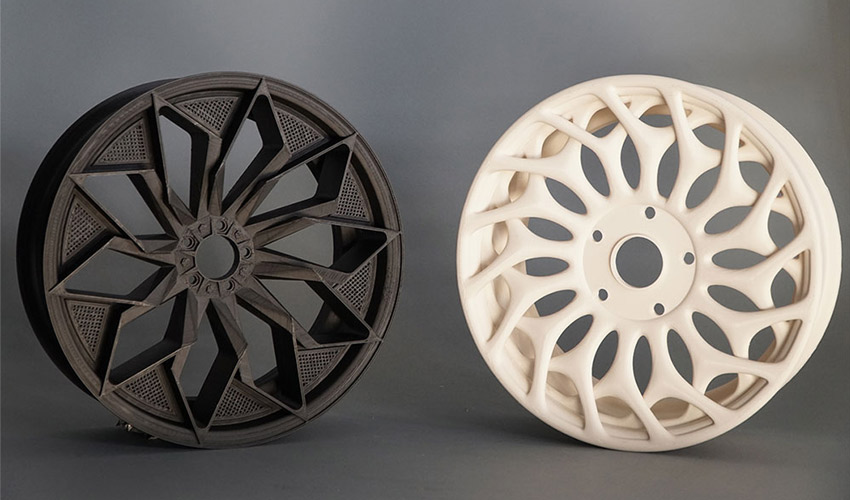
Large format 3D printing has found use in a wide range of applications. From making true to scale car panels, aerospace prototypes or billboards, many companies are interested in this type of 3D printing. Naturally, one of the key components of large scale 3D printing is the build volume of a 3D printer – even though it is possible to create large structures by assembling multiple 3D printed parts together. Today, you will find on the market 3D printers that can offer printing volumes of up to 1 m3. Most often, they are based on FFF technology, which means they extrude plastic onto a build plate layer by layer to create an object. However, some other technologies also enable the creation of large structures – for example the X Line 2000R from Concept Laser is a metal 3D printer based on LBPF that boasts a build volume of 800 x 400 x 500 mm. During the last few years, large format 3D printers have developed to suit the needs of manufacturers. So, what should you know about large format 3D printing? What are its benefits? How is it different from “conventional” 3D printing? We asked three experts some questions to gain clarity on the subject!
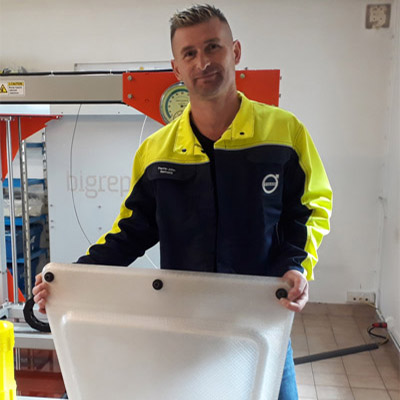
Our first expert is Martin Back, Managing Director at BigRep GmbH, responsible for corporate strategy and operations. The German company develops and sells some of the world’s largest 3D printers in the FFF segment. Our second expert is Pierre-John Bernard, Prototype Assembly Workshop Supervisor at Volvo Construction Equipment. He is in charge of managing the teams that carry out the assembly part of the prototypes. Last but not least, we talked to Dr. Habib Dagher, who is the Executive Director of the Advanced Structures and Composites Center (ASCC) at the University of Maine. The ASCC is a world-leading center for research, education, and economic development focusing on material sciences, manufacturing, and the engineering of composites and structures.


Technology and Materials for Large Format 3D Printing
As mentioned, most 3D printers with a large build volume are FFF machines. Other technologies such as stereolithography (SLA) or Multi Jet Fusion are available but are more expensive and more difficult to adopt. If we focus on FFF 3D printers first, one of the pioneers in the sector is German manufacturer BigRep, which has developed machines with a printing volume of up to 1 m3. The most commonly used materials in the FFF segment are PLA and PETG. Some 3D printer manufacturers are making machines capable of printing with high-performance materials, Martin Back from BigRep comments: “Together with BASF, we are continuously developing high-performance materials suitable for industrial use. PLX and PA6/66, by the way, are two new materials that we have now introduced, specially designed to take advantage of the speed, precision and quality of the large format 3D printers.”
More from the desk
Six other notes from the rest of the bench.
 NewsThe Best 3D Printing Videos From 20242024 was an extraordinary year for 3D printing, with breakthroughs revolutionizing fields as diverse as medicine, automotive and aerospace. In this article, we’ve put together a selection of our favorite videos of the year, where creativity and technology collide to…
 ApplicationsThe Medical Sector at Formnext 2023: Manufacturers and Market ApplicationsWhile the additive manufacturing event has been in full swing in Frankfurt since Tuesday, we wanted to focus on one of the market verticals that has been a major user of 3D technologies for several years now: medical. If several…
 NewsGE Additive Education Program open to primary and secondary schools to inspire & educate students about 3D printingGE Additive, one of the primary business divisions of the American multinational company General Electric (GE), announced it has opened its GE Additive Education Program for the 2019/2020 year cycle. The program will be open for entries from primary and…
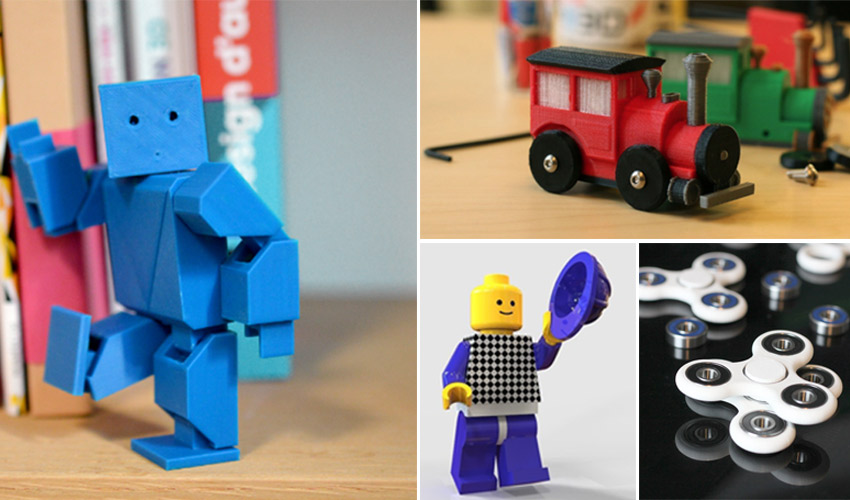 NewsTop 10 toys to make for your 3D printed ChristmasChristmas is fast approaching and it’s time to dig deep to find the right gift ideas. To help you, we have prepared a small selection of the best STL files for 3D printing toys. You will be able to please your loved…
 MaterialsExoskeletal Assisted Rehabilitation uses 3D PrintingAccording to the Centre for Disease Control and Prevention, almost 800,000 people suffer from a stroke each year in the US. During a stroke, blood supply to part of the brain is cut off. In 85% of cases, it is…
 SoftwareCHITUBOX Aims for Even More Convenient Slicing With its Newest Version, Pro V2.0Although there are many steps in 3D printing, one of the most critical is, without a doubt, slicing. In this stage, software platforms known as slicers are used to convert the 3D model into a series of thin layers, the…