Guides
incremental3d and The Challenges of 3D Printing with Concrete for Design and Architecture
Additive manufacturing is expanding into more and more fields, and with it, new materials are being tested. One of the most promising is concrete, especially in residential construction. incremental3d has been dedicated to this type of 3D printing since 2017.…
- 3 min read
- Guides
- Six more stories
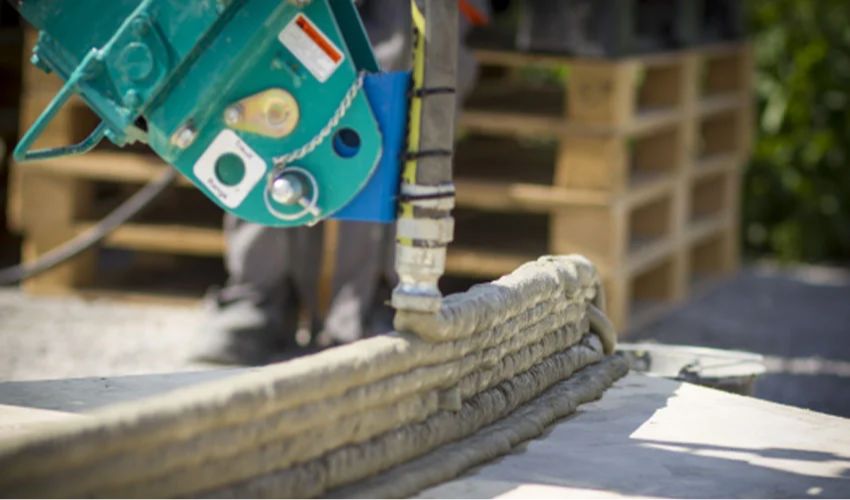
Additive manufacturing is expanding into more and more fields, and with it, new materials are being tested. One of the most promising is concrete, especially in residential construction. incremental3d has been dedicated to this type of 3D printing since 2017. Its founders, Georg Grasser and Johannes Megens, were already working together on additive manufacturing and concrete at the university before starting the company, and now they’re applying what they’ve learned to some pretty unique pieces. Read our interview with them below!
3DN: Can you introduce yourselves and tell us how you got into 3D printing?
We are incremental3d, and we’ve been in the world of 3D printing with concrete since 2017. In addition to running the company, we are research associates at the Faculty of Architecture at the University of Innsbruck. 3D printing has been around in the industry for some time, although at first it was used almost exclusively for models. Around 2012, the Institute of Experimental Architecture set up a robotic laboratory where automated manufacturing techniques have been researched ever since. Later, we began printing with other materials and in larger sizes; in 2015, we started working with concrete.

Johannes Megens (left) and Georg Grasser (right).
3DN: How did incremental3d come about, and what is its goal?
We founded the company in 2017 as a spin-off from the University of Innsbruck. We had already been researching 3D printing with concrete for over two years as part of a joint project. When we saw that there was demand and that the technology was already yielding decent results, we decided to take the plunge, but without jumping straight into large-scale production: we preferred to start with a few select projects. Yes, we started out more with design objects than with architectural works, although our intention is to eventually work on architectural scales; however, those pieces serve as our benchmark for quality, and that standard doesn’t drop when we do something bigger.
More from the desk
Six other notes from the rest of the bench.
 NewsThe First 3D Printed Parkour Playground Made Using Recycled Concrete Will Be in PragueIn the construction sector, 3D printing has been implemented in various projects as a solution to problems related to time, labor, and materials. Just last year, the city of Prague made headlines for its floating 3D-printed house. The capital city is…
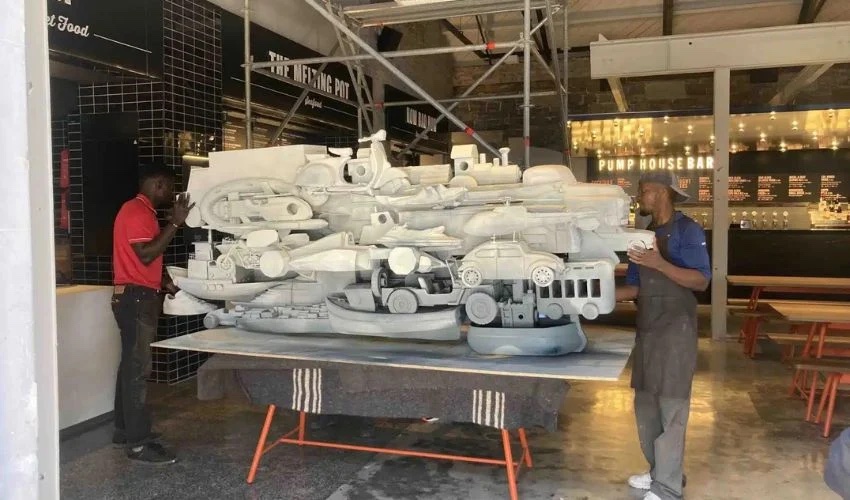 NewsSculpture Designed by Atang Tshikare 3D Printed in Only 20 Days3D printing never ceases to amaze us with its various applications. Many of them allow us to let our imagination run wild and make our thoughts and ideas come true. One area where this is clearly reflected is in art…
 News3D Daily Show #1: Reporting Directly from Formnext!Formnext, the international trade fair for additive manufacturing, officially opened its doors today. The event is taking place in Frankfurt from November 16th to November 19th, 2021. To let you follow what’s happening at the event from the comfort of…
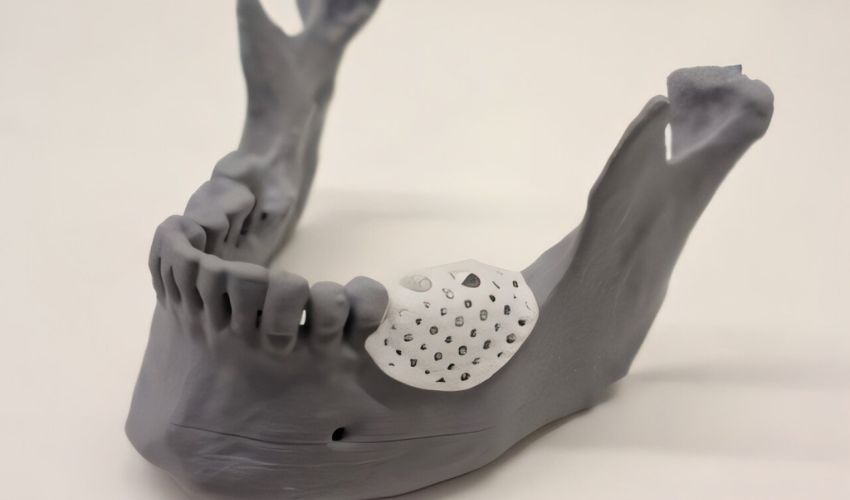 ApplicationsApplication of the Month: 3D Printed Scaffolds Help Rebuild Australian Man’s JawboneResearchers at the University of Queensland have accomplished an incredible feat. Clinicians at the school of dentistry have successfully used custom-made 3D printed bone scaffolds in staged alveolar bone augmentation to help rebuild part of a man’s jawbone. The hope…
 NewsIs industrial scale AM production limited by vendor lock-in?At the end of last year, we told you about Essentium’s study on the state of industrial scale 3D printing. According to findings, between 2018 and 2019, the number of manufacturers that were using 3D printing for full-scale production doubled…
 ApplicationsAirbus Qualifies Materialise and EOS to Make 3D Printed Flight-Ready PartsFor several years now, Airbus has been using additive manufacturing to produce and repair many parts for its aircraft. And by qualifying the technologies of Materialise and EOS, the European aircraft manufacturer is renewing its confidence in 3D printing. The…