News
HP’s Digital Manufacturing Report shows increased interest in 3D printing globally
Last October, HP unveiled its Digital Manufacturing Report, a study conducted among 2,175 decision-makers around the world ( across 3 continents and 9 geographic areas to be precise). After the recent publication of its French study, we decided to look…
- 3 min read
- News
- Six more stories
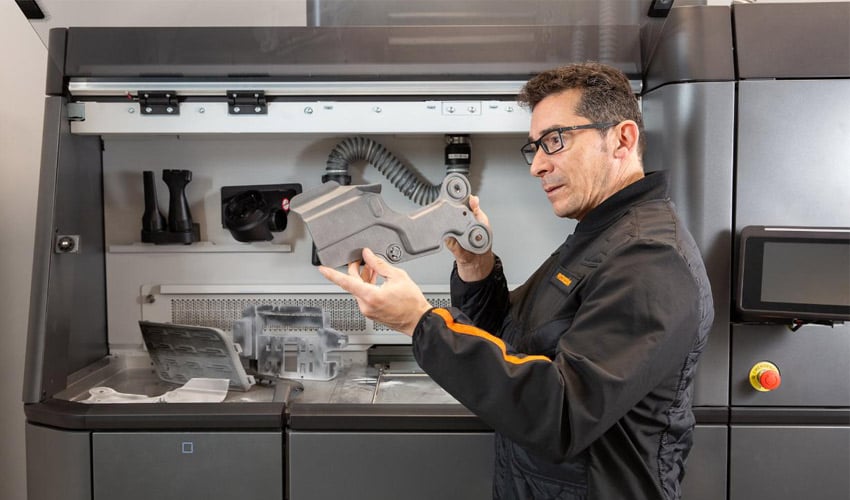
Last October, HP unveiled its Digital Manufacturing Report, a study conducted among 2,175 decision-makers around the world ( across 3 continents and 9 geographic areas to be precise). After the recent publication of its French study, we decided to look at its trends for the global market. The report seeks to understand the impact of digital manufacturing technologies on our production methods and more specifically the adoption of additive manufacturing by companies and the possible role 3D printing can play. The conclusion is clear: for all respondents, digital manufacturing is an engine of economic growth and 85% indicated that their company plans to increase their investments in 3D printing technologies. These technologies accelerate innovation, reduce manufacturing costs and allow for mass customization. That being said, there are still obstacles, many believe that the adoption of AM technologies is still difficult because of a lack of skilled labor. Through this global study, HP shows the full potential of additive manufacturing, highlighting its ability to change the way we design, prototype, produce and consume.
The health crisis has shown the weaknesses in our supply chains and the limitations of our current production methods. Additive manufacturing has proven to be a great asset in meeting these challenges by offering a decentralized model, favoring local and on-demand production. Last year, we saw that 3D printing manufacturers and users were some of the first to provide PPE and other necessary medical devices to respond quickly to the COVID-19 crisis. Furthermore, respondents to HP’s study highlighted that the medical, industrial and automotive industries were the most ripe for innovation in additive manufacturing/3D printing over the next five years.

Additive Manufacturing has had a significant impact on the medical sector(photo credits : Rady Children’s Hospital / piece 3D printed on a HP machine)
Additive manufacturing at the heart of innovation
For three-quarters of respondents to the study, 3D printing is a way of improving their agility but is especially interesting because of its capacity for innovation. Indeed, the majority of global participants consider that 3D technologies facilitate the development of innovative ideas and solutions by allowing on-demand, personalized production and also eliminating physical stocks.
More from the desk
Six other notes from the rest of the bench.
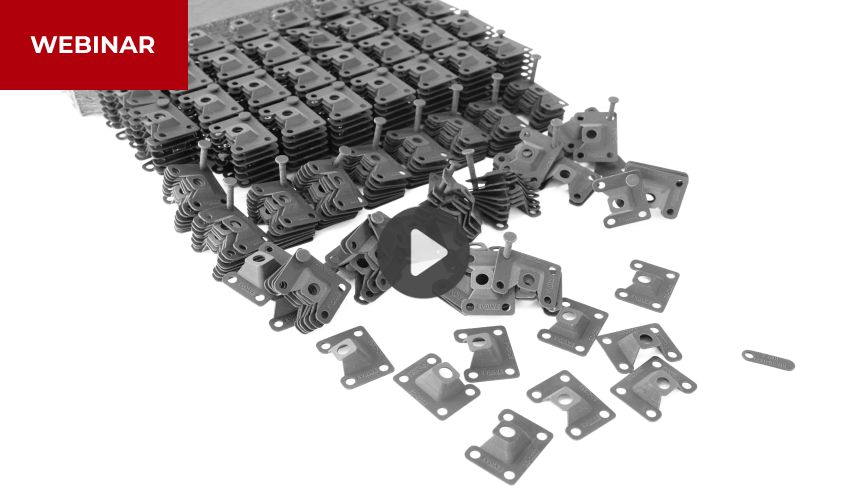 NewsWEBINAR: Beyond the Mold – Achieving Quality Additive Production That Rivals Injection MoldingInjection molding is one of the largest manufacturing methods used today, worth an estimated $187B in 2022. But did you know that additive manufacturing can rival or even replace this production method? Attendees were able to learn how in our…
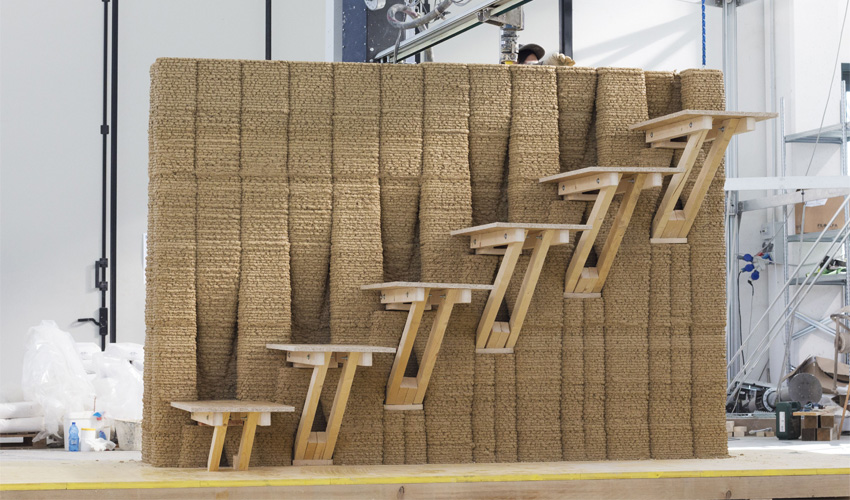 NewsWASP and IAAC create 3D printed wall with embedded staircaseThe concrete 3D printer manufacturer WASP presented its new prototype: a 3D printed wall that integrates the steps of a staircase. In collaboration with the Institute of Advanced Architecture of Catalonia (IAAC), the Italian company used its modular 3D printer…
 NewsOregon Dragon Bench, MX3D’s Nearly 33-Foot 3D Printed Metal SeatMX3D, a specialist in the WAAM (Wire Arc Additive Manufacturing) process, has unveiled its latest construction project: a 3D printed metal bench, with a rather surprising design, as it is shaped like an open loop. Named Oregon Dragon Bench, this…
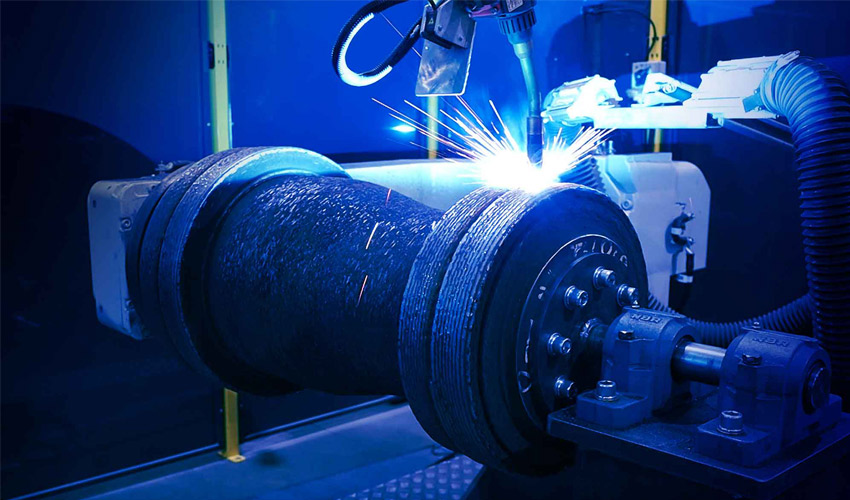 NewsAML3D to Make 2000-Pound, 3D Printed Pressure Vessel for ExxonMobilMetal machine manufacturer AML3D is beginning production of a pressure vessel for U.S. oil company ExxonMobil. It is a $190,000 contract to design an 8-meter by 1.5-meter diameter part, making it the largest commercial 3D printed commercial pressure vessel on…
 NewsWhat Were Some of the Key Takeaways from RAPID + TCT 2022?Last Thursday, RAPID + TCT 2022 closed its doors after three days of conferences, networking, announcements and of course innovations. For the 30th anniversary of the conference, SME noted that they had over 400 exhibitors as well as more than…
 ApplicationsJapan Approves Roboze 3D Printers for Onboard Railway ComponentsRoboze, an Italian manufacturer specializing in 3D printing high-performance polymers and composites, has announced that its ARGO 500 HYPERSPEED and ARGO 1000 HYPERMELT 3D printers have obtained Japanese Nannen-sei certification for ULTEM 9085 material in extrusion processes (fil