News
How Ceramic 3D Printing Solves Challenges in the Semiconductor Industry
From smartphones to autonomous driving, cryptocurrencies and artificial intelligence: the demand for ever more powerful microchips is booming. At the same time, raw material shortages, trade conflicts and the tense global political situation are putting the semiconductor industry
- 3 min read
- News
- Six more stories
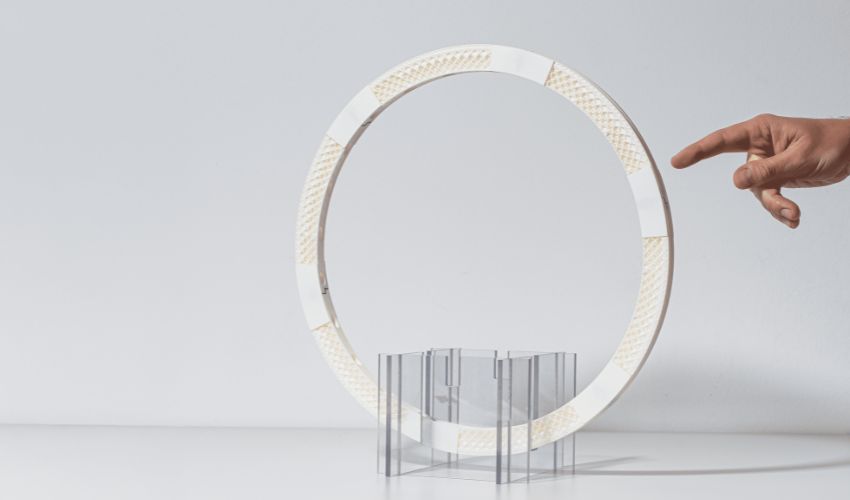
From smartphones to autonomous driving, cryptocurrencies and artificial intelligence: the demand for ever more powerful microchips is booming. At the same time, raw material shortages, trade conflicts and the tense global political situation are putting the semiconductor industry under enormous pressure. The urgent search for secure production sites is a top priority, and many manufacturers are under massive time and delivery pressure due to factory reshoring. How can all these challenges be overcome? And how can 3D printed high-performance ceramics contribute to solving the problem quickly?
In the semiconductor industry, it is important to produce quickly, precisely and cost-effectively, as the pressure to deliver and the associated costs are extremely high, especially in view of current political events, which pose additional challenges. This means that the implementation of new means must not only offer decisive added value and significantly increase production efficiency, but also address geopolitical developments. This is where 3D printing comes into play. 3D printers can be purchased quickly and moved to new locations, facilitating on-demand production and local flexibility. By using several machines together in 3D printing farms, the rapid supply of components and spare parts can be guaranteed. In addition, on-demand production means that hardly any storage space and costs are incurred. Overall, 3D printing significantly increases efficiency and stabilizes production in the face of acute challenges.
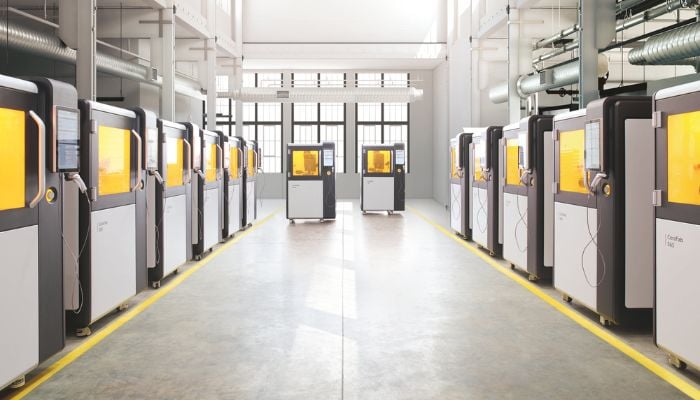
Lithoz LCM 3D print farm.
One company that has recognized the added value of additive manufacturing in the semiconductor industry is Lithoz. The Austrian company specializes in 3D printing technical ceramics and has shown in the past how its LCM technology can be used in medicine and aerospace. What’s more, the LCM process offers numerous advantages in the semiconductor industry, such as previously unattainable complex designs with smooth surfaces for critical details (for example, for high-precision channels in components for gas distribution and cooling), components with no connections and no assembly required. By integrating multiple functions into a single component and using DfAM, it is possible not only to save weight but also to increase cost-effectiveness. In addition, the LCM process enables reliable series production thanks to its stable process control.
More from the desk
Six other notes from the rest of the bench.
 GuidesThe Faces of Additive Manufacturing: Avi ReichentalAs additive manufacturing grows daily and finds more and more users in the industry, we have decided to focus on a few players who have had a profound impact on the market, contributed to its growth and followed its evolution…
 MaterialsCan UCLA engineers make environmentally friendly concrete?Last week, it was reported that a group of UCLA engineers received a $1.5 million grant to make environmentally friendly concrete – by environmentally friendly they mean that it will incorporate carbon dioxide, a greenhouse gas, as part of a…
 NewsExploring jewelry making using 3D printing with Caroline AuraixIn the jewellery sector, additive manufacturing has many benefits, especially in terms of creativity. It enables designers to design complex shapes that are impossible to obtain using traditional manufacturing methods. It also offers greater scope for personalization, satisfying
  NewsBlack Panther Movie Features 3D Printed Costume Parts3D printing in movies is an exciting application of the technology. Movie buffs will probably have seen Black Panther: Wakanda Forever’, already popular all over the world despite having hit the screens only a short time ago. If you have…
 NewsCourt Orders Nano Dimension to Comply With Desktop Metal AcquisitionWe all heard the story. Back in July 2, 2024, Nano Dimension reached an agreement to acquire Desktop Metal, and Nano Dimension’s CEO at the time, Yoav Stern, emphasized that the acquisition was key to advancing additive manufacturing. Both companies…
 NewsSaving Endangered Coral Reefs Using 3D PrintingMarine life has suffered significantly due to environmental issues in the past few years. Global warming and the accelerated urbanization in coastal areas has driven different parts of the life underwater to the edge of extinction. One alarming example is…