Applications
How Bioprinted Mini-Placentas Could Help Us Understand Pregnancy Complications
Placentas are a small but mighty organ, with many unique traits. It’s the only organ that is “disposable,” and a new one begins to form each time a fertilized egg is implanted in the uterus. Then, they grow rapidly in…
- 3 min read
- Applications
- Six more stories
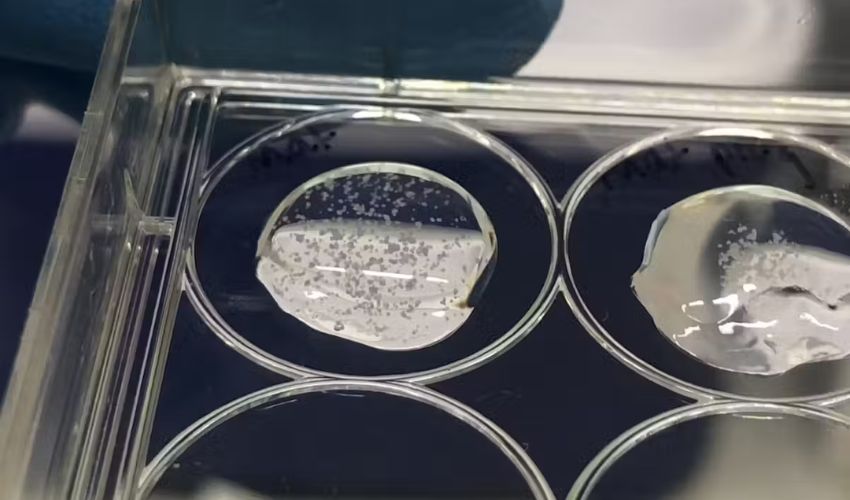
Placentas are a small but mighty organ, with many unique traits. It’s the only organ that is “disposable,” and a new one begins to form each time a fertilized egg is implanted in the uterus. Then, they grow rapidly in conjunction with the fetus, and can become the size of a small plate. This humble organ is literally a baby’s lifeline: babies don’t breathe or eat in the womb, so the placenta acts as their oxygen and nutrient supply, as well as the baby’s kidneys, which filter out waste from the bloodstream.
Although the placenta is critical to fetal development, it remains one of the least understood organs in human biology. One reason is that it is difficult to obtain samples during pregnancy without risking complications such as infection or miscarriage. After birth, the tissue changes significantly, making it unsuitable for studying early placental development. Animal models provide limited insight because most animal placentas differ substantially from those of humans. As a result, researchers still lack a clear understanding of how the placenta develops and functions, particularly in the early stages of pregnancy.
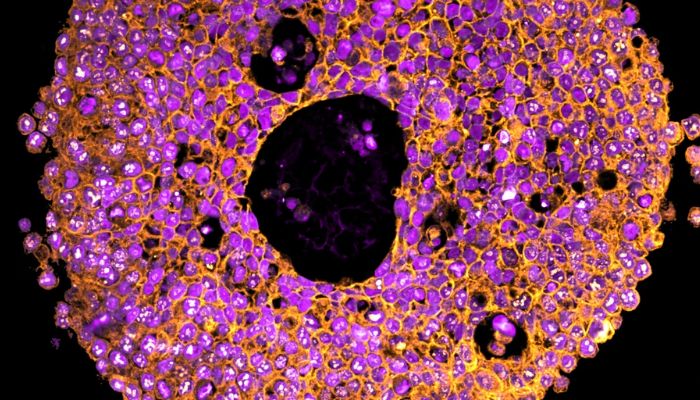
A placental organoid under the microscope
Placental Organoids
By 3D printing artificial mini-placentas, called organoids, researchers from the University of Technology Sydney are trying to fill this gap in understanding. Organoids, which arrived on the medical scene in 2009, are created by suspending stem cells in a gel that allows them to form clusters as they grow and divide. In 2018, researchers created the first placental organoids using trophoblasts, which are a cell type only found in the placenta.
More from the desk
Six other notes from the rest of the bench.
 NewsTop 5 Videos: Rapid + TCT In the LimelightIt is once again Sunday, which means it is time for the week’s top 5 3D printing videos! This weeks content is engulfed by the three day long Rapid + TCT 2023 event in Chicago, Illinois, the largest, most influential…
 ApplicationsNASA and ORNL Have Used 3D Printing to Create Moon Rover Wheel PrototypeOak Ridge National Laboratory has succeeded in 3D printing a lunar rover wheel based on a NASA design. This has been possible thanks to a newly developed and specialized 3D printer which they used to create parts designed specifically for…
 ApplicationsScottish Crew Tests 3D-Printed Boat Parts in Pacific CrossingThree brothers from Scotland are taking on a monumental challenge that shows how 3D printing is not just for the workshop but for the open ocean! Ewan, Jamie, and Lachlan Maclean are currently nearing the end of their 9,000-mile (approximately…
 ApplicationsAurora Labs Awarded Contract From Australian DefenseOver the past year or so, we have heard many different stories about the utility of additive manufacturing in the defense sector. Now another one has come from the land down under. Aurora Labs has announced that it has secured…
 NewsThe First 3D Printed Parkour Playground Made Using Recycled Concrete Will Be in PragueIn the construction sector, 3D printing has been implemented in various projects as a solution to problems related to time, labor, and materials. Just last year, the city of Prague made headlines for its floating 3D-printed house. The capital city is…
 NewsTOP 5 videos of the week: Submarines, Comics and more!A new selection of the best 3D printing videos of the week, just for you! Find our TOP 5 videos of the week below and tell us what your favorite video is in a comment or on our Facebook and Twitter page. Don’t hesitate to…