News
Heat Treatment in 3D Printing: All You Need to Know
Post-processing is a key stage in additive manufacturing. Indeed, there are a number of different methods used in the industry, which differ depending on the 3D technology used: depowdering, removal of supports and coloring, among others. Now it’s time to…
- 3 min read
- News
- Six more stories
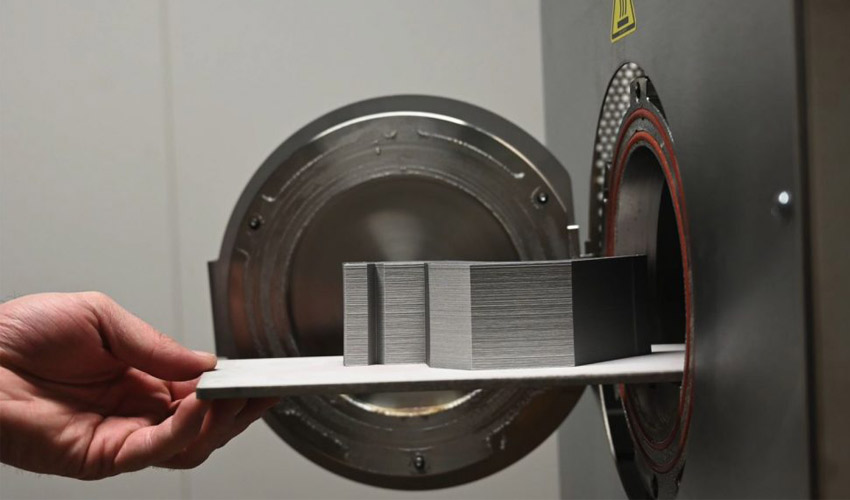
Post-processing is a key stage in additive manufacturing. Indeed, there are a number of different methods used in the industry, which differ depending on the 3D technology used: depowdering, removal of supports and coloring, among others. Now it’s time to explore yet another post-processing method in additive manufacturing: the heat treatment of 3D printed parts.
This can take several forms, depending on the desired results, the material used and the preferred technology. These include sintering, annealing for metals, curing and hot isostatic pressing. This type of post-processing has a clear goal: reducing the internal stresses of a 3D-printed part and improve its mechanical properties. Depending on the technique chosen, different results will of course be obtained, but the aim is to influence the residual stresses that may arise during printing.
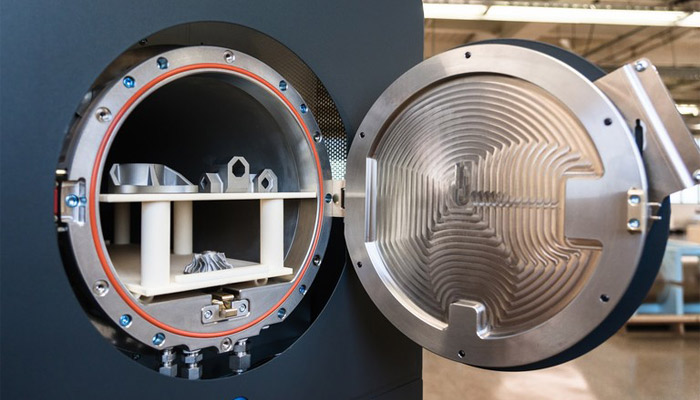
A range of equipment is available for heat treatment in additive manufacturing (photo credits: Markforged)
In additive manufacturing, the parts produced are subjected to different temperatures and undergo heating and cooling phases of varying degrees, depending on the printing process chosen. These phases have a direct impact on the parts, which accumulate residual stresses. Heat treatment after printing is therefore crucial, not only to eliminate these residual stresses, but also to influence the mechanical characteristics of the parts, such as bending strength, ductility and final hardness. We took a closer look at the different heat treatment methods used and what they do.
More from the desk
Six other notes from the rest of the bench.
 Applications3i-PRINT project creates 3D printed front end on classic Caddy 1 carVolkswagen is breaking into a full sprint with 3D printing following their recent project on 3D printing spare parts for their older modeled cars. In this latest development from the company, they are now working on a project alongside Altair,…
 MaterialsEssentium and LEHVOSS Group develop engineering-grade materials for AMFor a long time additive manufacturing was considered a technology for rapid prototyping. However, AM technologies have been increasingly employed for series production of parts that need to be customized or require designs impossible to manufacture using traditional methods. In&
 NewsThe Role of 3D Printing in Interior DesignAs we see 3D printing used in more and more industrial sectors, the question remains: what role does it play in everyday life? Is it able to influence our everyday environment? Looking at the use of 3D printing in interior…
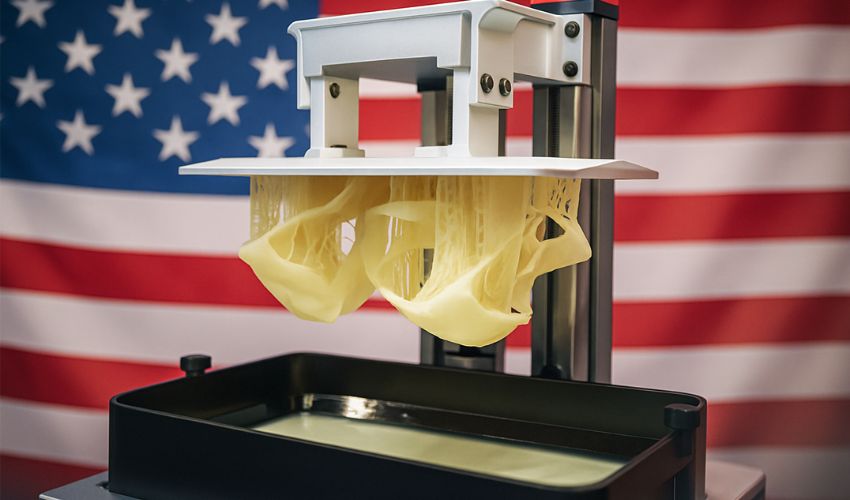 MaterialsWhich Companies Manufacture 3D Printing Resin in the United States?Resins play a central role in many 3D printing technologies. In fact, the very first 3D printing method—stereolithography(SLA)—relies on a UV-sensitive liquid resin that solidifies when exposed to ultraviolet light. This process, known as photopolymerization, is a hallmark of res
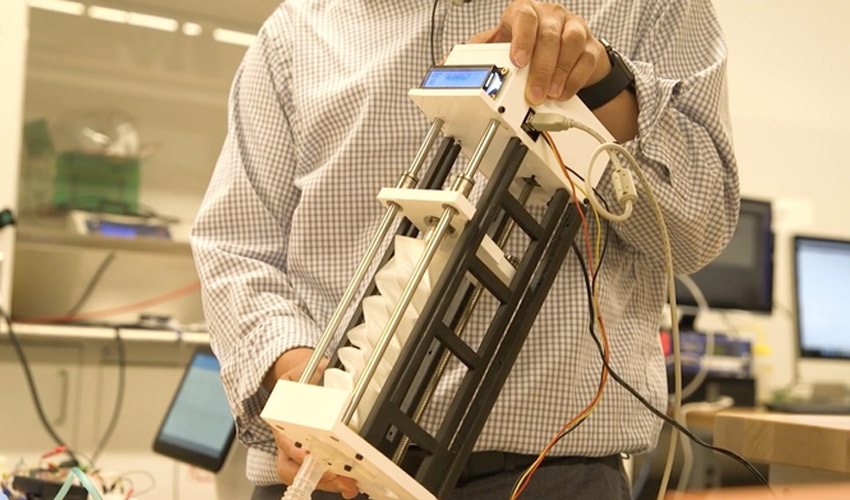 ApplicationsAn Origami 3D-Printed Ventilation System to Fight COVID-19At Simon Fraser University in Canada, a team of researchers led by Professor Kim Woo Soo developed a 3D-printed ventilation system to fight COVID-19. Drawing inspiration from the art of Japanese folding, better known as origami, the team was able…
 PrintersWhat is the outlook for 3D printer sales in 2020?The research firm CONTEXT recently published a report on 3D printer sales in 2020. Given the current health crisis, these have already decreased compared to last year, even though the last quarter of 2019 was not very conclusive. In recent…