News
The U.S. Department of Defense Awards ExOne Contract to Develop Military 3D Printing Factory Pod
The Defense Logistics Agency (DLA) of the U.S. Department of Defense (DoD) has awarded ExOne with a contract to develop a fully operational 3D printing factory pod in a shipping container. Since the $1.6 million contract was awarded in August…
- 3 min read
- News
- Six more stories
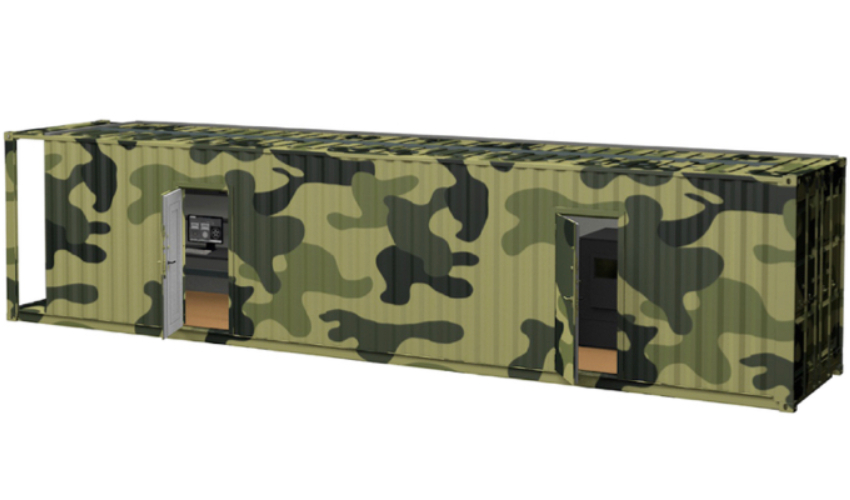
The Defense Logistics Agency (DLA) of the U.S. Department of Defense (DoD) has awarded ExOne with a contract to develop a fully operational 3D printing factory pod in a shipping container. Since the $1.6 million contract was awarded in August last year, ExOne has already commenced the development stage of the project. ExOne is a leading manufacturer of industrial sand and metal 3D printers. Relying on binder jetting technology, ExOne’s 3D printers are currently able to produce parts in over twenty different metal, ceramic, and composite materials.
With this project, ExOne endeavors to improve the ruggedness of their commercially available printers in order to make them compatible with a wider range of operating conditions and military applications, while still keeping a high standard of quality and precision in final parts. The company are also in the process of adapting their technology for the factory pod in order to make it simpler to use in the field and easily operable by users with minimal technical knowledge. ExOne are currently developing an upgraded version of its current commercial 3D printer with a unique body style and other features in order to make it a more rugged, military-grade product.
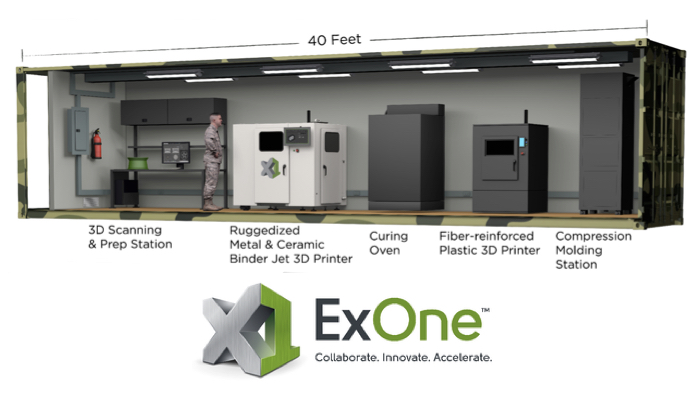
Photo Credit: ExOne
John Hartner, CEO of ExOne commented on the company’s contract: “Binder jet 3D printing is a critical manufacturing technology for military use because of its speed, flexibility of materials, and ease of use. We’re excited to collaborate with the U.S. Department of Defense and other partners to make our 3D printers more rugged for the military, which will also benefit our other manufacturing customers. Most importantly, we know that years from now, our technology will play an important role in filling critical needs quickly.”
More from the desk
Six other notes from the rest of the bench.
 Materials3DEO: Reinventing Low-cost Metal 3D Printing3DEO are a unique new metal 3D printing company that are combining scalable aspects of traditional manufacturing, and applying them to 3D printing. Though they don’t currently sell their own 3D printers, 3DEO’s technology allows them to create parts at…
 ApplicationsResearchers Successfully 3D Print Muscle TissuesThe additive manufacturing industry has experienced strong growth in recent years and opened up new opportunities in numerous professional fields. In addition to the automotive sector or aerospace, 3D printing is finding more and more applications especially in the medical&hellip
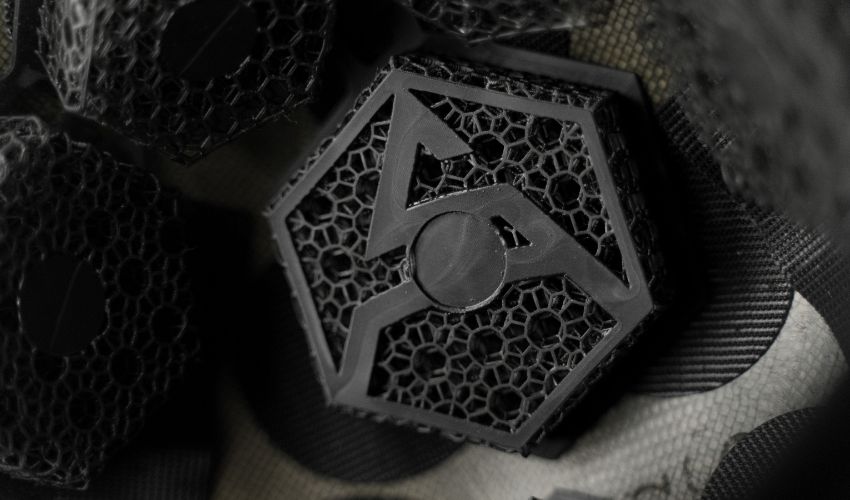 ApplicationsNew 3D Printed Helmet Suspension System for Military and Law EnforcementWhen most people think of making helmets safer, 3D printing technology is probably not the first thing that comes to mind. However, over the years we have seen numerous examples where additive manufacturing has contributed to better-fitting, more comfortable helmets,…
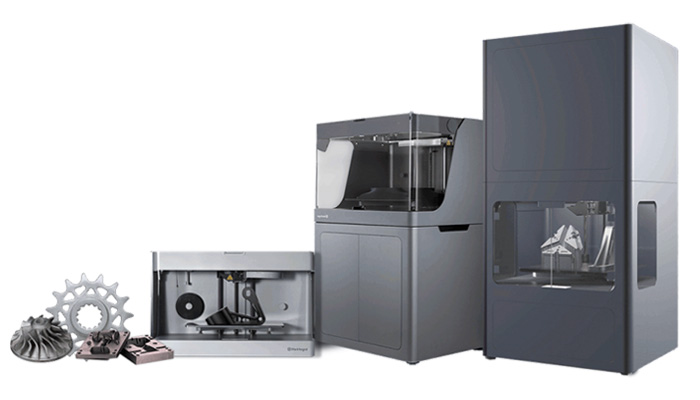 PrintersMarkforged launches two new industrial printers: the X3 and X5In less than 3 years, American 3D printing company, Markforged, has managed to position itself as one of the leaders in the 3D printing industry, with their main mission being to make additive manufacturing more accessible to people and industries. Today,…
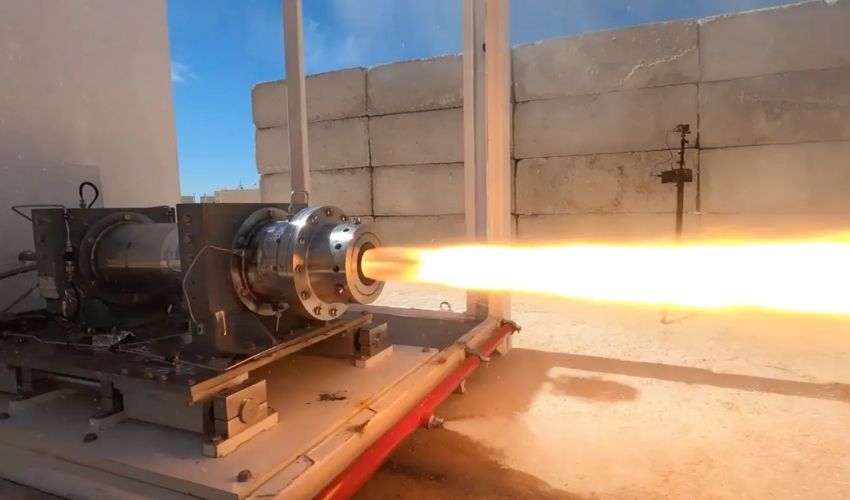 ApplicationsFirehawk Scores $60M Investment Led by 1789 Capital, Firm Tied to Trump Jr.Firehawk Aerospace, a Dallas-based defense company specializing in 3D printed solid rocket fuel, has just received a $60 million Series C investment led by 1789 Capital. The company’s mission is to enable the next generation of defense systems with solid…
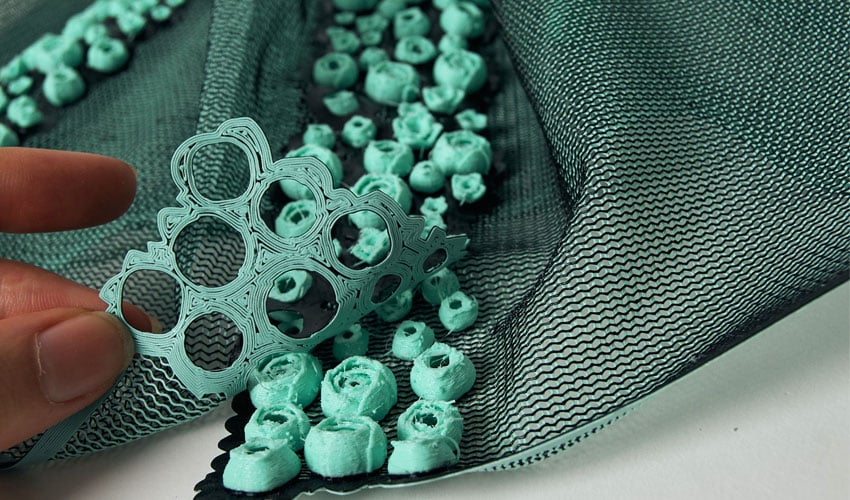 GuidesMiranda Marquez and her original vision of 3D printed clothingThe use of additive manufacturing in fashion is becoming increasingly popular. Many are the projects that use this technology to design unique pieces, from footwear to entire collections. In the world of fashion and design, 3D printing technology offers a great…