Materials
FABULOUS Sets Course for the USA with Certified, Food-Safe 3D-Printing Materials
It is no secret that 3D printing is becoming more and more popular and is expanding its field of application to diverse areas. Already established in the verticals of aerospace, the automotive sector and the medical field, additive manufacturing is…
- 3 min read
- Materials
- Six more stories
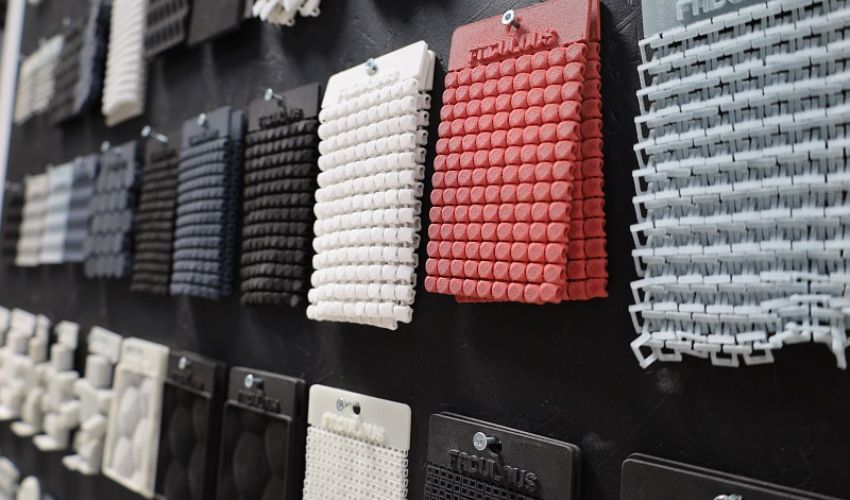
It is no secret that 3D printing is becoming more and more popular and is expanding its field of application to diverse areas. Already established in the verticals of aerospace, the automotive sector and the medical field, additive manufacturing is now being used for the production of consumer and luxury goods, in the construction industry and also in the food industry. On the one hand, this primarily involves innovative, edible products from the 3D printer, such as those already marketed by Barilla, Revo Foods and Steakholder Foods. On the other hand, 3D printing is increasingly being used to produce objects that come into contact with food. These are, for example, food nozzles, grippers, scrappers, plates, cutlery, packaging etc. or machine parts.
All items that interact with food must adhere to strict regulations to ensure the safety of consumers. Such rules and safety standards are a must for end users, but a significant challenge for material manufacturers, as the regulations of the relevant authorities are stringent. In the EU, Directive 10/2011 regulates the criteria for polymer materials to be certified as “food-safe”. In the United States, the Food and Drug Administration (FDA) regulates the materials and procedures for food safety, specifically the Code of Federal Regulation Title 21 (CFR21). The rules are, therefore, slightly different in each country, and the approvals also vary depending on how a material is processed.
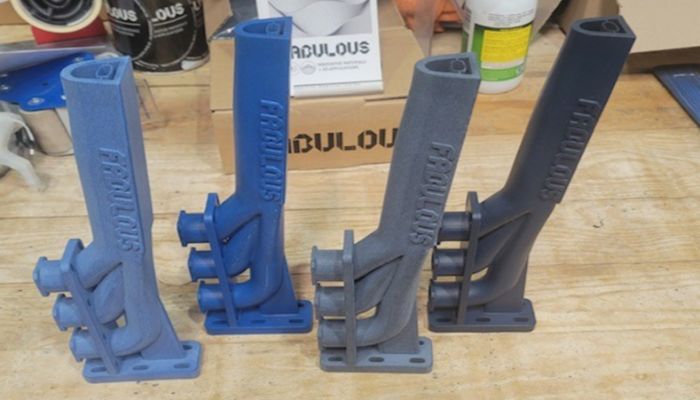
Food nozzles 3d printed in BLUECARE and DETECT materials. Some of them were post-processed by vapor smoothing.
PLA, for example, is considered a food-safe material by the FDA, but only if it is not colored; the same applies to PETG. As these materials are mainly processed using the FDM process, there is a further problem, as the materials could become contaminated through contact with nozzles and hoses. SLS 3D printing eliminates this fundamental problem, making the process more suitable for processing food-safe materials. However, if taking a closer look at the available materials – PA11 and PA12 – there is only a limited number of certified materials that are truly safe for the end user. One manufacturer trying to close this gap is FABULOUS. The French company has already made a name for itself in Europe with its technical 3D printing materials and is now looking to gain a foothold in the North American market, thanks to its international patent extension to the United States.
More from the desk
Six other notes from the rest of the bench.
 NewsBambu Lab Opens Its First Retail Store in ChinaHow often do you see a 3D printer sitting on a store shelf? Chances are, you haven’t. Most consumer 3D printing sales still happen online. Bambu Lab is looking to change that with the launch of what it calls the…
 NewsIndustrial 3D Printer Shipments Suffer While Desktop Continues to SoarIt is no secret that financial markets the world over had a challenging year last year. Inflation and high interest rates have sparked fears for a recession, as even the International Monetary Fund noted that policies must be implemented to…
 NewsTop 5 Videos: How to Prevent Moist Filament From Ruining FDM 3D PrintsWe’re back with last week’s Top 5 videos on 3D printing, and we’re bringing you informative and inspiring content you don’t want to miss. First, we’ll uncover why moist filament is likely the reason your FDM prints have imperfections in…
 ApplicationsInfographic: 3D Printing in the Railway SectorWhether for prototyping or end-use parts, it is undeniable that additive manufacturing can be used in many industries, indeed we have already told you about its use in space, sports and food, among many others. This includes the railway sector.…
 NewsA Bridge Incorporating a 3D Printed Concrete Staircase has Been Inaugurated in ScotlandOne of the largest 3D printing structure to date in the UK is finally opening. In Glasgow, the Sighthill Bridge has opened over the M8 freeway, one of the busiest roads in Scotland. To clarify, this structure is not entirely…
 NewsA team from the Wake Forest Institute for Regenerative Medicine 3D bioprints face mask to heal woundsThe Wake Forest Institute for Regenerative Medicine (WFIRM) in the United-States aims to translate scientific discovery into clinical therapies. Today, this interdisciplinary team is working to engineer more than 30 different replacement tissues, organs and develop healing cell t