Guides
Why you should integrate Powder Bed Fusion into your business: Experts give their advice!
Powder Bed Fusion describes AM processes in which metals in powder form are fused with a heat source to manufacture a part. This heat source either be in the form of either a laser or an electron beam. An example…
- 3 min read
- Guides
- Six more stories
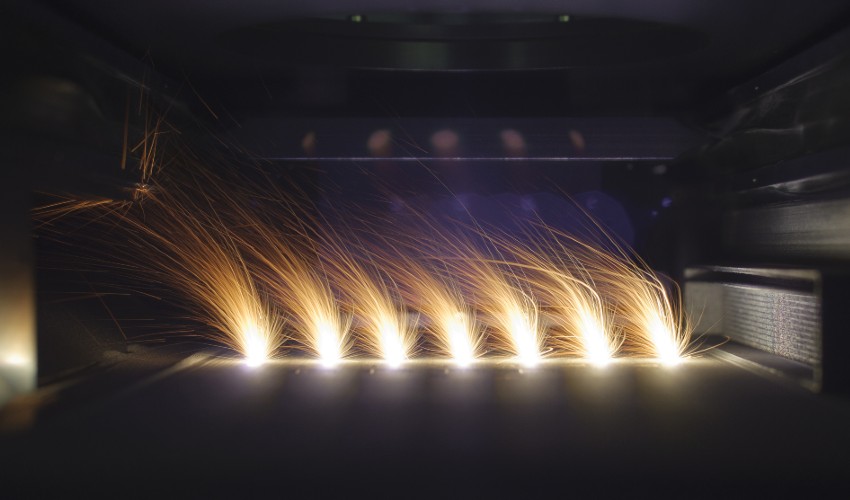
Powder Bed Fusion describes AM processes in which metals in powder form are fused with a heat source to manufacture a part. This heat source either be in the form of either a laser or an electron beam. An example of a technology that uses a laser is laser powder bed fusion (LPBF). Electron beam melting (EBM) technology uses an electron beam. The printing process for all Powder Bed Fusion technologies is very similar: a thin layer of metal powder is applied to the build platform and the laser or the electric beam fuses the powder together at the places where the part is to be created. Then the build platform lowers a little and another layer of powder is applied. This process is repeated over and over again. Thanks to this layer by layer process and due to the laser working point by point, the resulting piece can be much more precise than in other methods, allowing for greater design complexity. This is just one of the reasons why companies choose Powder Bed Fusion. Although there are other technologies for printing metal, such as Direct Energy Deposition (DED), we will focus on Powder Bed Fusion in this article. To learn more about why you should integrate Powder Bed Fusion into your business, we asked our three experts Dr. Yves Hagedorn, Dr. Elena Lopéz and Sadato Kobayashi for their advice.
Dr. Yves Hagedorn is the CEO of Aconity3D, a mechanical engineering company for special machines in the field of LPBF, founded in 2014. His goal is to provide flexible and open equipment technology to efficiently expand metal 3D printing towards industrialization. Dr. Elena Lopéz works as department head for additive manufacturing at the Fraunhofer Institute for Material and Beam Technology IWS in Dresden. In addition, she has been operationally leading the large-scale AGENT-3D project (€90 million/$109,292,400, 120 project partners) since 2014, where virtually all relevant AM processes for metals, ceramics and polymers are being further developed in over 35 research projects. Sadato Kobayashi is the department head for additive manufacturing at GF Machining Solutions Japan. He has been working with additive manufacturing users for 18 years.


When should a company choose Powder Bed Fusion over traditional manufacturing methods?
In order to answer the question of why you should integrate Powder Bed Fusion into your company, it is first necessary to clarify when it actually makes sense to use this technology over more conventional ones. While additive manufacturing definitely has its advantages, it is still not equally suitable for every company. Kobayashi says that it mainly depends on the company’s situation and business plans. He cites the following example as one motivation: “The need to replace a skilled but retiring production workforce is an important reason from an organizational perspective and in terms of business continuity.”
More from the desk
Six other notes from the rest of the bench.
 Printers#3DExpress: UltiMaker Launches the New, Faster S8 3D PrinterIn this week’s #3DExpress, we start off with an exciting launch: the S8 3D printer from UltiMaker! This FDM solution has been designed to increase user productivity through an increased speed without compromising on quality. Next, construction 3D printing is…
 Guides3DBiotech, additive manufacturing in regenerative medicine3D bioprinting has revolutionized the medical sector by providing advanced treatments that improve the quality of surgical interventions. In fact, we already analyzed the advantages of additive manufacturing for personalised medicine, and saw the various 3D printing technologies
  News#TOP5 videos: 3D printed mini cooper, recycling in space and more!We found the TOP 5 videos of the week related to 3D printing and collected the additive manufacturing here. Share your videos and comment on the article below or on the 3Dnatives’ Facebook or Twitter account. Hope you’ll enjoy and…
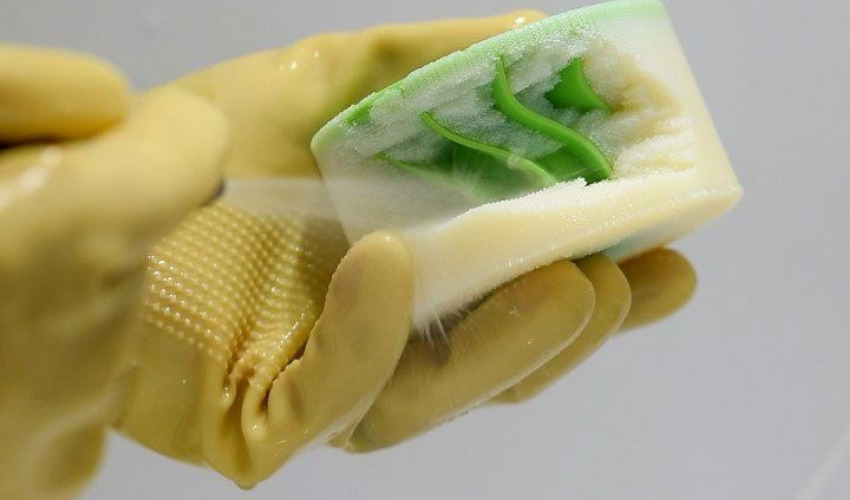 MaterialsArburg Inc. & Oryx Additive Join Forces In Post-Processing PartnershipPost-processing is an essential step in additive manufacturing. While it is the last stage in the manufacturing process, where parts receive their finishing touches such as smoothing and painting, it is also where many projects can bottle-neck and face various…
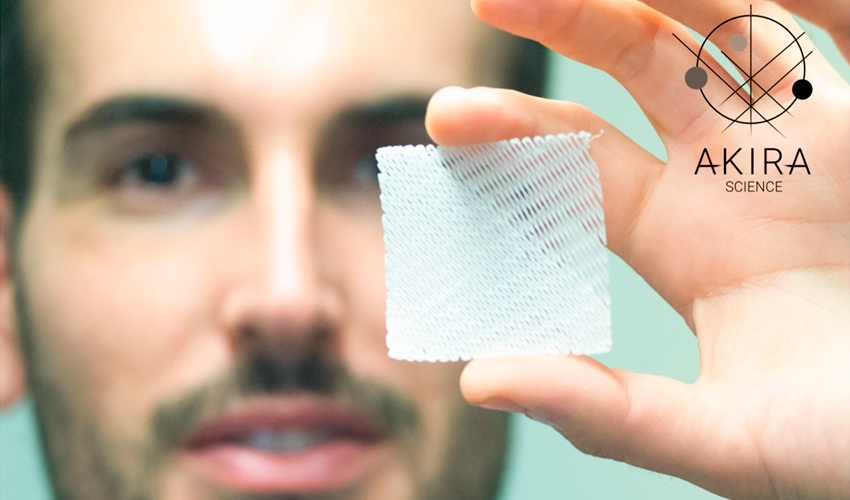 GuidesAkira Science on 3D Printing Biomaterials for Tissue RegenerationAs 3D printing continues to revolutionize the healthcare field, more and more companies are exploring its applications in the development of innovative medical solutions. This technology, which excels in customization and precision, is transforming the way devices and materials a
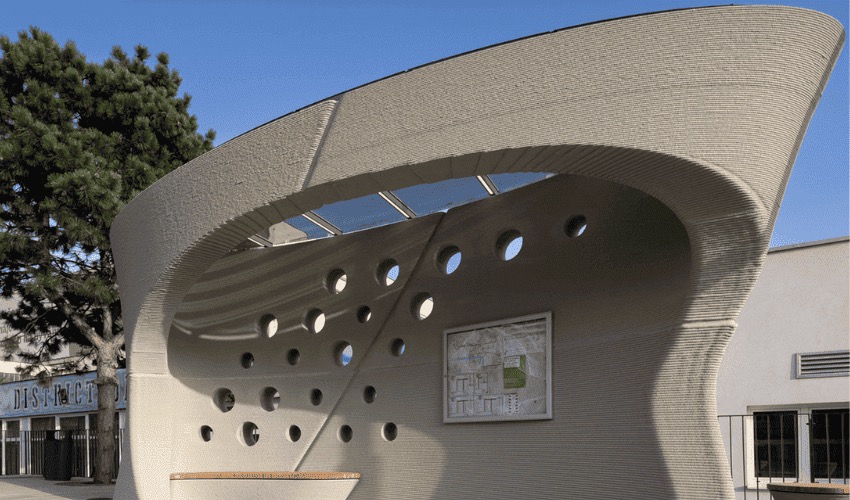 ApplicationsNew 3D Printed Bus Shelter Transforms Public SpaceAfter seeing the birth of a Starbucks café and a train station made using additive manufacturing, the technologies have been used for yet another new architectural breakthrough. This time, a more modest, but innovative structure, has been brought to the…