News
Top 5 Videos: Eating 3D Printed Food Tailored For Dysphagia Patients
Welcome to our compilation of this week’s most compelling 3D printing videos. We kick off this week’s edition with a taste test and exploration of 3D printed food, tailored for those suffering from dysphagia. Next, we’re given an in-depth look…
- 3 min read
- News
- Six more stories
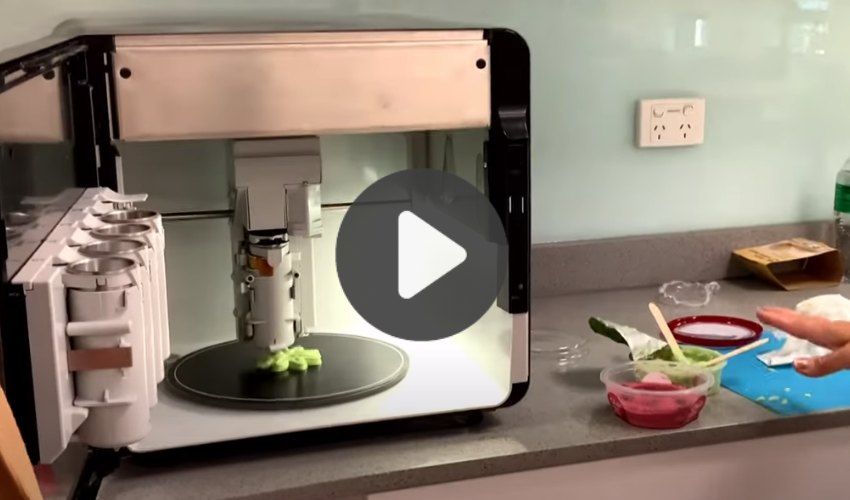
Welcome to our compilation of this week’s most compelling 3D printing videos. We kick off this week’s edition with a taste test and exploration of 3D printed food, tailored for those suffering from dysphagia. Next, we’re given an in-depth look at the collaboration between SCANLAB and Autodesk Fusion. Moving forward, Chris Holman of the Michigan Business Beat series interviews Tom Kelly, President and CEO of Automation Alley. We’re then presented with a video by the NanoTriz Innovation Academy, exploring stem cell therapy and 3D printing’s role in organ transplantation and stem cell research. And finally, we conclude this week’s top 5 with a close look at a 3D printed air cannon, using compressed air to fire high-explosive rounds. Let’s get started!
Top 1: Trying 3D Printed Food Tailored For Dysphagia Patients
First up, the team at Create Digital tries 3D printed food tailored to individuals with swallowing difficulties, aiming to enhance their dining experience. The process involves loading pureed food into a canister, ensuring it meets texture standards before selecting easy-to-swallow shapes for printing. Although the team acknowledges the need for further improvement, they noted smooth texture and enhanced flavor, likening the experience to something from the future, reminiscent of Star Trek! The video concludes by emphasizing the potential for 3D printing technology to aid those with dysphagia and other eating disorders.
Top 2: SCANLAB and Autodesk Fusion Partnership
Our next video highlights the collaboration between SCANLAB and Autodesk Fusion, emphasizing the integration of SCANLAB’s SCANmotionControl SDK with Autodesk Fusion software. Through this partnership, users can gain access to advanced technologies such as CAD-driven toolpathing, precise timing predictions, enhanced hatching strategies, real-time synchronization of lasers, and more. The video also discusses the benefits of the partnership, such as improving laser beam programming, creating end-to-end product solutions, and advancing research in 3D printing.
More from the desk
Six other notes from the rest of the bench.
 NewsWalmart Has 3D Printed Groundbreaking Concrete ExpansionAs online shopping interfaces become increasingly popular, new solutions to support this technology must be developed. That’s why Walmart built an extension to their store in Athens, Tennessee that’s dedicated to online delivery and pickup services. However, this building is&hell
 NewsSpanish Police Bust Illegal 3D Printed Weapons WorkshopIn a joint effort between the National Police and officials of the Tax Agency, the first illegal 3D printed weapons manufacturing workshop in Spain has been dismantled. While the operation itself was carried out a few months ago on September…
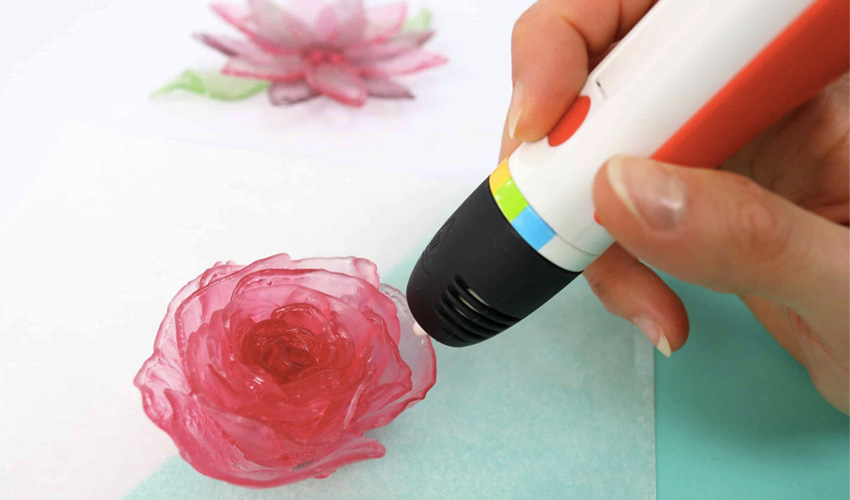 NewsCandy Play, Polaroid’s New 3D Pen That Makes CandyBecause of their ease of use, functionality and material compatibility, 3D pens are becoming increasingly popular in the additive manufacturing market. Based on the FDM process, 3D pens are for some an alternative to desktop 3D printers, although the finishes…
 NewsASTM International Stakes Claim on the Wohlers Report in Recent AcquisitionIn the midst of the excitement leading up to the Standards Forum at Formnext 2021, ASTM International announced the acquisition of Wohlers Associates. In its 35 years as a global industry leader in additive manufacturing, Wohlers Associates was able to…
 NewsCould Paper Be the Answer to More Sustainable 3D Printing?There are already a large number of projects that have used additive manufacturing to ensure a more sustainable and environmentally friendly existence. Now, a research group at the Technical University of Hamburg (TUHH) led by Prof. Dr.-Ing. Claus Emmelmann has…
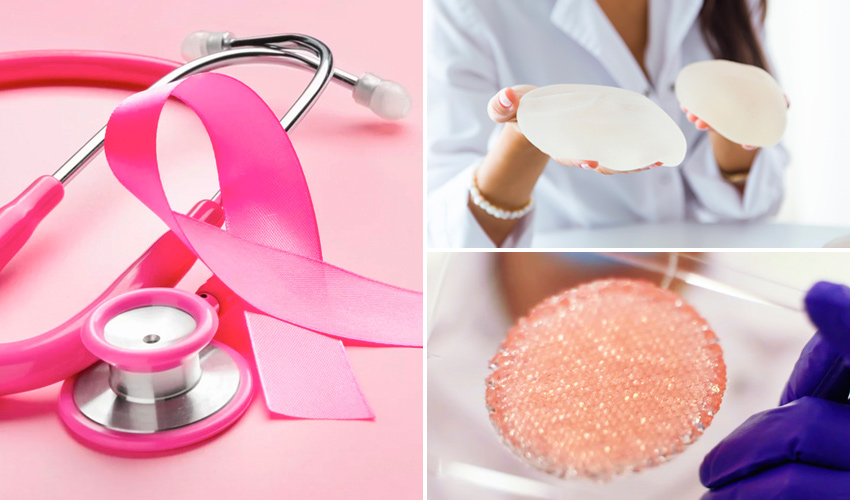 Guides3D Printing Applications in the Fight Against Breast CancerBeing a woman is the biggest risk factor for developing breast cancer. Even though men are not immune to this type of cancer and around 1% are diagnosed with it every year, breast cancer was the most common cancer in…