Printers
Dubai is planning its first 3D printed high-rise
The United Arab Emirates are already known for implementing the most innovative ideas in 3D printing, so the additive production of buildings is nothing new in Dubai. In May of last year, they unveiled the first 3D printed office building…
- 3 min read
- Printers
- Six more stories
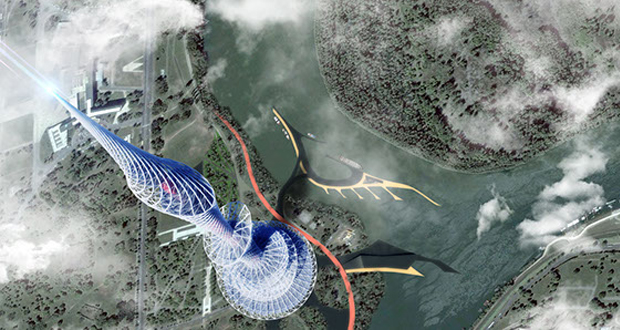
The United Arab Emirates are already known for implementing the most innovative ideas in 3D printing, so the additive production of buildings is nothing new in Dubai. In May of last year, they unveiled the first 3D printed office building and now, in cooperation with the startup Cazza Construction Technologies, it has been announced the their 3D printed high-rise building is being planned.
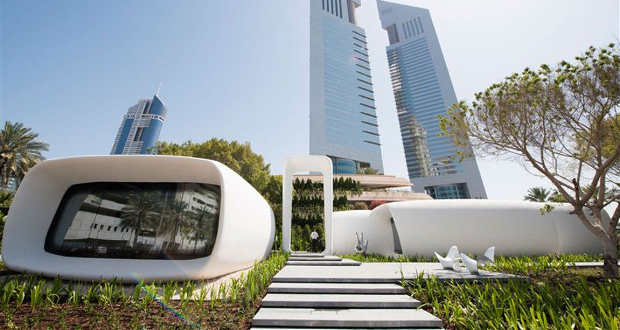
This office was build in only 17 days
At the end of 2016, Dubai signed a partnership with Cazza as the United Arab Emirates is looking to produce a quarter of the buildings planned in their projects by the end of 2030, by means of 3D printing. For this latest project, Cazza wants to use a new technology called “Crane Printing”. This technology would allow the construction of buildings that are more than 80m in height (about 262 ft.).
“When we first thought about implementing 3D printing (in the construction industry), it was mostly houses and low buildings. Developers always asked us if it was possible to produce 3D printed skyscrapers. This has prompted us to carry out research on this technology for larger structures”.
How does this technology work?
Cazza Construction Technologies has so far only experienced building flat buildings. With the new Crane Printing Technology, they will be able to raise the bar (literally). The technology itself is based on the manufacturing of existing materials such as concrete and steel. The mobile robots for 3D printing are mounted on cranes, which will provide the lifting. According to Fernando De Los Rios, COO of Cazza, the system is compatible with all cranes and no special designs have to be made for this project. The process is to be as cost-efficient and environmentally friendly as possible, which is why they combine mobile robots for additive production and conventional construction methods.
More from the desk
Six other notes from the rest of the bench.
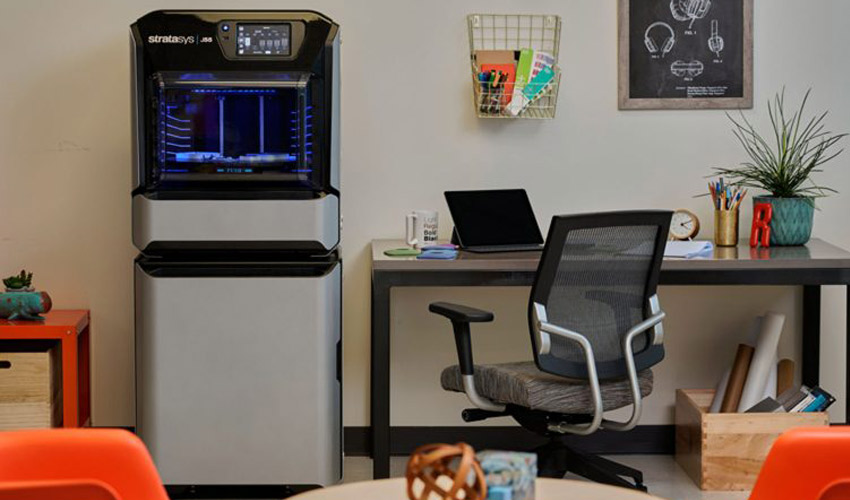 PrintersStratasys J55: A PolyJet desktop 3D printer that offers thousands of coloursThe manufacturer Stratasys has just launched its new PolyJet machine: the J55 is a compact solution, suitable for all designers who want to bring their designs to life. The printer is smaller but retains its multi-material and multi-colour capabilities: it…
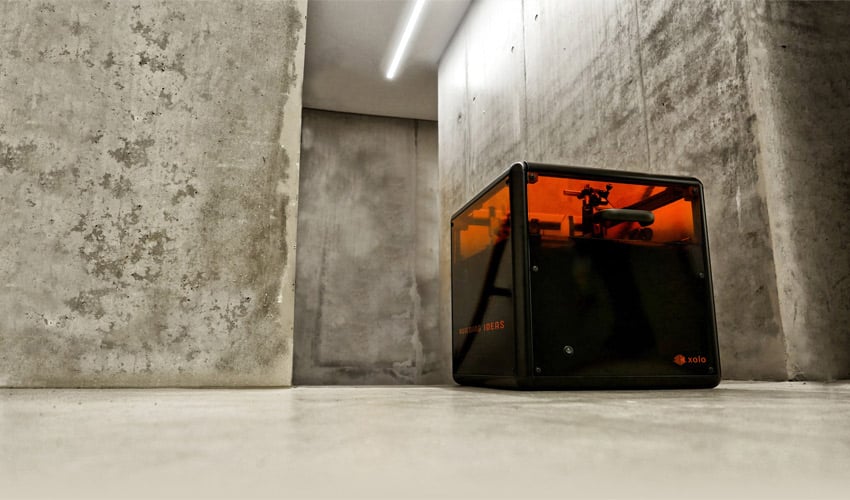 Printersxube Produces Resin Parts in 20 Seconds Thanks to Volumetric 3D PrintingGerman startup Xolo has just unveiled its new 3D printer, called xube, which is based on volumetric additive manufacturing, a much faster method than traditional resin processes. xube is said to be able to construct parts of the smallest size…
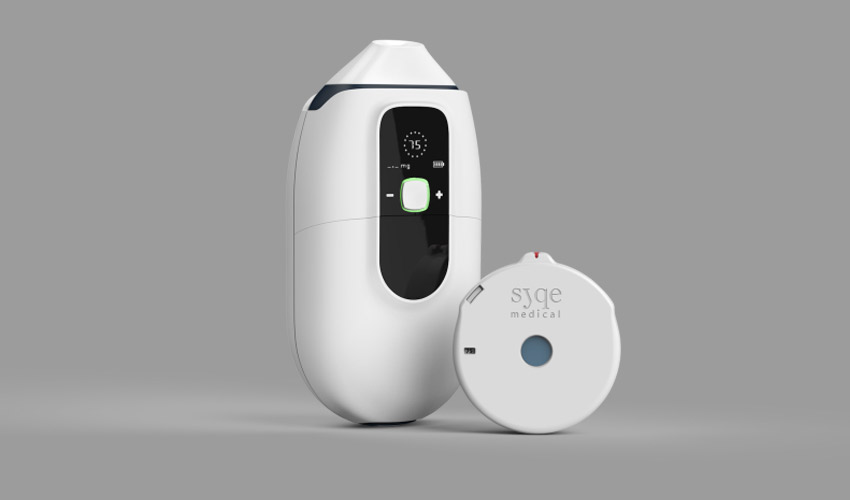 GuidesSyqe Medical, a 3D printed medical cannabis inhalerSyqe Medical is a young Israeli company that has developed a 3D printed cannabis inhaler to offer a tailor-made pharmaceutical treatment. This tool transforms the plant in order to meet the pharmaceutical requirements of the market and thus offer patients…
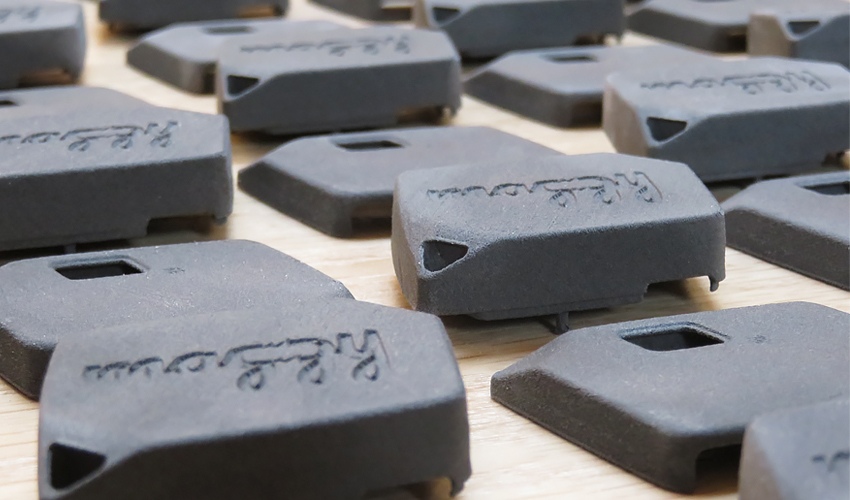 NewsMaggy, the 3D printed device that promotes social distancingOver the past few months we have seen how the additive manufacturing industry has mobilized to fight the health crisis caused by Covid-19. However, once the worst stage of the pandemic is over, it is time to ensure that this…
 GuidesCytosurge, 3D metal printing on a microscaleDirect 3D printing of metals with submicron resolution is a promising additive manufacturing technique for a wide range of sectors. The FluidFM µ3Dprinter from Cytosurge is the world’s first 3D printer capable of delivering such resolution in direct metal printing, while…
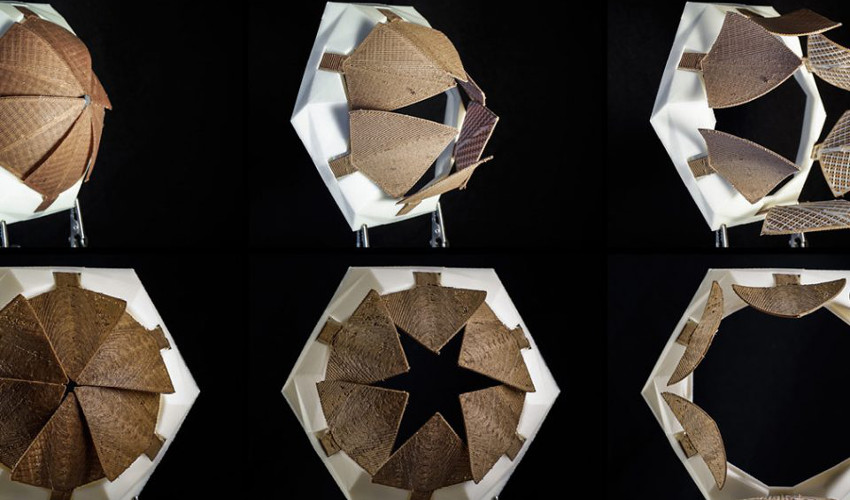 Printers4D Printing: The Next Stage in Additive Manufacturing?Within the last four years 3D printing has become far more well known. If you mention it at a dinner party, the likelihood is everyone will have some idea of what it is. However, mention 4D printing and you’ll definitely…