News
DLP Can Be Used for the Creation of Better Rubber Parts
Digital Light Processing (DLP) is one of the major 3D printing technologies available today. A type of photopolymerization, it essentially consists of the use of a video projector to cure photosensitive resins. The technology is popular both for its speed…
- 3 min read
- News
- Six more stories
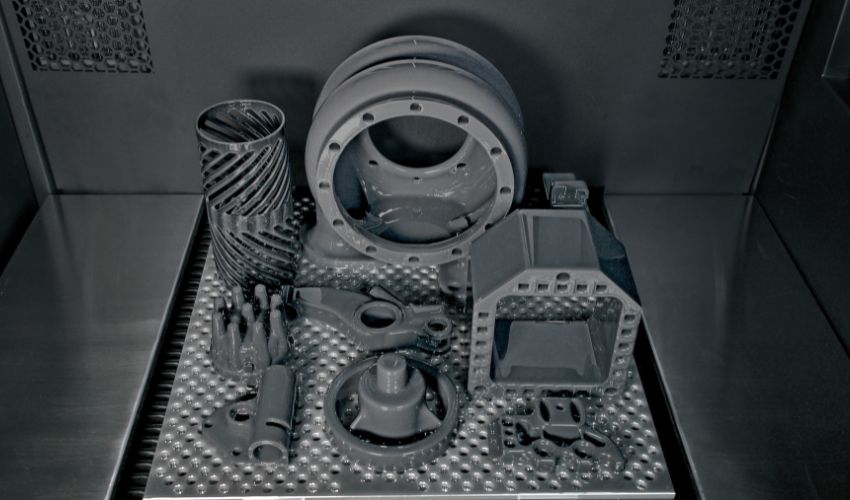
Digital Light Processing (DLP) is one of the major 3D printing technologies available today. A type of photopolymerization, it essentially consists of the use of a video projector to cure photosensitive resins. The technology is popular both for its speed and accuracy and can be used in any number of industries. And it continues to improve.
The first company to commercialize the technology, EnvisionTEC, has made huge steps forward over the years. And since its acquisition last year by Desktop Metal, which split the company into Desktop Health and ETEC, it has shown its most exciting innovations in the field including top-down DLP, the development of new materials such as rubber and more. But how does DLP work? What exactly are the innovations that ETEC has made in the sector? And most importantly what are the applications for the technology? We took a closer look.
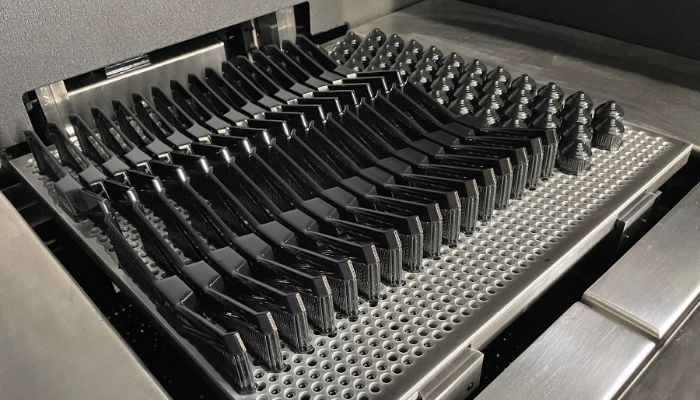
ETEC Extreme 8K DLP build plate (photo credits: ETEC)
How Does it Work?
Photopolymerization, or the curing of photosensitive resins with UV light, can be considered the parent of additive manufacturing. As you might know, the very first 3D printing technology was stereolithography in the 80s. However, not long after that, new technologies started to arise to address the problems inherent in SLA. This includes DLP which came into existence in 1999.
More from the desk
Six other notes from the rest of the bench.
 NewsMeet adidas 4DFWD: The All New 3D Printed Shoe from adidasAfter years of combining athlete data with unique 3D printing technology, adidas has arrived at the “next step in data driven 3D printed midsole innovation,” with an all new running experience – adidas 4DFWD. Partnering with Carbon, development of the 3D…
 ApplicationsResearchers at ETH Zurich Study 3D Printed Breast TissueUnfortunately, research on the female body, particularly concerning health, remains largely neglected. Researchers at ETH Zurich now want to change this with their groundbreaking study of breast milk cells. Specifically, how breast milk is produced within the body has not…
 News#TALK3D: Interview with Ramón Pastor, President of the IAM3DHUBThe adoption of additive manufacturing by companies in a variety of sectors has grown considerably in recent years. Even so, many still have doubts in terms of its implementation, for example which technology would be best for each application and…
 MaterialsMetallum3D: providing wider access to metal 3D printing services and materialsRecently, the Centre for Innovative Technology (CIT) announced that CIT GAP Funds has invested in the company Metallum3D based in Charlottesville, Virginia. The startup is an online metal 3D printing platform that provides accessible and affordable metal 3D printing materials&hel
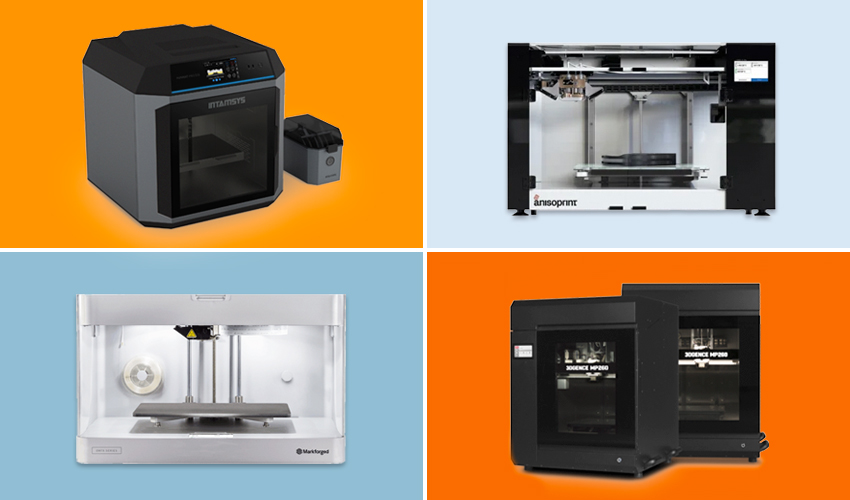 PrintersThe Top Compact, Industrial FDM 3D PrintersDespite the growth in other additive manufacturing technologies in other years, fused deposition modeling continues to dominate a large share of the market. This can be seen not only with a corresponding rise in commercial, lower-cost solutions in recent years,…
 PrintersThe New Omni PRO and PRO HT 3D Printers Are Ready to Innovate Industrial ApplicationsIt goes without saying that the additive manufacturing sector as a whole is turning toward greater industrialization and has done so for the past few years. A sharp contrast to the technologies’ origins in the 80s, 3D printing is being…