News
The Complete Guide to Direct Ink Writing
Direct ink writing (DIW) is an extrusion-based additive manufacturing technique where ink is extruded through a fine nozzle that follows a digitally defined path to build a three-dimensional structure layer by layer. One of the key characteristics of this technique…
- 3 min read
- News
- Six more stories
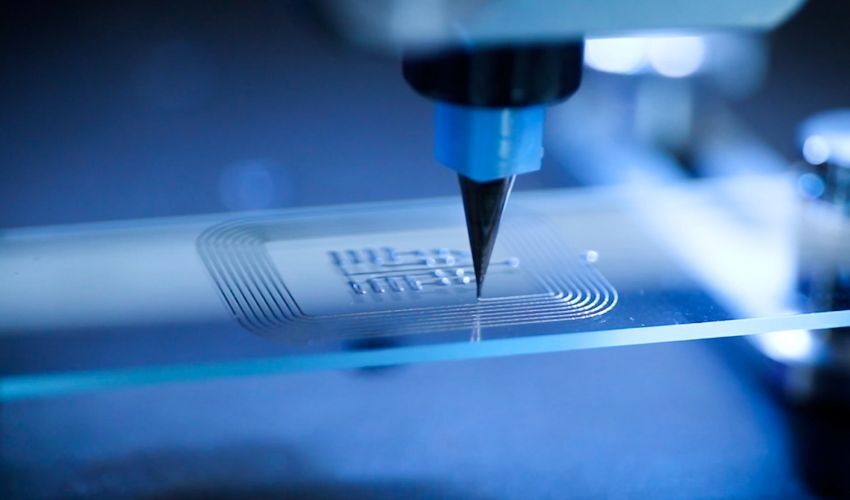
Direct ink writing (DIW) is an extrusion-based additive manufacturing technique where ink is extruded through a fine nozzle that follows a digitally defined path to build a three-dimensional structure layer by layer. One of the key characteristics of this technique is its ability to print customizable inks at the meso- and microscale (essentially, not large-scale projects). The technology was first patented in 1997 by Joe Cesarano and Paul Calvert at the Sandia National Laboratory, where they developed it as a technique for printing complex ceramic structures. Since then, DIW has been applied broadly across a range of studies and fabrication processes beyond ceramics. It has mostly been used in research labs for small-scale fabrication and prototyping, but the technique has the potential to create efficient, industrial-grade parts. Here, we’ll take a closer look at the process, materials, and applications behind DIW, highlighting its advantages and limitations.
How Does Direct Ink Writing Work? Processes and Materials:
Typically, the fundamental process for DIW is the same as any 3D printing process. Users need a 3D model created via computer-aided design (CAD) and a movement path file from a slicing software. DIW can process almost any material, provided the ink exhibits the right rheological behavior, namely, the appropriate yield stress under shear and compression, along with suitable viscoelastic properties. As a result, DIW enables a wide range of inks to be printed into complex 3D structures with high-resolution patterning, architectural flexibility, and tailored material characteristics. This sets it apart from other AM technologies like FDM and SLA, which are constrained by material class. Additionally, DIW is versatile because of its ability to use multiple nozzles to create multi-material structures.
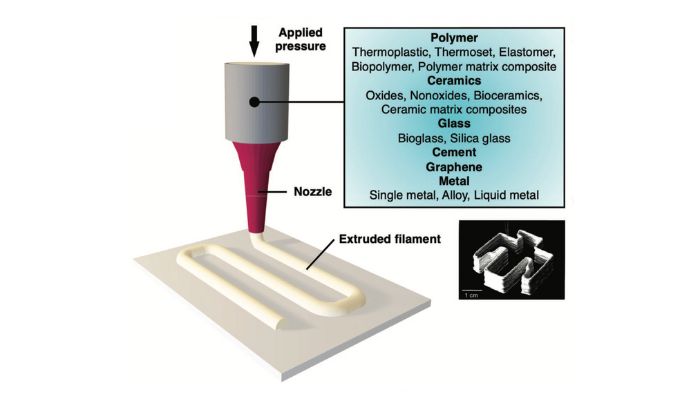
Overview of the direct ink writing process. (Image Credits: Sandia National Laboratory)
In DIW, applied pressure forces liquid inks through a nozzle, and this pressure can alter the ink’s viscosity. This is a key distinction of DIW: instead of using heat, DIW prints inks at room temperature, meaning the rheological properties of the ink are critical. After exiting the nozzle and before final deposition, the ink is not completely at rest. Rather, the material bends and stretches depending on the ratio between the extrusion rate and the speed of the printhead movements. Once deposited, the ink solidifies either naturally or through external processes like evaporation, phase changes, heat treatment, or gelation.
More from the desk
Six other notes from the rest of the bench.
 MaterialsAll You Need to Know About PEKK for 3D PrintingPolyetherketoneketone, better known by its acronym PEKK, is a semi-crystalline thermoplastic that is increasingly used in the additive manufacturing market. Often compared to PEEK, it belongs to the same family – the PAEK family – known for its mechanical and…
 PrintersThe BS210 3D printer that automatically changes its printing trayOpencreators is a young Korean startup that is based in the United States and has recently started their Kickstarter campaign for their brand new 3D printer, the BS210. With hundreds of Kickstarter campaigns for 3D printers today, what makes theirs…
 Applications3D printing to treat spinal cord injuriesResearchers from the University of California, San Diego, have successfully treated rats with spinal cord injuries using 3D printing. Their research offers hope for people with the same injury. 3D printing to help heal spinal cord injuries The Researchers from…
 NewsADDITIV Aerospace will Take Place Tomorrow!On March 18th at 8AM EDT (1PM CET), ADDITIV Aerospace will open its doors to Aerospace professionals to discuss the applications for additive manufacturing (AM) in the sector. This 100% virtual event will be an ideal opportunity to learn how…
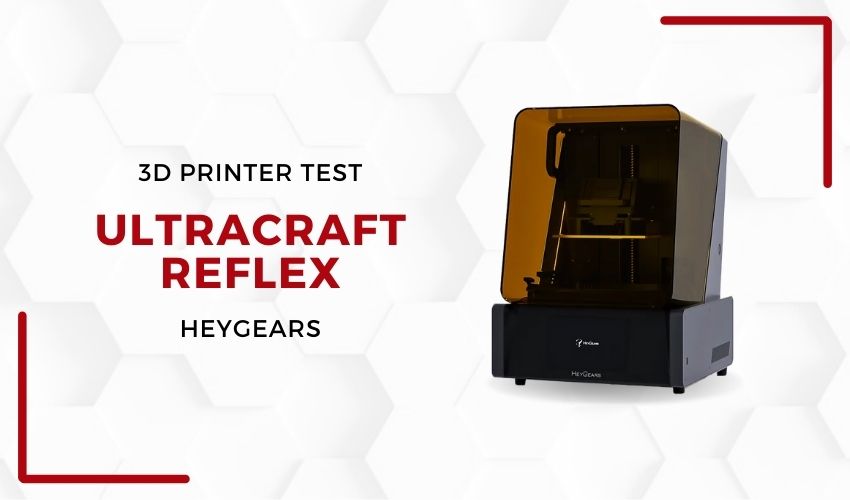 News3Dnatives Lab: Testing the UltraCraft Reflex 3D Printer From HeyGearsWhether created by historic manufacturers or up-and-coming players, it’s always interesting to discover the latest innovations that have emerged on the 3D printing market. Case in point, recently, the 3Dnatives Lab had the opportunity to take a look at the…
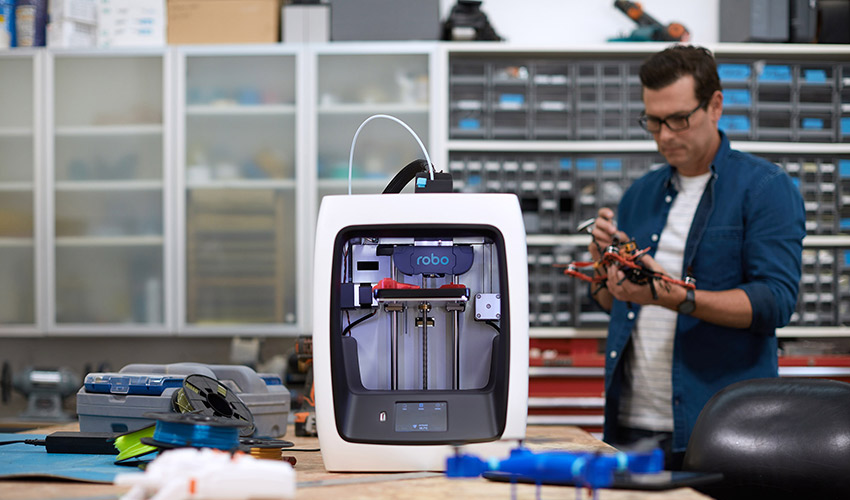 PrintersLab 3Dnatives: Robo C2 3D Printer TestRobo 3D are an American manufacturer based in California who first came to the world’s attention in 2013 with the launch of their Robo C1 3D printer on Kickstarter. At the end of 2016, Robo 3D launched another Kickstarter campaign…