News
Designer Jakub Pastuszak Uses 3D Printing for the Museum of Amber in Gdasnk
3D printing is another way for artists and creatives to visualize ideas and break new ground in the creation of art objects. In the past, we have already reported on artists who use additive manufacturing to produce lamps, pieces of…
- 3 min read
- News
- Six more stories
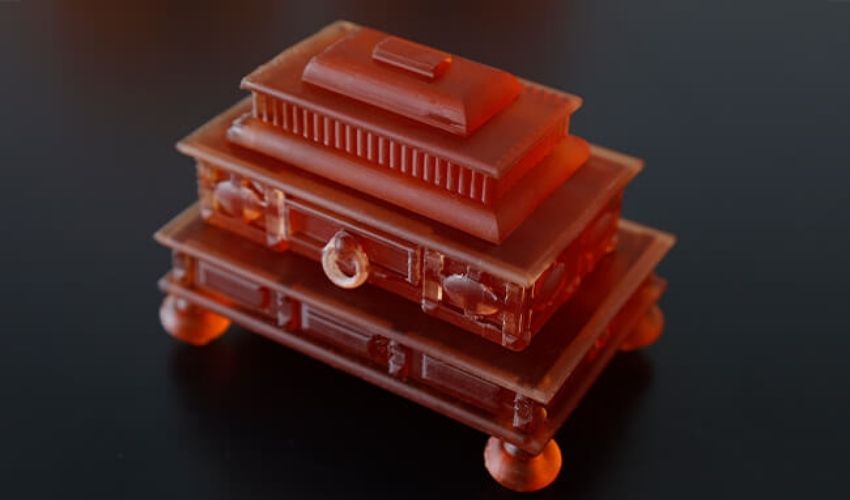
3D printing is another way for artists and creatives to visualize ideas and break new ground in the creation of art objects. In the past, we have already reported on artists who use additive manufacturing to produce lamps, pieces of furniture or acoustic elements. But museums have also already recognized the potential of the technology. A current example of a museum using 3D printing for some models on display is the Amber Museum in Gdańsk, Poland. There, objects by emerging industrial designer Jakub Pastuszak will soon be on display and while they are not actually made of amber, they are either inspired by it or will represent models of well-known amber art.
The 3D printing in the museum in Gdansk
The Amber Museum in Gdansk is moving to new premises and will open its doors to visitors on July 24, 2021. In the future, the various exhibitions on amber will be located in the newly restored Grand Mill from the 14th century, in which contemporary art will be found alongside historical amber pieces. Jakub Pastuszak, a local industrial designer, will also have the opportunity to install four additively manufactured installations there. Pastuszak has been working as a designer for three years and will graduate in 2022 with a degree in industrial design from the Academy of Fine Arts in Gdansk. The industrial designer wants his work to focus on the interaction between people and objects, and says himself about the use of 3D printing, “The lack of contact with living matter creates a cognitive dissonance, which is not good for the implementation of the design. 3D printing can help avoid the risk of the projects remaining only in the sphere of three-dimensional concepts.” The artist himself sees 3D printing as a tool for artists that can be used to produce objects in a time- and cost-efficient manner, for which additional specialists would otherwise have to be hired.
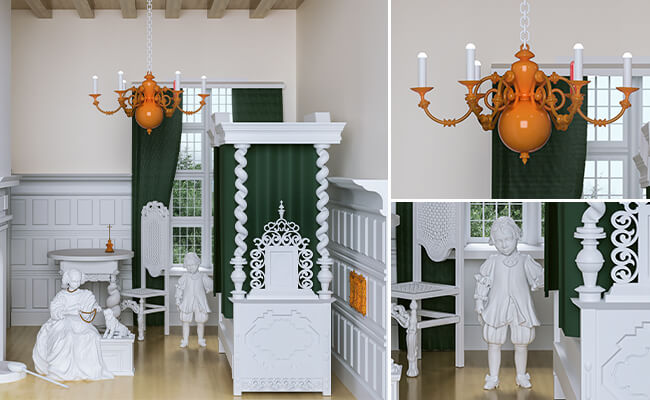
A 1:6 model of a 17th century craftsman’s room is one of the additively manufactured objects in the exhibition, for which the Amber Museum would alternatively have had to commission miniaturists to make. Because there are few of these, completion would take several years and involve high costs. In addition, the production of replicas and models using 3D printing involves much less waste, which makes the technology more environmentally friendly compared to traditional methods.
More from the desk
Six other notes from the rest of the bench.
 SoftwarePrintWatch Detects 3D Printing Errors to Optimize Time and MaterialsU.S.-based Printpal has announced the official release of PrintWatch, a software and API that can detect printing errors during the part manufacturing process and take appropriate actions. The solution can stop printing in progress, warn the user of a defect…
 NewsBMS Circuits Is Optimizing its Production Flow by Integrating 3D PrintingAll Circuits is an electronics subcontractor that designs electronic boards for the automotive, medical and mass-market sectors. Its Bayonne site, BMS Circuits, which is responsible for medium and large production runs, has been investing in fused deposition modeling 3D printing
  NewsThe 3D Printing Innovations at CES 2020!CES, the largest electronics trade show dedicated to consumers brings thousands of participants to Las Vegas every year, eager to discover the latest high-tech products, connected objects and all kinds of technologies. In 2019, the event attracted more than 175,000…
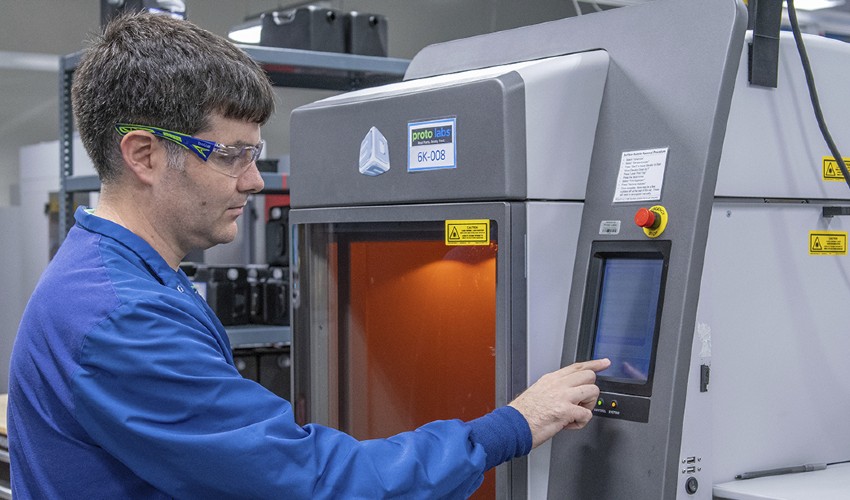 NewsProtolabs acquires 3D Hubs to launch largest digital manufacturing platformFrom today, 3D Hubs will officially become a part of Protolabs. The two companies announced earlier that they had sealed a deal in a definitive agreement. In it, Protolabs will acquire 3D Hubs in a $280 million deal, of which…
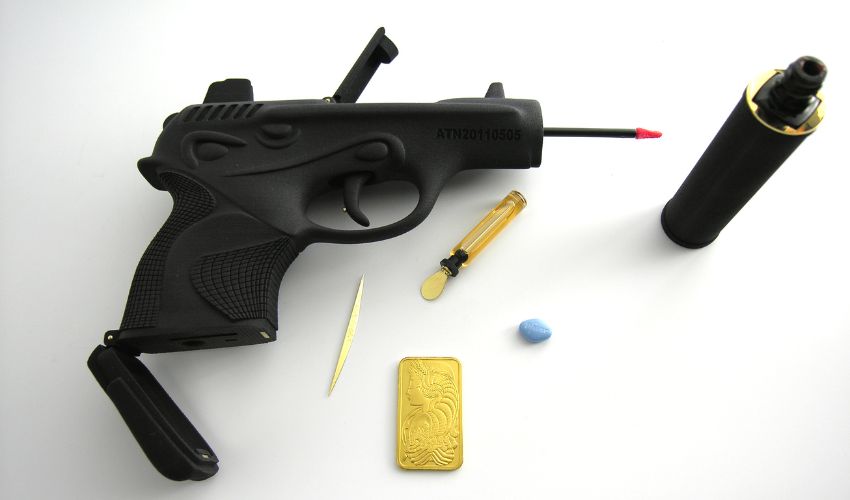 NewsEuropol Concerned About Growing Number of 3D Printed WeaponsIn recent years, an increasing amount of 3D printed weapons has been seized in Europe, which is raising concerns for the European Police Office (Europol). For that reason, a conference was recently held to bring together a number of professionals…
 NewsTop 5 Videos: The Ultimate Gift Guide for a 3D Printing EnthusiastIt’s the holiday season, so it’s time to curl up with a blanket and watch some fascinating 3D printing videos. First up, we have some shopping inspiration: a gift guide for 3D printing enthusiasts. Second, learn about the future of…