Printers
Could 3D Printing at Home Be Detrimental to Health?
Since the early 2000s, when the RepRap movement took off, 3D printing has gained commercial success worldwide. Though of course much of the market is dedicated to industrial additive marketing, cheaper desktop 3D printers designed for hobbyists have also grown…
- 3 min read
- Printers
- Six more stories
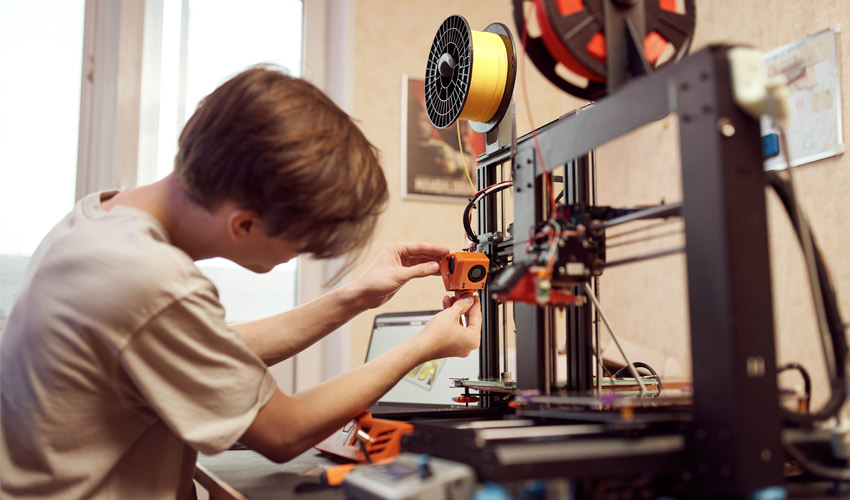
Since the early 2000s, when the RepRap movement took off, 3D printing has gained commercial success worldwide. Though of course much of the market is dedicated to industrial additive marketing, cheaper desktop 3D printers designed for hobbyists have also grown in popularity, especially since COVID-19. In 2022 the global desktop 3D printing market size was estimated to be worth $3.96B according to Grand View Research. And is only expected to grow rapidly in coming years, especially in countries like China, where cheap 3D printer manufacturers with solutions designed for home users are widespread. But is it actually good for users’ health to be 3D printing at home? Researchers at Dublin City University say maybe not.
These findings come from a recent study titled “Characterization of Volatile and Particulate Emmissions from Desktop 3D Printers” which was published by Melissa Finnegan, Collen Lee Thach, Shirin Khaki, Emma Markey, David J. O’Conner, Alan F. Smeaton and Aoife Morrin. These researchers were interested in indoor air pollution and emissions released indoors, given that we do spend the majority of our lives inside our homes. A part of this was looking into the emissions that consumer devices like 3D printers were releasing into that environment.
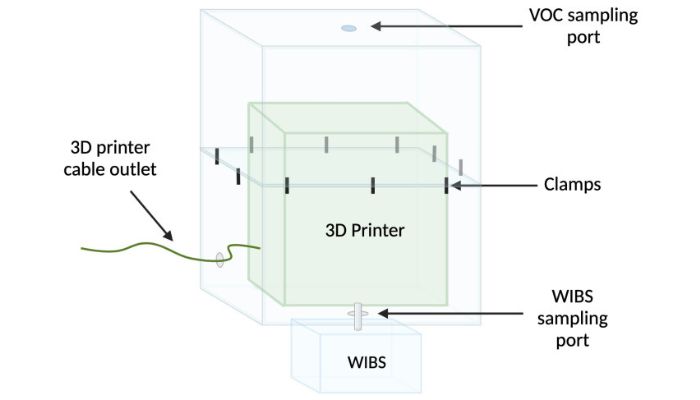
A schematic of the 3D printer with the VOC sampling and the sampling ports, which together was used to collect the particle samples (image credits: Finnegan M, Thach CL, Khaki S, Markey E, O’Connor DJ, Smeaton AF, Morrin A 2023)
Exploring the Impact of 3D Printing on User Health
To do this, the researchers decided to look into the emissions while 3D printing of volatile organic compounds (VOCs) and particulates, as concerns regarding health and safety for both have arisen in recent years. Notably, they took a look at the safety aspects of 3D printing PLA and ABS filaments, meaning they only studied FDM 3D printers. This was done by using gas chromatography-mass spectrometry (GC-MS) to profile VOC emissions and attaching a particle analyzer (WIBS) to the printer to quantify and characterize particulate emissions.
More from the desk
Six other notes from the rest of the bench.
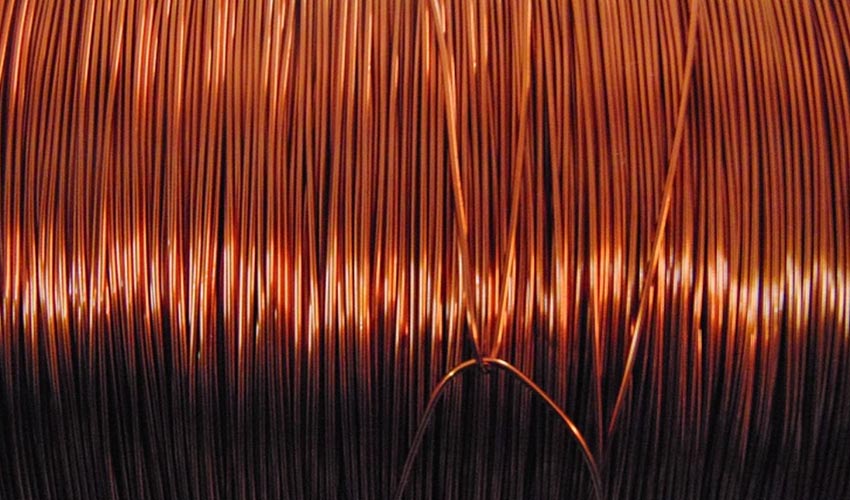 News3D printing copper on surfaces can kill COVID-19 virusThe Australian company SPEE3D has developed and tested a fast and affordable way to 3D print antimicrobial copper onto metal surfaces. Laboratory tests have shown that touch surfaces modified by this process kill up to 96% of SARS-CoV-2 – the…
 ApplicationsCombining Blockchain and 3D printing to make aircraft partsThe company Moog Inc. designs, manufactures and integrates precision aerospace control parts and systems for four segments: aircraft controls, space & defense controls, industrial controls, and components. Just like many players in the aerospace industry, the company has gras
 NewsPart 1: How are AM companies responding to the COVID-19 outbreak?The COVID-19 crisis has introduced a lot of uncertainty for many industries around the world. Whilst the crisis is resolving in China, where it started, in other parts of the world this is far from being the case. Governments have…
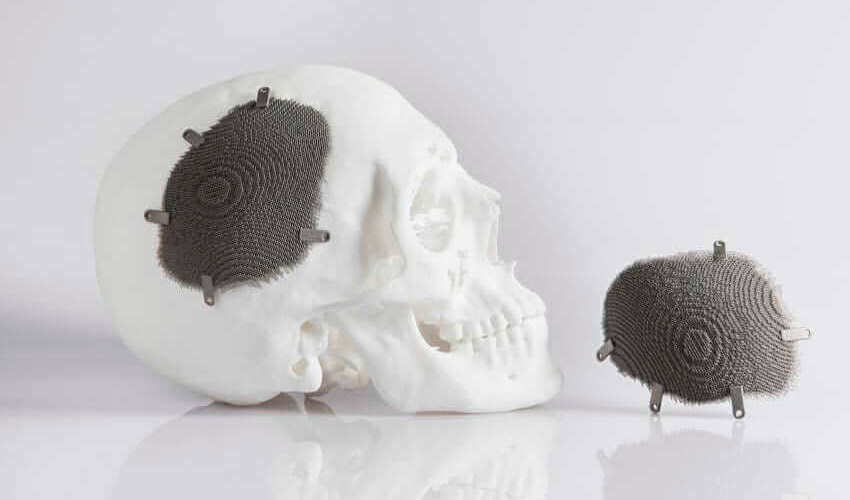 ApplicationsThe Growing Market of 3D Printed ImplantsResearch firm, Precedence Research, recently published a report on 3D printed medical implants. According to the report, 3D printed implants should generate more than 9 billion dollars in 2030 against 1.5 billion in 2020, an annual growth of 19%. Faced with increasingly complex&h
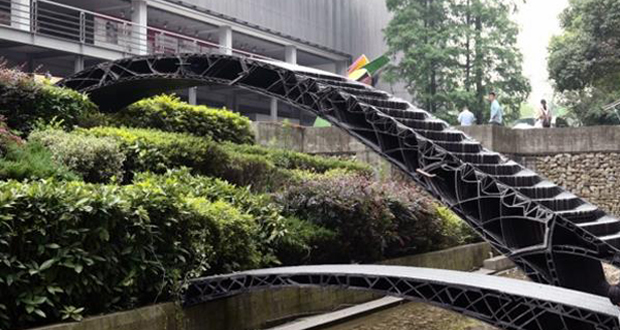 NewsChina creates their first 3D printed bridgesThe School of Architecture and Urban Planning at Tongji University in Shanghai has created the first 3D printed pedestrian bridges in China. The two bridges were made of plastic and measure 11 meters and 4 meters long. With China’s latest…
 GuidesOur Guide to Intellectual Property in 3D PrintingIntellectual Property is a controversial and sometimes confusing issue. The moniker covers such a broad spectrum, that it requires years of experience to master. This is bad for designers who want to create 3D-printed models and share them for both…