News
Low CO2 Concrete, 3D Printed Building Unveiled in Copenhagen
The use of 3D printing in the construction sector should no longer come as a surprise. What was once a niche topic has gradually increased worldwide with 3D printed buildings popping up in New Zealand, Qatar, China, the USA, the…
- 3 min read
- News
- Six more stories
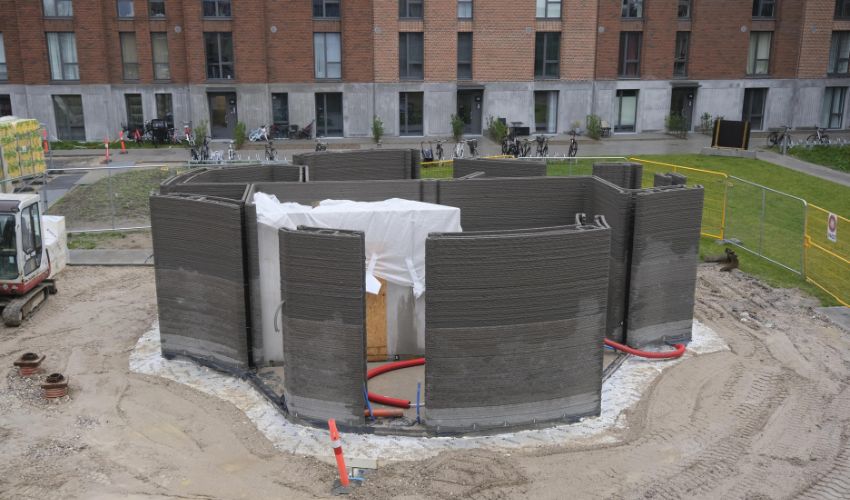
The use of 3D printing in the construction sector should no longer come as a surprise. What was once a niche topic has gradually increased worldwide with 3D printed buildings popping up in New Zealand, Qatar, China, the USA, the UK, Germany and many other places. But even if construction 3D printing is becoming widespread, there are still obstacles that need to be overcome in the industry. Notably, these center on environmental concerns, especially the high carbon footprint of concrete. But now, a new community building in Copenhagen that was 3D printed with low CO2 concrete material has been announced.
As mentioned, there are a number of concerns centered on sustainability in construction. Materials are at the core of this as the cement industry is one of the main producers of carbon dioxide, with an estimated 4 billion tons of cement produced in 2021 contributing to 8% of CO2 emissions according to Chatham House. This notably has put a dent in claims that additive manufacturing will be key to making construction more sustainable. If construction 3D printing is still using concrete, won’t the end result still be the same? But if it was combined with low CO2 concrete, that would no longer be an issue.
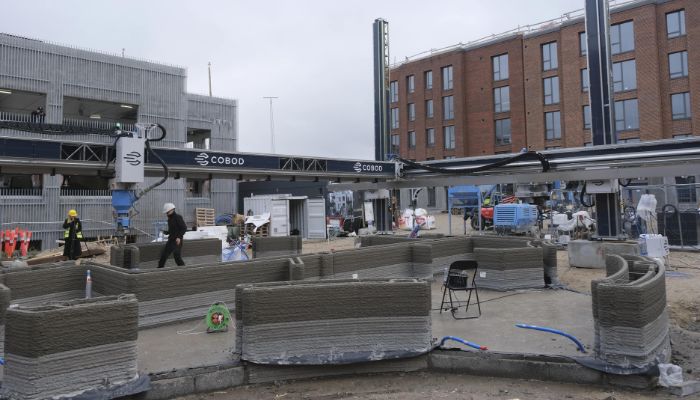
The 3D printed community building was made using a COBOD BOD2 printer
In a press release, AFK, the real estate developer behind the building, further explained, “3D printing is an adaptive construction process where material is added only where necessary. In the process, it is determined how much material should be used in different building components, making it possible to create buildings where concrete is only added where it is structurally necessary. This allows for a reduction in resource consumption and can bring significant environmental and economic benefits while providing greater freedom in the architectural design of the building.” This is obviously only increased if the material is also more environmentally-friendly, such as with this 3D printed community building made out of low CO2 concrete.
More from the desk
Six other notes from the rest of the bench.
 PrintersContinuous Composites’ Patent Infringement Lawsuit Against MarkforgedA patent protects the author of an invention from being copied, thereby allowing the inventor to market their product and profit without fear of competition. In emerging technologies such as additive manufacturing, scores of patents are filed each year to…
 NewsSolidworks World 2018 Recap: Industrial RenaissanceHaving spent 4 days in Los Angeles, Solidworks World 2018 ended on Wednesday. The event brought many users of Dassault Systèmes’ software, Solidworks, together. These range from companies in the virtual reality, CAD, augmented reality and 3D printing industries, eager&helli
 MaterialsZ-PEEK from Zortrax Confirmed Suitable for SpaceflightWhen it comes to exploring the unknown, what better than innovative, flexible technologies which can adapt to any need? For that reason, one of the largest adopters of additive manufacturing in the past few years have been organizations working on…
 NewsFirst-Ever 3D Printed Starbucks to Open in TexasIt may not be as American as apple pie, but Starbucks has quickly become an emblem of American soft power and consumerism, similar to McDonald’s. And now, Starbucks has announced its first-ever 3D printed location. Opening on April 28th, it…
 NewsGet All the Latest News From Formnext 2023 With 3DnativesWe have all heard the iconic slogan “Formnext – where ideas take place.” This is how Mesago presents one of the most important events in 3D printing, attracting people from far and wide with visitors from Australia, Asia, Europe, North…
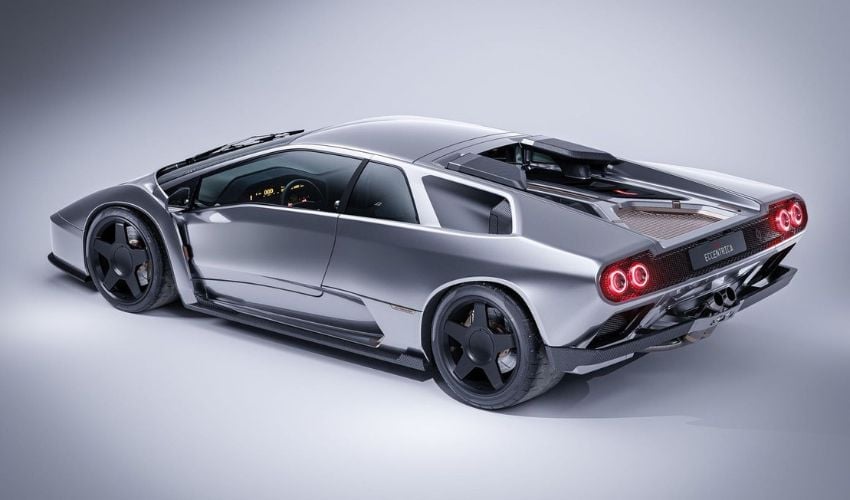 ApplicationsLamborghini’s Iconic Diablo Eccentrica Features 3D Printed TitaniumEmerging from the San Marino startup Eccentrica Cars, the genesis of this innovation lies in the restoration of a classic car, namely the Diablo Eccentrica. This inaugural restomod project, drawing inspiration from the iconic Lamborghini Diablo of the 90s, is…