Printers
How to Choose a Resin 3D Printer? Experts Give Their Advice!
In 1986, Charles Hull filed one of the first commercial patents in the 3D printing sector for stereolithography (SLA), a process which uses a laser to polymerize photosensitive resins, layer by layer. Since its invention, other photopolymerization methods have been…
- 3 min read
- Printers
- Six more stories
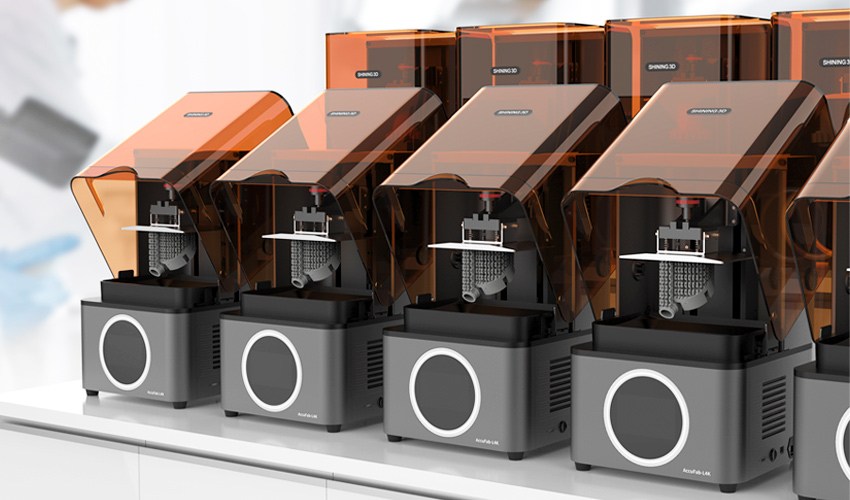
In 1986, Charles Hull filed one of the first commercial patents in the 3D printing sector for stereolithography (SLA), a process which uses a laser to polymerize photosensitive resins, layer by layer. Since its invention, other photopolymerization methods have been developed including DLP and LCD which, instead of using a laser that will act point by point, use a screen to cure the entire layer of resin in a single pass. Though each method has its own specific characteristics, it should be noted that in general resin additive manufacturing is often known for its precision and the fineness of details that can be obtained – especially compared to FDM. But how to choose a resin 3D printer? Which process is the best fit for varied needs? We interviewed three experts in the sector to find out more!
Our first expect is Bo Pang, a 3D printing product manager at SHINING 3D, a leading provider of imaging and resin 3D printer solutions. He has been working in the industry for 8 years, mostly in SHINING’s R&D department, and focuses on resin 3D printing. Next, Robin Brockötter is the 3D printing supply chain manager for Europe and the UK at Hubs, the world’s largest peer-to-peer network of 3D printing services. He has been with the company for 8 years. Finally, our last expert is Julien Montenero, a facial, dental and maxillofacial prosthesis technician who has been using resin technology for different applications for 15 years.



Why Turn to Resin 3D Printing?
One of the main advantages of resin additive manufacturing is its ability to produce very detailed parts with high precision. However, among the processes, this still differs. Robin Brockötter explained what users could expect: “The specs of the different resin printers differ from one brand to another. For example, when it comes to LCD printers, which are generally more affordable than desktop SLA machines, the resolution of the screen determines the precision of the print. The layer thickness is usually a setting that can be adjusted. This varies anywhere between 25 microns to 200 microns per layer (draft mode on Formlabs for example). Meanwhile, laser SLA printers generally have the highest precision.”
More from the desk
Six other notes from the rest of the bench.
 PrintersRevopoint POP 2 Kickstarter Launched by RevopointAfter the success of the Revopoint POP 3D scanner, a cost-effective 3D scanner that is remarkable for its many features, Revopoint has now launched a Kickstarter for their latest scanner: the new Revopoint POP 2. The new scanner is set…
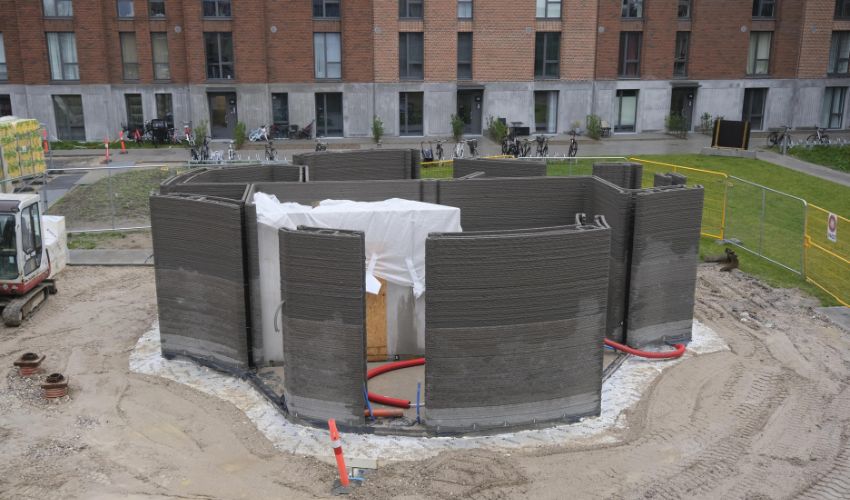 NewsLow CO2 Concrete, 3D Printed Building Unveiled in CopenhagenThe use of 3D printing in the construction sector should no longer come as a surprise. What was once a niche topic has gradually increased worldwide with 3D printed buildings popping up in New Zealand, Qatar, China, the USA, the…
 NewsOregon Dragon Bench, MX3D’s Nearly 33-Foot 3D Printed Metal SeatMX3D, a specialist in the WAAM (Wire Arc Additive Manufacturing) process, has unveiled its latest construction project: a 3D printed metal bench, with a rather surprising design, as it is shaped like an open loop. Named Oregon Dragon Bench, this…
 NewsWhat Did You Miss at RAPID + TCT 2022?Weren’t able to attend RAPID + TCT 2022? The largest trade show in North America took place in Detroit, Michigan between May 17th and 19th. After three keynote presentations and over 105 hours of educational content, the event has closed…
 NewsQuébec invests $3M to develop additive manufacturing into the medical sectorThe Government of Québec has recently announced its commitment to invest approximately $3 million into a medical 3D printing center. The center, which will be located in Québec City, is aimed to help accelerate the development of additive manufacturing within…
 NewsFormify Is Using 3D printing to Improve the Experience of Video Game PlayersAccording to a report published on April 19, 2022 by Newzoo, a company specializing in video game market data analysis, the E-sports sector is expected to grow by 21.8% compared to 2021. By the end of the year, it could…