News
Carbon Launches ‘Next Generation’ of 3D Printers with M-Series
The new year continues with launches from some of the leading brands of additive manufacturing. This time, Carbon, has announced the launch of its new M-series printers, the M3 and the M3 Max, which it claims will leverage the next…
- 3 min read
- News
- Six more stories
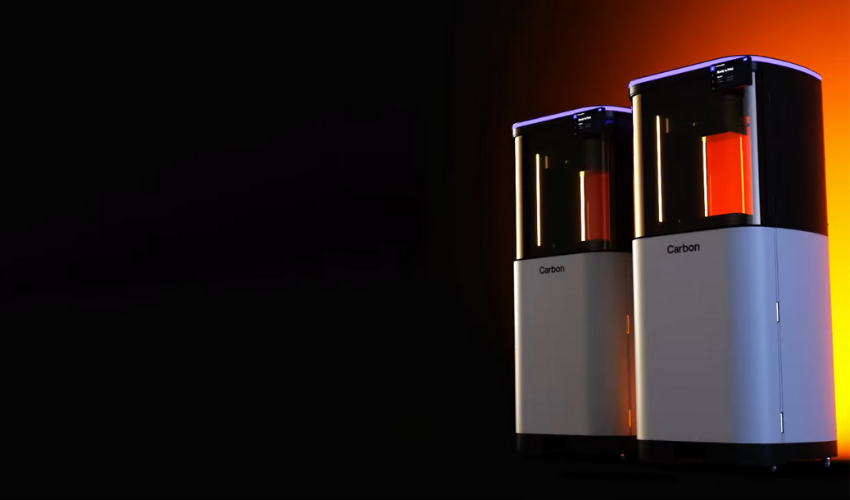
The new year continues with launches from some of the leading brands of additive manufacturing. This time, Carbon, has announced the launch of its new M-series printers, the M3 and the M3 Max, which it claims will leverage the next generation of DLS printing technology. Specifically, they have designed them to provide greater value in the dentistry industry, which commonly uses photopolymer AM technologies. They hope that with these machines, they will be able to encourage even more dental labs to adopt 3D printing.
And the launch certainly seems to be welcomed by the industry. In the press release, Jeff Lowthorp, Argen Vice President, Business Development commented, “Carbon printers have been a workhorse in our manufacturing center and create high-quality dental models print after print. Having experienced first-hand what previous generations of printers are capable of, we look forward to this step in technology that will save us time and money as we continue to produce high quality products in a shorter period of time.” Indeed, Carbon is looking to provide an advanced end-to-end idea-to-production platform for an overall better user experience when combined with the Carbon Design Engine™ and Carbon DLS materials.
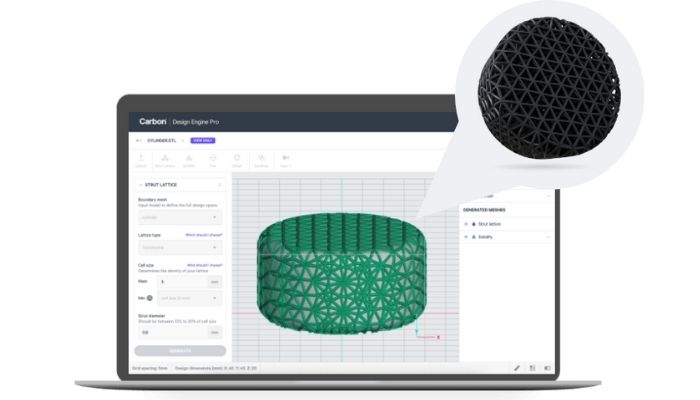
Photo Credits: Carbon
What to Expect from the M-Series from Carbon
But what should you expect from this new series? Well for one, Carbon notes that the M-Series printers have been designed for faster printing, a simpler print experience and improved cross-build consistency. The M3 Max will also offers true 4K light engine as well as double the build area with the same pixel size and density. The large build area in particular is noted as being idea for dental labs that would like to produce many smaller parts at the same time, giving them a similar quality. The printers are also noted to be up to 2.5x faster than previous models thanks to better heat management.
More from the desk
Six other notes from the rest of the bench.
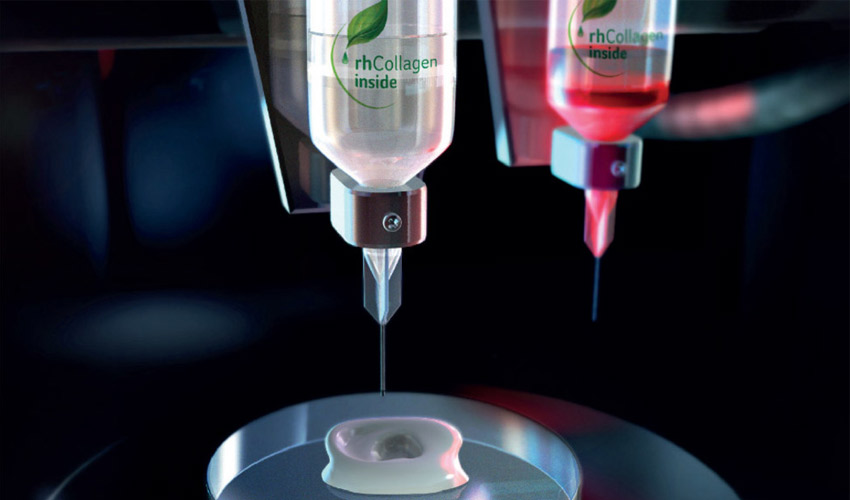 ApplicationsCollPlant and United Therapeutics accelerate kidney bioprintingWhat if you could 3D print your kidney? This is what CollPlant Biotechnologies and United Therapeutics Corporation are looking to do: they have just expanded their current partnership to produce and use a human collagen-based bioink to accelerate human kidney…
 ApplicationsEvonik and Laxxon to Produce More Effective 3D Printed PillsEvonik Venture Capital, which deals with all kinds of applications related to the use of 3D technologies, has announced its investment in the Nevada-based Laxxon Medical. The goal: to produce 3D-printed tablets that will improve patient health thanks to better…
 ApplicationsAirBike, the 3D Printed Flying Motorcycle Reinventing Aerial MobilityIs it a bird? Is it a plane? No, but it does seem to be a motorcycle straight out of a science-fiction movie. This week, Polish start-up Volonaut unveiled the AirBike, a flying motorcycle. Yes, you read that right: this…
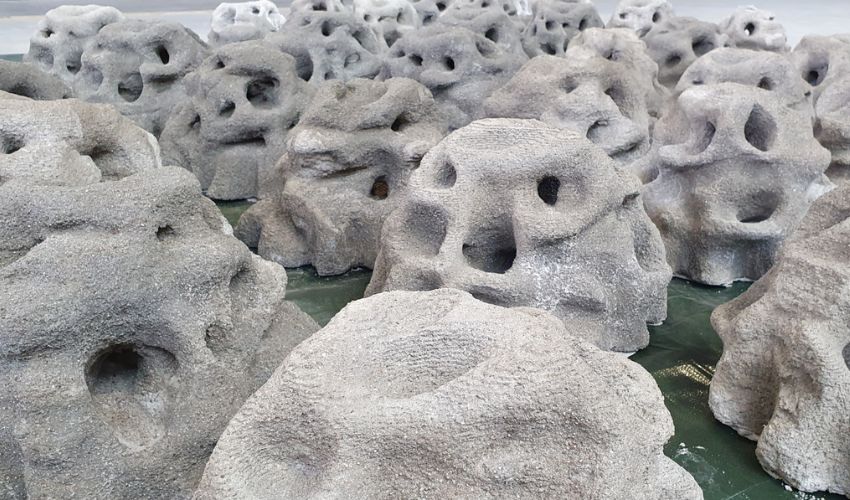 GuidesCoastruction Dives Into Novel Solutions for 3D Printing ReefsOceans are key to the planet’s health, and that is why humans must protect them. Several companies have leveraged 3D printing technology to aid ocean conservation in recent years, and their work has been nothing short of innovative. Some common…
 Applications#3DExpress: U.S. Navy and Velo3D Partner to Boost AM in DefenseYesterday, we covered the U.S. Defense Advanced Research Projects Agency’s investment of over $10 million to predict the lifespan of 3D printed parts, and today, we have another defense headline: Velo3D is partnering with the U.S. Navy. Velo3D is a…
 NewsTop 5 Videos: 3D Printed SupercarsThis week’s Top 5 Videos about 3D printing include a huge variety of videos spanning a range of topics. We’ve included videos about 3D printed supercars, 3D printed turtle eggs to stop poaching, and 3D printed hearts to save lives…