News
How to Choose Between a Bowden and Direct Extruder for 3D Printing
In the 3D printing landscape, the extruder configuration you choose can make all the difference between a successful, flawless print and a frustrating trial-and-error process. FDM 3D printing extruders come in a variety of shapes and forms, but despite the…
- 3 min read
- News
- Six more stories
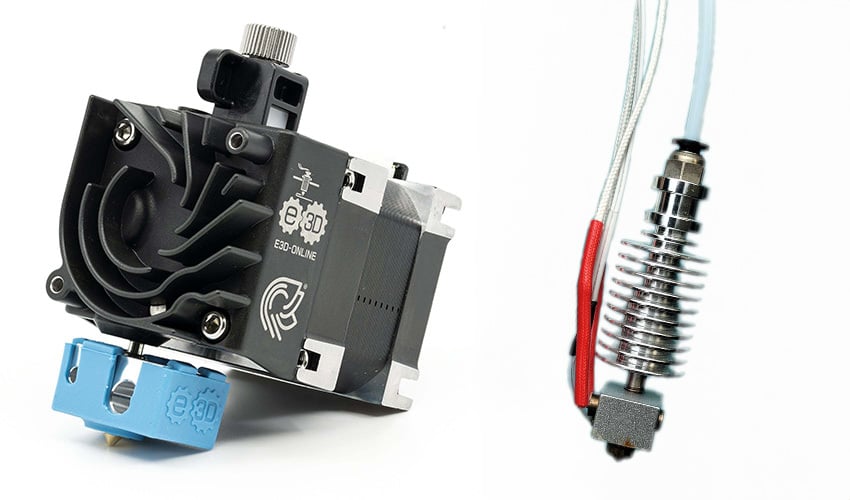
In the 3D printing landscape, the extruder configuration you choose can make all the difference between a successful, flawless print and a frustrating trial-and-error process. FDM 3D printing extruders come in a variety of shapes and forms, but despite the intricate differences of each extruder, they all cater to either one of two types of setup. Bowden and the direct drive extruders are the two distinct powerhouses, each armed with unique advantages and challenges. But how to know which one to choose? To unravel the intricacies of these extruder types, we took a closer look at the performance of both in terms of print quality, speed, versatility, and more.
Before going into the differences, it is important to look at what exactly an extruder is. An extruder is a vital component of the FDM (Fused Deposition Modeling) 3D printing process. Not to be confused with the nozzle, it serves as the mechanism responsible for precisely feeding filament material into the hot-end of a 3D printer where it is then melted and deposited layer by layer to create a three-dimensional object. The extruder is tasked with maintaining consistent filament flow, controlling the rate of extrusion, and ensuring accurate placement of the molten material onto the print bed. Its role in the printing process makes the choice of extruder type a critical decision, as it directly impacts factors such as print quality, speed, material compatibility, and the overall capabilities of the 3D printing system.
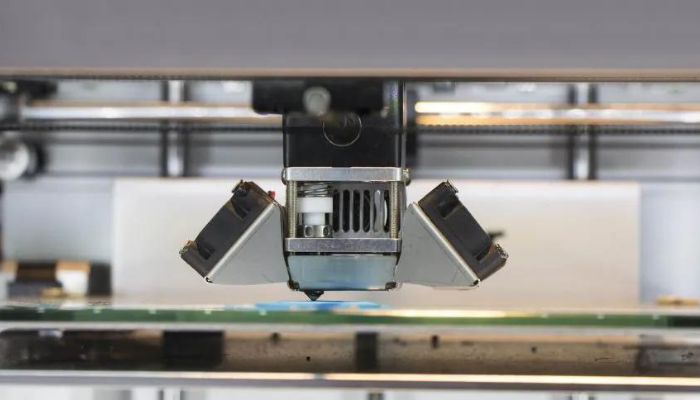
Photo credits: Sculpteo
Bowden vs. Direct Extruder: What to Know
But what exactly is the difference between the two? A Bowden extruder is characterized by its separation of the extruder motor from the hot-end assembly. A PTFE tube (also known as a Bowden tube) connects the components, allowing for reduced moving mass on the carriage and enabling faster movements during printing. This configuration is favored by those aiming for smoother, faster prints. The Bowden setup excels in minimizing vibrations, which is especially advantageous for printing intricate and delicate models. That’s because there is less mass to suddenly move. Since the force of acceleration is equal to mass times speed, it is easier to quickly accelerate and decelerate a lighter object. Also, the lighter the object, the less momentum (kinetic energy) it builds up. However, the increased distance between the extruder motor and the hot-end can result in challenges with flexible filaments, as they tend to buckle inside the tube, affecting extrusion consistency. Part of this problem is also the friction induced by the PTFE tube, or Bowden tube.
More from the desk
Six other notes from the rest of the bench.
 GuidesStartup of the month, Aspect Biosystems: bioprinting human tissuesOur startup of the month is Aspect Biosystems, a Canadian specialist in bioprinting. Aspect Biosystems has developed a unique technology that allows the creation of customized human tissues for different applications such as drug development, regenerative medicine, disease unders
 PrintersWhy Combine 3D Printing and Industrial Automation Applications?3D printing is widely used in the field of automation such as in compression molding. It’s a formative manufacturing method, currently popular in industry, that involves compressing the desired amount of molding material between two heated presses to give it…
 NewsFreeform Injection Molding, the New Platform Dedicated to 3D Printed ToolingAs you may know, several initiatives to promote the use of additive manufacturing in the tooling sector which have been launched. And recently, another more project along these lines has been developed. Industrial 3D printer manufacturer Nexa3D, based in California,…
 NewsBigRep 3D prints a wheel rim with a unique designGerman 3D printer manufacturer, BigRep, recently unveiled a 3D printed prototype of a completely original wheel rim. One of their designers, Marco Mattia Cristofori, wanted to show how large format additive manufacturing could be beneficial for the industry while offering…
 MaterialsHow Recycling MJF & SLS Powder into FDM Filament Promotes Sustainability in Additive ManufacturingNever has there been so much discussion of environmental damage and awareness of our impact on the planet. Whatever the sector, environmental protection is at the heart of many concerns. And the 3D printing market is no exception. With the…
 NewsWalmart Has 3D Printed Groundbreaking Concrete ExpansionAs online shopping interfaces become increasingly popular, new solutions to support this technology must be developed. That’s why Walmart built an extension to their store in Athens, Tennessee that’s dedicated to online delivery and pickup services. However, this building is&hell