News
Bold Design on the Use of Additive Manufacturing in the Creative Field
Today, advances in 3D printing have enabled its implementation in a wide variety of applications and sectors. This is largely due to its flexibility, design freedom, manufacturing speed and cost reduction, among other things. In Europe notably, more and more…
- 3 min read
- News
- Six more stories
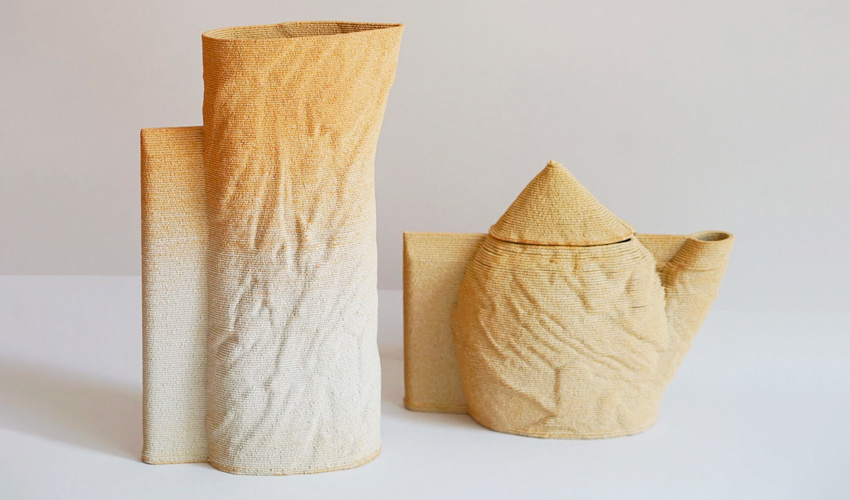
Today, advances in 3D printing have enabled its implementation in a wide variety of applications and sectors. This is largely due to its flexibility, design freedom, manufacturing speed and cost reduction, among other things. In Europe notably, more and more small and medium-sized businesses are adopting this technology as a production method, either by purchasing a machine or through a 3D printing service. One example, in France, is the Bold Design studio, which was set up with the aim of democratizing 3D printing in all creative fields. These range from craftsmanship to interior decoration and other design sectors. To find out more about the company’s work, we spoke to its founders.
3DN: Could you introduce yourself and your connection with 3D printing?
Hello, we are William Boujon and Julien Benayoun, designers and co-founders of Bold Design. We design objects, furniture, spaces and a variety of products for different companies. Our relationship with 3D printing has developed over the years. We are a research laboratory, constantly questioning the possibilities and limits of these technologies. More and more companies are contacting us to create 3D printed parts and collections that bring a more sensitive side to their products. We also organize numerous workshops on 3D printing and design, and give lectures on the subject.
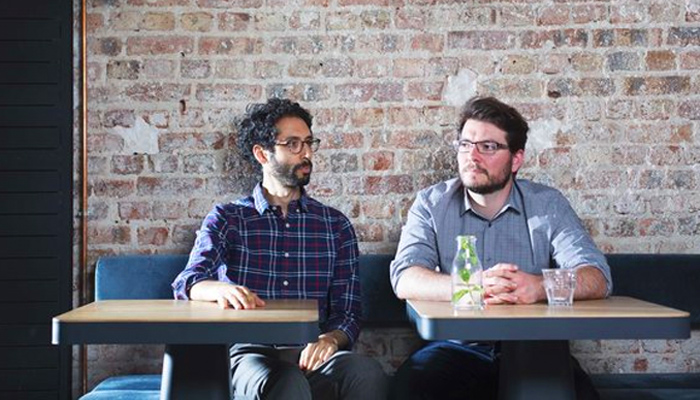
William Boujon and Julien Benayoun of Bold Design (photo credits: Maia Art / Kataba)
3DN: How did the idea to start Bold Design come about?
In 2014, we asked the French company DOOD to print numerous mock-ups for us as part of the design of a small wearable object for a collaboration with the MIT Media Lab. The following year, we designed an FDM 3D printer for DOOD. The idea was to take their printers out of the makers’ world and turn them into a product with an identity that would suit schools, architecture, design agencies and the like. We set up the first prototype in the agency and started asking ourselves whether it was possible to print a certain shape under certain conditions with this tool. We quickly built up what we called our “3D idea book”. One idea and one experiment led to dozens of others. We had never been trained in 3D printing, and most of our knowledge came from hours of hands-on printing.
More from the desk
Six other notes from the rest of the bench.
 NewsInside 3D Tour: Visiting Stratasys Headquarters and Production Site in IsraelSurely you have already heard of our Inside 3D Tour, the series of videos in which we visit major manufacturers or distributors in the 3D industry to learn firsthand how the different additive manufacturing methods are developed, and understand what…
 ApplicationsA 3D-Printed Hydrogel Implant Could Treat High Blood Pressure Without MedicationHigh blood pressure is one of the leading causes of cardiovascular disease worldwide. For many patients, standard drug treatments are not sufficient. Researchers at Penn State University may have found a potential solution in a small bioelectric implant made using…
 NewsFollow All the Formnext 2022 News on 3Dnatives!Formnext, the international trade fair for additive manufacturing, is returning to Frankfurt from November 15th to 18th for its seventh year. This time around promises to be even richer in innovations and novelties! While the 2021 event brought together more…
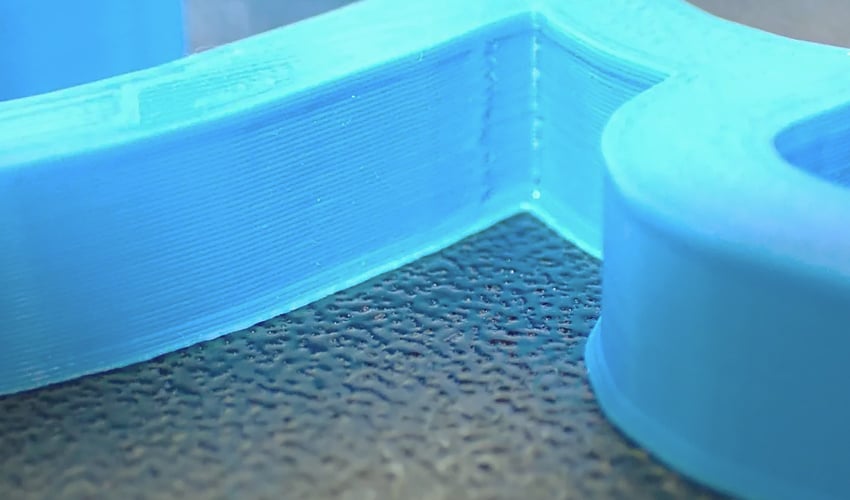 NewsHow to Avoid the “Elephant Foot” Effect in FDM 3D PrintingAdditive manufacturing offers a significant advantage in design freedom. However, this advantage can be jeopardized when the 3D printer lacks proper configuration or the design and modeling phase is not optimized. Consequently, a range of 3D printing issues may arise,…
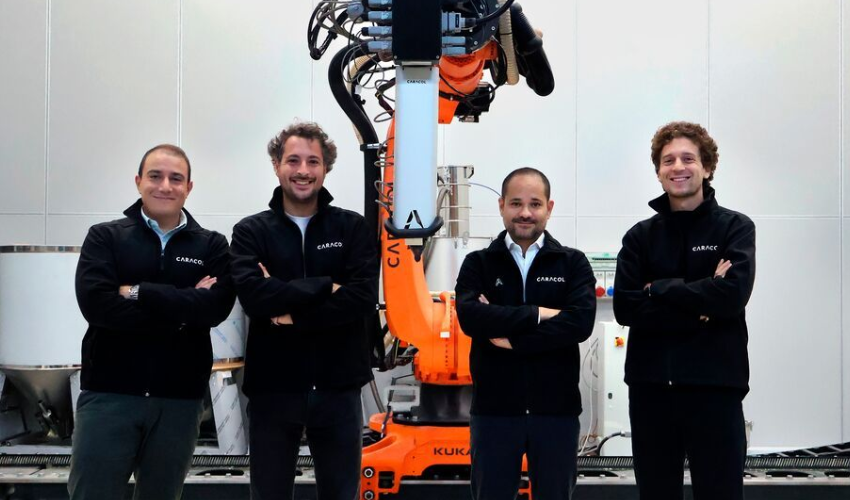 News$40M Boost Fuels Caracol’s Global Additive Manufacturing PushCaracol, an Italian deep-tech company that has pioneered large-scale robotic additive manufacturing, recently raised $40 million USD in a Series B funding round to help accelerate its global expansion. This investment will support the company’s continued push into new globa
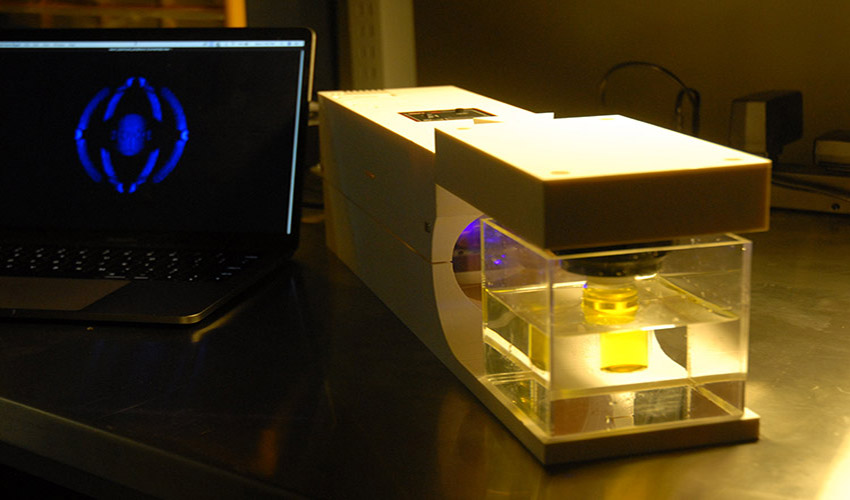 PrintersNew 3D Printing Process Solidifies Objects with Rays of LightResearchers at the University of California, Berkeley, developed a new 3D printer that uses a special light-sensitive resin that solidifies into objects in a matter of minutes. The researchers nicknamed their machine the “Replicator” after the Star Trek device that…