Applications
BMW M Visionary Materials Seat Wins Sustainability Prize Thanks to 3D Printing
The automotive industry is steadily moving towards greater sustainability and 3D printing is playing a crucial role in this transition. This is because additive manufacturing enables companies to produce more environmentally friendly, lighter and more efficient components. This i
- 3 min read
- Applications
- Six more stories
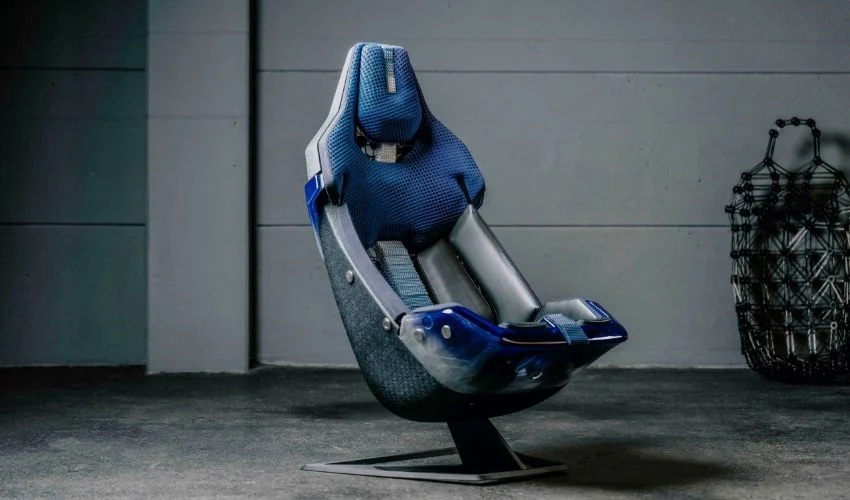
The automotive industry is steadily moving towards greater sustainability and 3D printing is playing a crucial role in this transition. This is because additive manufacturing enables companies to produce more environmentally friendly, lighter and more efficient components. This in turn reduces the ecological footprint and paves the way for a greener future.
An impressive example of this is the BMW Group’s BMW M Visionary Materials Seat, which has now been awarded the Altair Enlighten Award in the “Sustainable Processes” category at the Center for Automotive Research Seminar in Michigan. This annual award recognizes innovative lightweight and sustainable solutions in the automotive industry that minimize carbon, water and energy consumption and promote the recycling of materials. Without the use of additive manufacturing, the environmentally friendly production of the seat would not have been possible, as BMW was able to dispense with support structures and chemical post-processing.
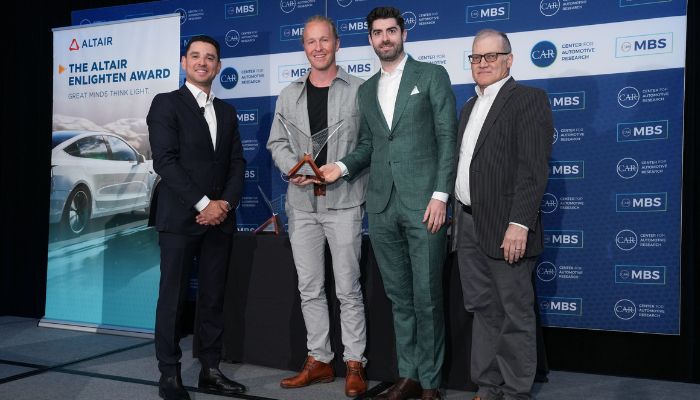
The Altair Enlighten Award honored the BMW Group’s progress in innovation (photo credits: BMW Group)
The Visionary Materials seat was produced in collaboration with the BMW design team for color and material concepts as well as various partners such as Management Consulting GmbH, Bcomp Ltd, Gradel Light Weight Sàrl and Lasso Ingenieurgesellschaft. Falco Hollmann, Innovation Manager for Lightweight Design and Sustainability at BMW M GmbH, accepted the award and explained: “We are showing today what will be possible tomorrow with existing technologies and materials in order to take our efforts to reduce emissions and conserve resources to the next level. This is about more than just substituting materials; it is above all about designing for circularity.”
More from the desk
Six other notes from the rest of the bench.
 NewsThe global additive manufacturing market accounts for $ 9.3 billion in 2018While the company Materialise gave us some predictions for 2019 trends in additive manufacturing, the US firm SmarTech Publishing brings us the results for the past year. They say the additive manufacturing market generated $ 9.3 billion in 2018, an 18% increase…
 NewsICON Reveal Design for Quirky 3D Printed Texas Campground Hotel on 62 Acre SiteArt and design needs people who can push boundaries and have an eye for style and a nose for the latest up-and-coming technologies. More recently, everyone from fashion designers to artists have employed 3D printing to make unique pieces with…
 NewsECO 3D: The latest economic news in 3D printing for AugustProgress towards the future of 3D printing continues to grow, whether it be in the introduction of new, promising technologies, or within the production chain of a company who has implemented additive manufacturing to propel their production even further. In…
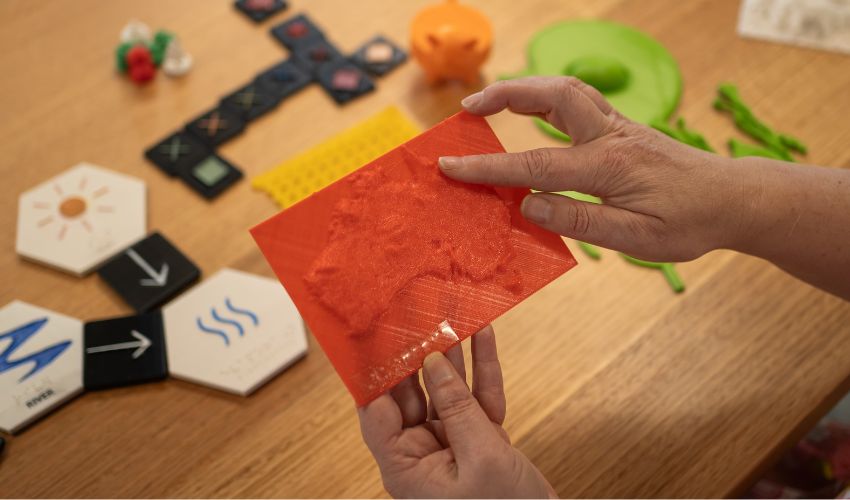 NewsMonash University Releases First Guide on 3D Printing for Blind and Low-Vision PeopleProsthetics, hearing aids, and wheelchairs — these are just a few of the numerous tools that can be customized and improved thanks to 3D printing technology, benefiting people with disabilities. 3D printing can serve blind or low vision people too,…
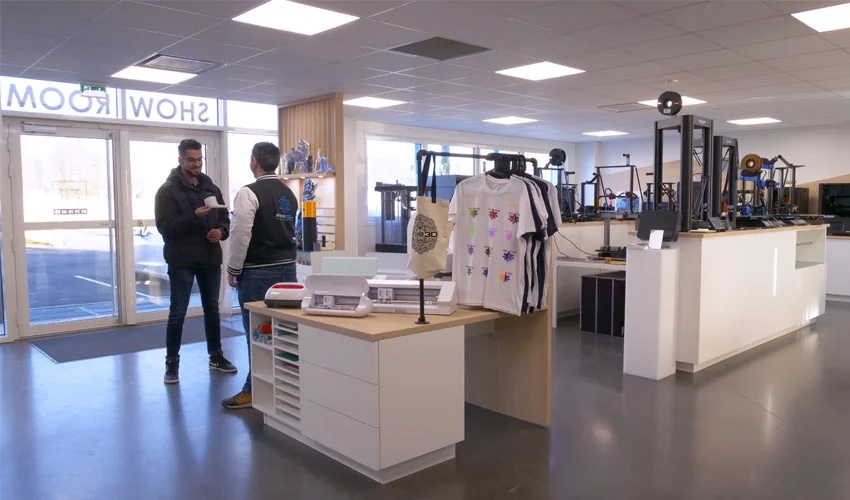 NewsAtome3D Is Opening a Franchise Network to Promote the Development of 3D Printing in FranceThe French distributor Atome3D is accelerating its development in France and wishes to reinforce its presence on the territory thanks to a new franchise concept. The company’s objective is to open a number of Atome3D showrooms, i.e. stores that will…
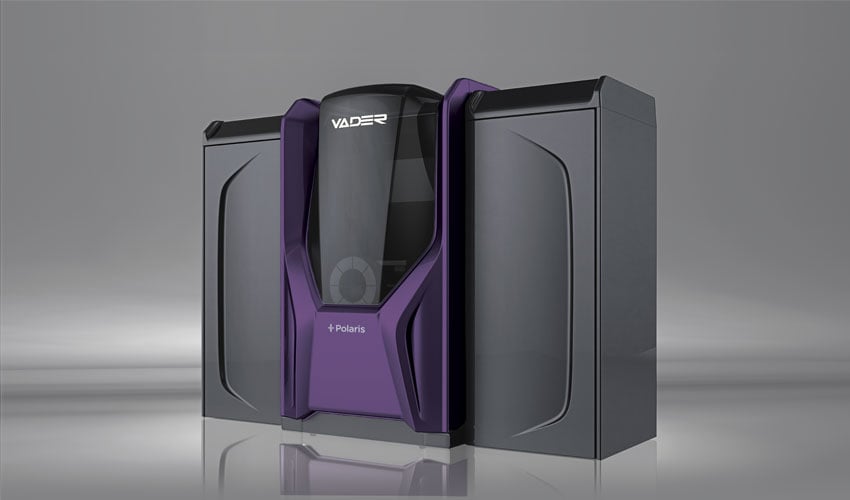 Guides#3DStartup: Vader Systems and 3D Liquid Metal PrintingIn 2013, Vader Systems presented us with their prototype for their first 3D printer, the Mark 1, which was based on Liquid Metal Jet Printing technology. Created by Scott Vader and his son Zach, the startup wanted to make metal…