News
BMW Supports Olympic Athletes With 3D Printing
Since the early 1990s, BMW has been using 3D printing technology to design its vehicles more efficiently, faster and lighter. Starting from the idea of a car or motorcycle to prototypes and finished spare parts – AM offers a wide…
- 3 min read
- News
- Six more stories
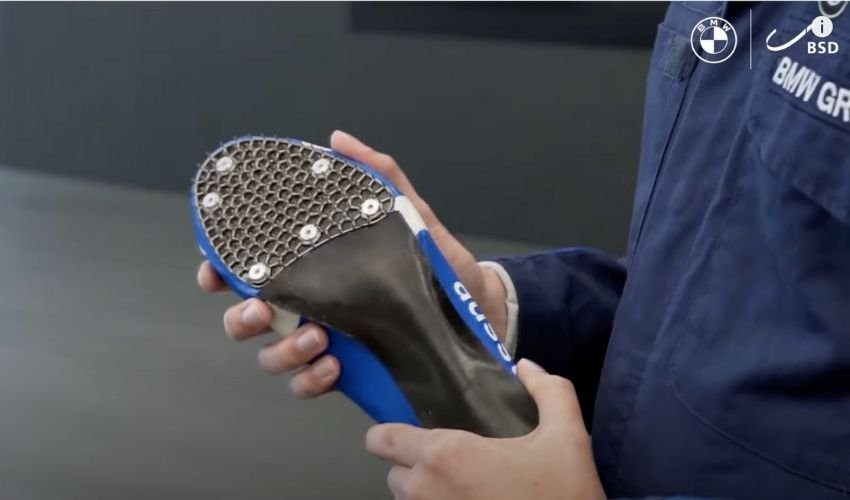
Since the early 1990s, BMW has been using 3D printing technology to design its vehicles more efficiently, faster and lighter. Starting from the idea of a car or motorcycle to prototypes and finished spare parts – AM offers a wide range of uses, especially in automotive. For this reason, BMW launched 3D printing at the BMW Additive Manufacturing Campus in 2019. However, it is also clear additive manufacturing has other applications for the company beyond the cars for which it is known. The German bobsleigh, skeleton and luge teams are currently benefiting from BMW’s use of 3D printers to specifically produce sports equipment for their winter athletes. And the equipment is already being used at the current Winter Olympics in the Beijing.
3D printing has been a part of BMW’s production process for a number of years now. And now, the German athletes of the Bobsleigh and Sledding Association (BSD) have now also been able to benefit from the innovative ideas of the company. Thanks to its technological expertise, the athletes were able to compete with new spikes. The luge teams, on the other hand, were delighted with improved sports equipment. But there is another reason for both the professional athletes and BMW to be happy: some of the athletes who benefited from BMW’s equipment have already been able to collect a number of medals at the Winter Olympics.
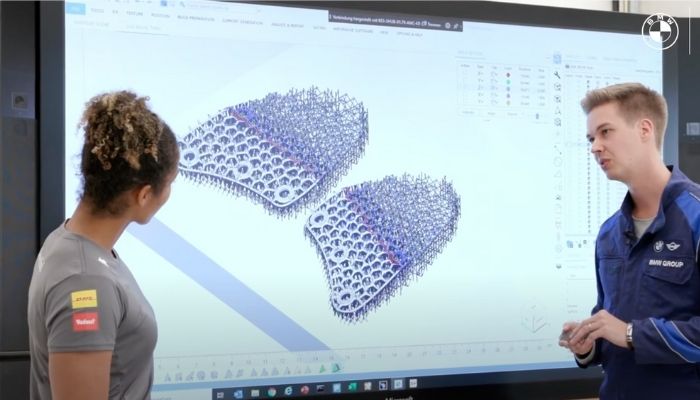
BMW incorporates the individual wishes of the athletes (photo credits: BMW Germany)
BMW Uses 3D printing to Improve Equipment
Together with the BSD team, BMW set itself the goal of scrutinizing every last detail in terms of the performance of the sports equipment. It was clear to both sides that any idea, no matter how innovative, could go a long way toward winning a gold medal at the Winter Olympics. If you look at skeleton, in which athletes race belly-first through an ice canal at speeds of up to 145 km/h, it is clear that the focus here is not only on lightness and speed, but also increasingly on the safety of the athletes. In this particular case, BMW presented the solution from the 3D printer back in 2010: the trestle – the connecting spar between the recumbent tub and the runners of the toboggan. Through additive manufacturing, the vehicle manufacturer managed to reduce the material used to such an extent that the total weight was only half. However, this did not affect other important properties such as the stability or functionality of the toboggan.
More from the desk
Six other notes from the rest of the bench.
 ApplicationsAML3D Expands its Presence in 3D Printing in Aeronautics Through Boeing PartnershipAustralian metal 3D printing specialist AML3D has announced a renewed partnership with aircraft manufacturer Boeing. Earlier this year, Boeing commissioned AML3D to 3D print prototype aluminum aircraft parts. The parts must match AS9100D quality assurance requirements for “
 NewsAdvances in additive manufacturing in 2018Have you kept updated with additive manufacturing in 2018? Have you not followed the 3D printing news in recent months and you want an update? Find the highlights in our recap events, new products, strategic announcements and innovative applications that have…
 NewsThe Longest 3D-Printed Bridge for Cyclists Has Been Inaugurated in the NetherlandsAlas! After several months of work, the Dutch city of Nijmegen is now home to one of the longest 3D-printed bridges for cyclists. Inaugurated on September 8, the bridge measures 29 meters long and was manufactured in the 3D printing…
 MaterialsPutting Materials and AM Processes in the Spotlight at RAPID + TCTOne of the core aspects that makes RAPID + TCT more than just a trade show is its conference. This year, there will be more than 140 technical presentations divided into eight tracks, only accessible for attendees with a conference…
 NewsNanoscribe Has Developed New Microfabrication Methods with the XLF Print SetWhile many developments in the additive manufacturing sector are dedicated to large-format printing, microfabrication, i.e. the process of creating micro-sized structures and also known as microscale 3D printing, is also at the heart of several research efforts. The German compan
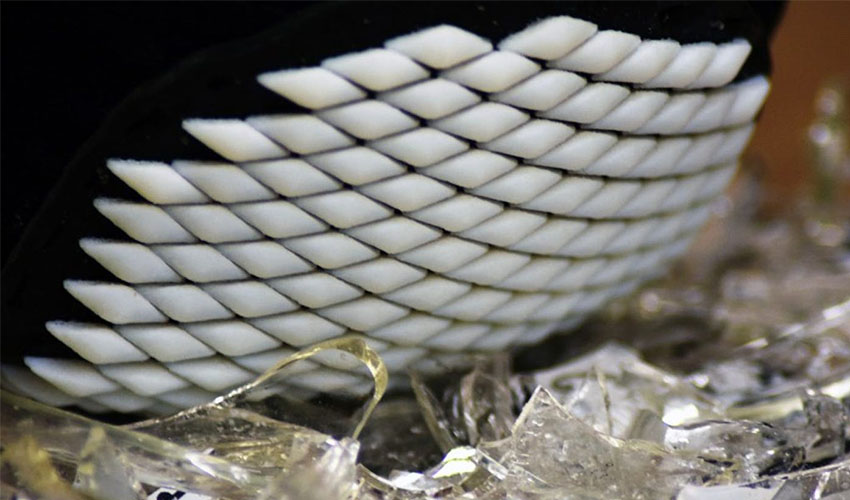 NewsResearchers create bio-inspired flexible armor using 3D printingNature has a way of designing structures that is often optimal. This is the reason why a number of research teams around the world are developing bio-inspired designs. At Virginia Polytechnic Institute and State University, research led by Ling Li…