News
Blackstone Resources 3D-Prints More Efficient Battery Cells
Founded in 1995, Swiss company Blackstone Resources specializes in battery production, using additive manufacturing to design lithium-ion battery cells with a 20% higher density. Thanks to its patented Thick Layer Technology process, the company intends to develop batteries that
- 3 min read
- News
- Six more stories
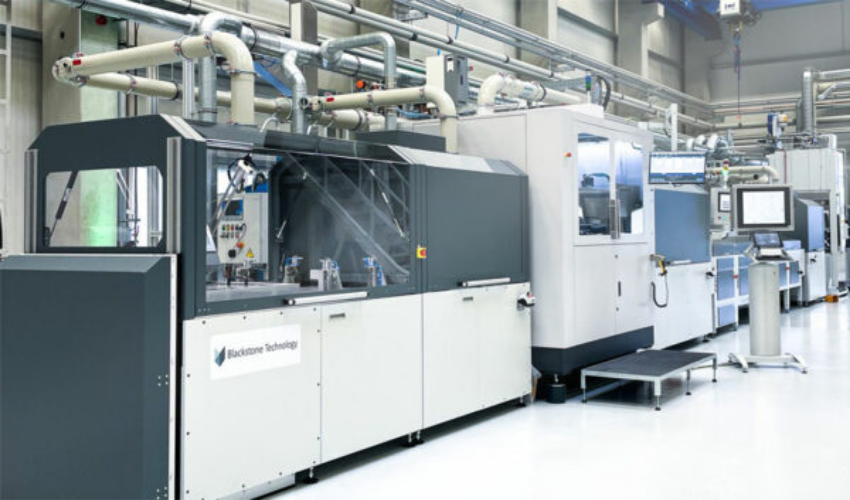
Founded in 1995, Swiss company Blackstone Resources specializes in battery production, using additive manufacturing to design lithium-ion battery cells with a 20% higher density. Thanks to its patented Thick Layer Technology process, the company intends to develop batteries that are more environmentally friendly, durable and powerful. It has announced that it is ready for mass production which could have a significant impact on the current market.
The use of additive manufacturing in the production of solid batteries can be of particular interest in increasing energy density, reducing the size of the battery in question and its weight, while providing better performance. In fact, this is the challenge that Sakuu launched in May: the company wants to offer owners of an electric car a platform to 3D print the battery of the vehicle in question. While the idea sounds futuristic, the advances are indeed real. The opening of a production line for small series of 3D printed batteries by Blackstone Resources in Germany confirms this trend.
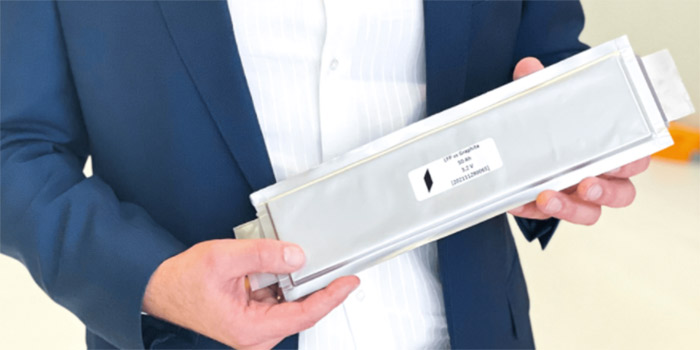
Blackstone Resources uses 3D printing to create more efficient batteries. (Photo Credit : Blackstone Resources)
Blackstone Resources Lithium Iron Phosphate Battery Cells
Blackstone Resources relies on a 3D printing process to design LFP (Lithium Iron Phosphate) battery cells and uses a cathode material developed by IBU-Tec. This manufacturing method would allow it to achieve an output of 220 Wh / kg, a rather impressive result today when you consider that the most advanced solutions reach figures in the neighborhood of 166 Wh / kg. Blackstone Resources states in its press release: “We are currently starting with LFP and NMC cells, but the technology will be applicable to all cell chemistries. In the future, we also want to print solid state batteries – with solid state technology, the energy density can be increased by 70%, which is remarkable. ”
More from the desk
Six other notes from the rest of the bench.
 NewsNew 3D Printed Gripper Can Work Without ElectronicsOne area where it is expected to increasingly see the presence of 3D printing is in soft robotics. Indeed, the use of additive manufacturing allows for the design of complex and interesting robotics for a lower cost, making it attractive in…
 NewsCan Chitosan Improve the Sustainability of 3D Printing Plastics?Why not use natural resources to design new 3D printing materials? That’s the thinking behind a team of researchers from Malaysia, Singapore, Thailand and India. They sought to understand how they could use chitosan, a natural polymer found in certain…
 ApplicationsThe New Bentley Batur Features 18K Gold 3D Printed PartsAlmost every day, new car parts are produced using additive manufacturing for various vehicles, Whether for cars, trucks, motorcycles or even NASCAR, numerous parts have already been 3D printed. Nevertheless, it is always exciting to see what new possibilities this opens…
 NewsGE’s education program invests AM into educationAs part of GE’s Additive Education Program, GE Additive will offer 3D printers to more than 400 schools, reaching more than 180,000 students across the world. An initiative that will help streamline the use this technology in education. General Electric…
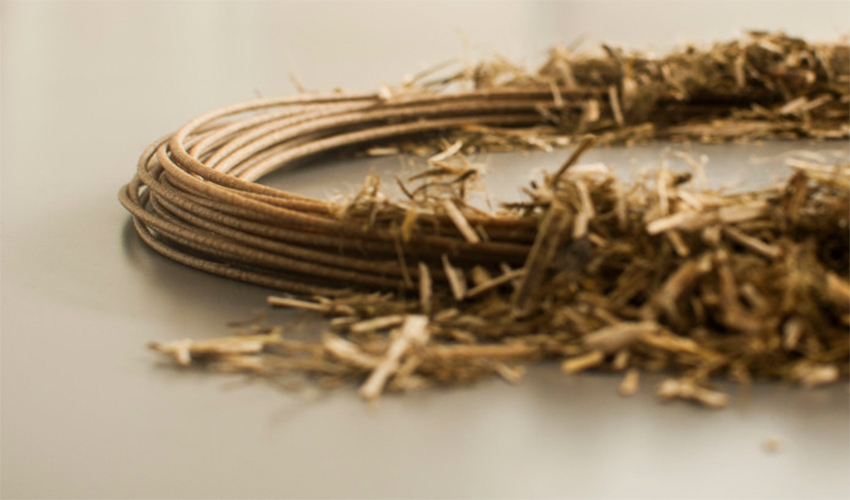 MaterialsHemp 3D printer filament: A sustainable alternativeCannabis has over recent time been a growing topic of debate. As it is discussed in various ways for its medical uses, environmental benefits and sustainable abilities, it is only natural that Hemp 3D printer filament would also come up…
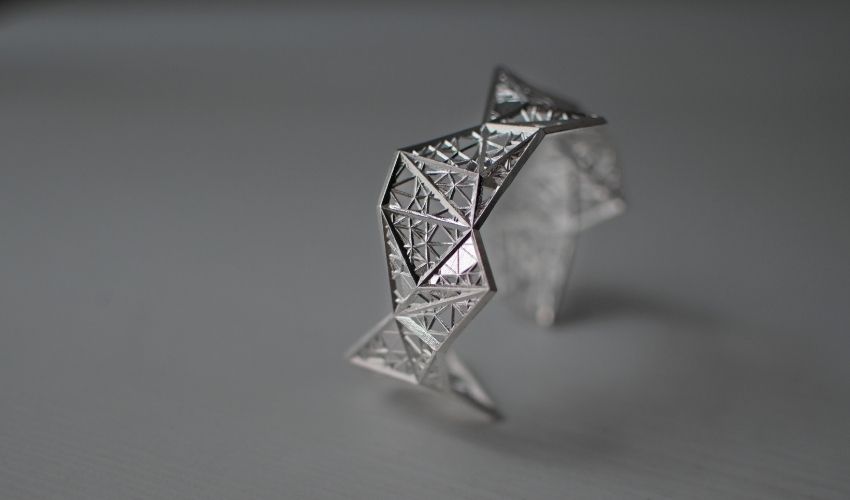 NewsInvaerso on Rethinking Jewelry With 3D PrintingIn the jewelry industry, additive manufacturing has already proven itself time and again. For example, take the case of the Indian 3D printing service Imaginarium who created a ring with 7,801 diamonds using 3D printing. A record at the time.…