News
Why Choose Binder Jetting? Experts Give Their Advice!
Binder Jetting is one of the various additive manufacturing processes currently available on the market. It works in a similar way to other 3D printing methods, but it is based on the use of a liquid binder in the form…
- 3 min read
- News
- Six more stories
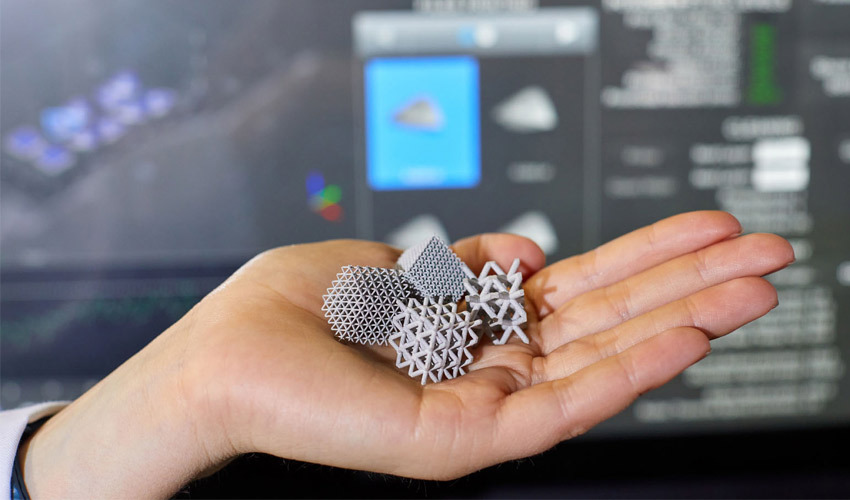
Binder Jetting is one of the various additive manufacturing processes currently available on the market. It works in a similar way to other 3D printing methods, but it is based on the use of a liquid binder in the form of micro droplets and powder, whether metal, sand, ceramic or even composites. Layer by layer, the desired part is manufactured and, depending on the binder and the powder used, post-processing steps, such as sintering, could be necessary. It is a 3D printing process renowned for its flexibility in terms of materials and design, and for its ability to produce large parts. This makes it a key technology for many manufacturers. But what should be considered when a company wants to integrate binder jetting? What are the strengths and challenges of the technology? Our experts have answered a few questions to shed some light on the topic!
Our first expert is Andreas Müller, Product Manager at ExOne. His main focus is on developing and improving the capabilities of sand 3D printing machines. ExOne is one of the leading manufacturers of binder jetting 3D printers, especially systems using sand. Our second expert is Lefteris Havouzis, Managing Director of Lino3D. The Greek company currently supports companies and manufacturers in their additive manufacturing projects thanks to its expertise in several processes, including metal binder jetting. Finally, our last expert is Vincent Poirier, founder and president of Novadditive, the first custom production center for ceramics in multi-process 3D printing.



How Does Binder Jetting Work?
Like any additive manufacturing process, binder jetting is used to produce a part by superimposing layers of material. In this case, a bed of powder with ideally grains that are ideally spherical and with a diameter of a micrometer. In order for the powder particles to stick to each other, a binder is sprayed onto the plate at the desired locations using a print head. The process is repeated layer by layer until the final object is obtained. Andreas Müller of ExOne adds, “Similar to printing on sheets of paper, the process is repeated layer by layer, using a map from a digital design file, until the object is complete. After printing, an entire job box filled with parts can print in about a half a day, the parts can be removed from the print area. Depending on the material and binder used, additional curing and post-processing steps may be necessary.”
More from the desk
Six other notes from the rest of the bench.
 NewsSolvay, L’Oréal and Ultimaker Join Forces For 3D Printing Design CompetitionFor Solvay’s 3rd Annual Additive Manufacturing Cup, the company is joining forces with L’Oréal, the world’s beauty leader, and Ultimaker, a global leader in professional 3D printing, to challenge students, engineers, and creators from around the world to create innovative…
 NewsFiberForce launches the first filaments based on Pantone’s colour standardsFiberForce have announced the launch of the world’s first Pantone Matching System (PMS) based 3D printing filament line. They have partnered with Pantone, provider of professional colour standards for the design industry. In fact, Pantone has provided a universal language…
 NewsWhat Types of 3D Printing Dyeing Solutions Are There?Beyond its purely aesthetic function, color plays an important role in areas such as consumer goods, interior design, and even medicine. A colored 3D component can be produced in various ways: either directly with a multicolor 3D printer, through hand…
 Materials3D Printing makes Stainless Steel 3X Stronger!When you think of 3D printing, naturally you think of plastics. However, there is a growing trend towards using metals as a 3D printing material. The visibility of 3D printing metal has grown further recently as HP have announced plans…
 SoftwareRutgers Team Develops Dual Digital Twin Approach to Strengthen Cybersecurity in AMFor the fifth year in a row, IBM’s X-Force Threat Intelligence Index 2026 found that manufacturing remains the most targeted industry for cyberattacks. The sector accounted for 27.7% of incidents, only a slight increase from 26% last year. And the…
 ApplicationsFluicell Develops Advanced BioPrinted Products for DiabetesThe field of medical bioprinting is rapidly advancing. Particularly, quite a bit of progress had been made in the medicinal application of 3D printing technologies for people living with diabetes. Companies have created 3D-printed pancreas models for childhood diabetes research,&