News
Bentax to Integrate 3D Printed Parts in Coffee Machines
Finding the perfect coffee for your home can sometimes be difficult, but finding the right coffee machine can be even more difficult especially if your favorite breaks. Luckily, Bentax, a Danish company offering a number of solutions to coffee lovers,…
- 3 min read
- News
- Six more stories
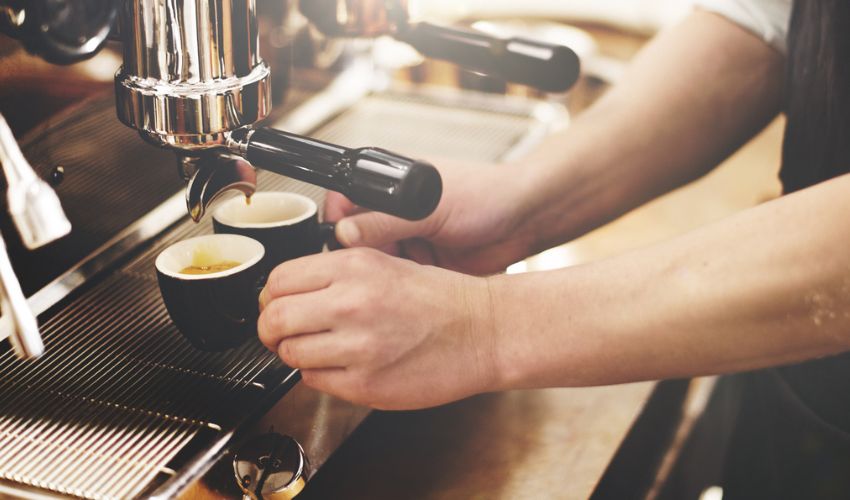
Finding the perfect coffee for your home can sometimes be difficult, but finding the right coffee machine can be even more difficult especially if your favorite breaks. Luckily, Bentax, a Danish company offering a number of solutions to coffee lovers, however hopes to change this. As individual parts of beloved coffee machines can break, the coffee giant has teamed up with the Danish Technological Institute to see how 3D printing can be used to repair broken parts, especially worn-out milk pumps.
Thanks to the use of additively manufactured metal spare parts, Bentax is hoping to benefit from a more cost-effective production and manufacturing method. In fact, in a MADE materials demonstration project supported by the Danish Technological Institute, they see it as an opportunity to also reduce waste thanks to additive manufacturing, as it allows them to reuse expensive and already heavily worn breast pumps, for example. Instead of throwing these parts away – as they were used to doing in the past – the question at the beginning of the research was how to recycle these old discarded parts and give them a new life. Anders Myrup, technical project manager at Bentax, explains, “Initially, the aim is to pump some life into the broken pumps so that we can recycle them. In the long term, we would like to be able to make the spare parts rather than buying new pumps from the supplier, and we would also like to achieve a longer durability and a lower price compared to a new pump.”
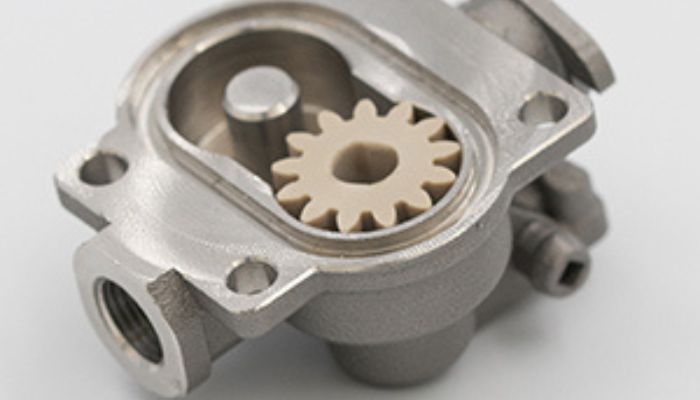
Bentax is researching 3D printing of the gears and housing (photo credits: Danish Institute of Technology).
Coffee Machines Get New Parts With 3D Printing
The manufacture of parts or even entire coffee machines is probably considered a traditional craft, but what happens when this meets modern 3D printing technologies? In the course of the research project, Bentax looked at those milk pumps that statistically suffer from wear and tear, because the small gears that are inside the housing of the latter cut into it over time, leaving traces prevent the pumps from delivering the desired result. And this is where additive manufacturing comes in: after the entire milk pump was scanned and then measured at the Danish Technological Institute, a completely identical digital copy was thus made and 3D printed in stainless steel. After its post-processing, testing began, with the gears here being manufactured using CNC milling and PEEK. To increase durability, Bentax explained that the individual components of the parts had to be surface treated with chromium nitride.
More from the desk
Six other notes from the rest of the bench.
 GuidesInside GLB’s Mission to Make Industrial Metal 3D Printing AccessibleWith a presence in more than 60 countries and over 80 agents worldwide, GLB has quickly become one of the fastest-growing names in metal additive manufacturing. Based in Jiangsu, China, the company combines independently developed selective laser melting (SLM) systems…
 NewsVivobarefoot 3D Prints Customized, Sustainable Shoes at the Click of a ButtonDid you know that 25 billion pairs of shoes are produced every year, with around a quarter of which only last a year and then end up in landfill? Indeed, it is certainly no secret that the fashion industry is…
 GuidesAtome3D on desktop 3D printing’s key role to accelerate productionThe company Atome3D is one of the main players in additive manufacturing in France. Today, it distributes a wide range of desktop 3D printing solutions, from printers, materials, to 3D scanners, and supports professionals and industrialists in the integration of…
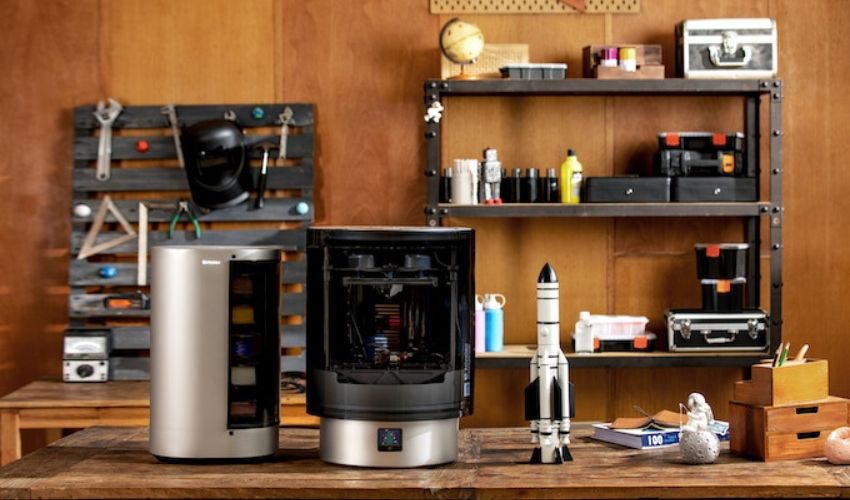 PrintersThe KOKONI SOTA 3D Printer Uses AI and Prints Upside DownThough additive manufacturing is rapidly industrializing, it is important to not forget that so many of the innovations we have today were a direct result of the RepRap movement that started in 2005 (and continues to this day). Furthermore, that…
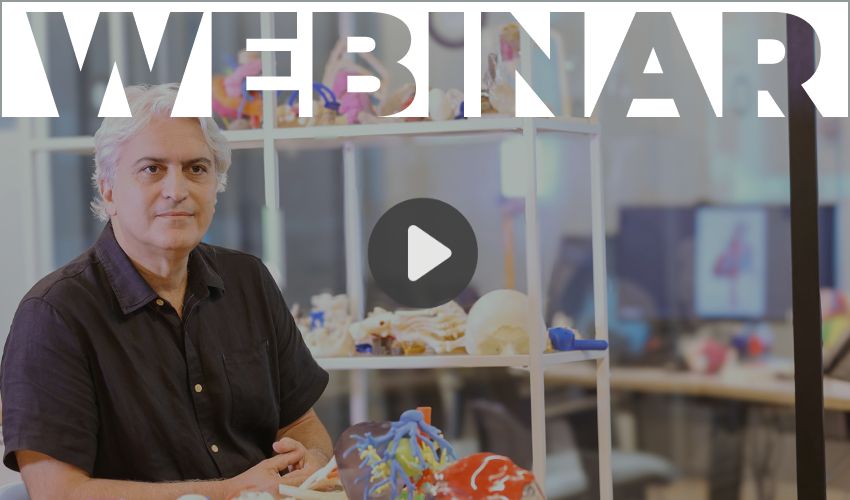 ApplicationsWEBINAR: Making Your First Steps Into 3D Printing at Point-of-CareOne of the sectors where we have seen the most significant growth in use of additive manufacturing is undoubtedly medical. Indeed, it has gotten so popular that we have even seen a rise in the use of 3D printing in…
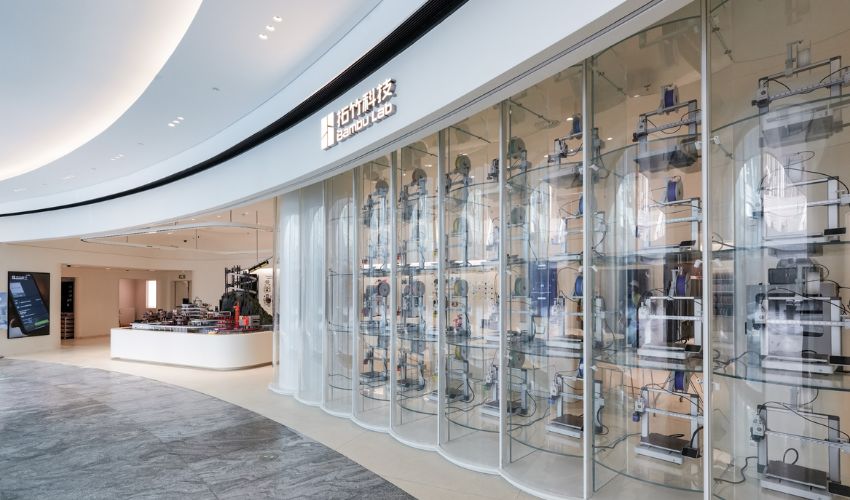 NewsBambu Lab Opens Its First Retail Store in ChinaHow often do you see a 3D printer sitting on a store shelf? Chances are, you haven’t. Most consumer 3D printing sales still happen online. Bambu Lab is looking to change that with the launch of what it calls the…