Materials
ARCHIBIOFOAM: The 3.5 Million Euro Project for 4D Printing Buildings That Adapt to the Environment
The construction industry is one of the most innovative sectors, where new technologies and materials are continually being tested and fine-tuned to move toward more sustainable construction and solve long-standing problems. Additive manufacturing is one of the technologies being
- 3 min read
- Materials
- Six more stories
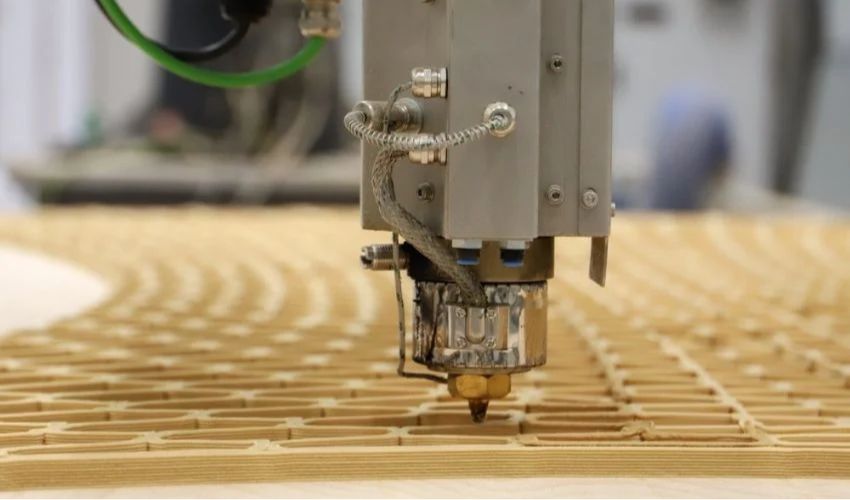
The construction industry is one of the most innovative sectors, where new technologies and materials are continually being tested and fine-tuned to move toward more sustainable construction and solve long-standing problems. Additive manufacturing is one of the technologies being studied in the field because it allows for building design to be reimagined with materials that are not accessible with traditional technologies. We have seen a number of ongoing projects in Italy in this field such as the European ConstructAdd project, which has the involvement of the Milan Polytechnic, and the innovations brought about through WASP and D-shape technology around the world.
In this vein, the European project ARCHIBIOFOAM, which also has the participation of the University of Milan, has been awarded a 3.5 million euro grant from the European Innovation Council (EIC) to develop an expanded, 3D-printed biomaterial capable of changing shape and reacting according to its surroundings. Let’s see what it’s all about.
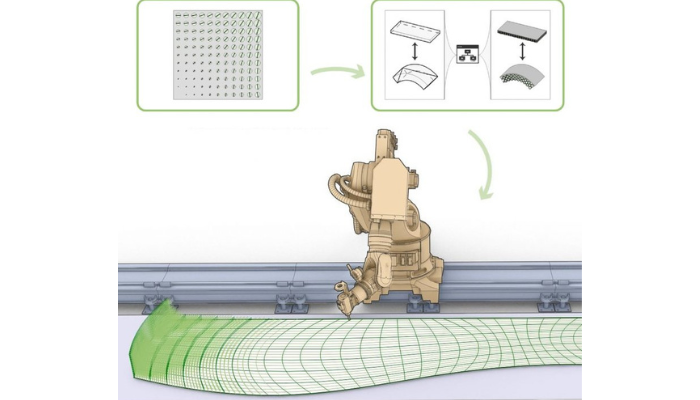
The ARCHIBIOFOAM Project: The Challenge of More Sustainable Construction
The ARCHIBIOFOAM project was born out of a specific need: to reduce the environmental impact of the construction sector, now responsible for 40 percent of annual global emissions. How? Through 4D printing and the use of a special biofoam (or bio-foam), which is organic and biodegradable. The project partners are the Center for Complexity and Biosystems at the University of Milan, Finland’s Aalto University, its spin-off company Woamy, and the University of Stuttgart. Each brings its expertise and specialization to integrate bio-based materials science, computational design of metamaterials and robotic additive manufacturing.
More from the desk
Six other notes from the rest of the bench.
 PrintersStratasys J55: A PolyJet desktop 3D printer that offers thousands of coloursThe manufacturer Stratasys has just launched its new PolyJet machine: the J55 is a compact solution, suitable for all designers who want to bring their designs to life. The printer is smaller but retains its multi-material and multi-colour capabilities: it…
 NewsTop 5 videos: 3D printing in construction, and moreThis week we found the top 5 videos about 3D printing and the way additive manufacturing is changing production. The technology has infiltrated many sectors, from medical to automotive – check our selection of the week to keep up with the innovations! If you enjoy these, you&hell
 NewsWEBINAR: 2023’s Must-Know Tech Trends in Dental 3D Printing and How to Implement Them in LabsAs the world of digital dentistry continues to evolve and accelerate, it is essential to keep up with the latest trends and advancements and take advantage of them. And considering how fast the sector is growing, with the market already…
 NewsECO 3D: 3D printing for mass production3D printing has come a long way since its humble beginnings; with large corporations and companies slowly turning to 3D printing to help propel them into the future. Whether this be through the financing of promising new technologies, a simple…
 ApplicationsSpecialized’s New 3D Saddle Boosts Pro Cycling ComfortSpecialized has introduced a new saddle that allows elite cyclists to stop choosing between comfort and performance. The S-Works Power EVO with Mirror is an upgraded version of the brand’s well-known Power series. Designed for riders who shift their weight…
 News3D Printed Beets: A New Tool for Plant PhenotypingTechnology in the agricultural industry is continually advancing. In recent years, the adoption of tools such as drones, agrarian robots, scanners, precision planters, and artificial intelligence has significantly increased. These innovations have primarily enhanced crop yields a