Applications
Application of the Month: LEAP 71 Successfully Tests Liquid-Propellant Engine Made With 3D Printing and AI
The fact that 3D printing can contribute to groundbreaking innovations and progress in the aerospace industry is underpinned by numerous examples from recent years. NASA and ESA are constantly experimenting with exploiting the potential of 3D printing in space and…
- 3 min read
- Applications
- Six more stories
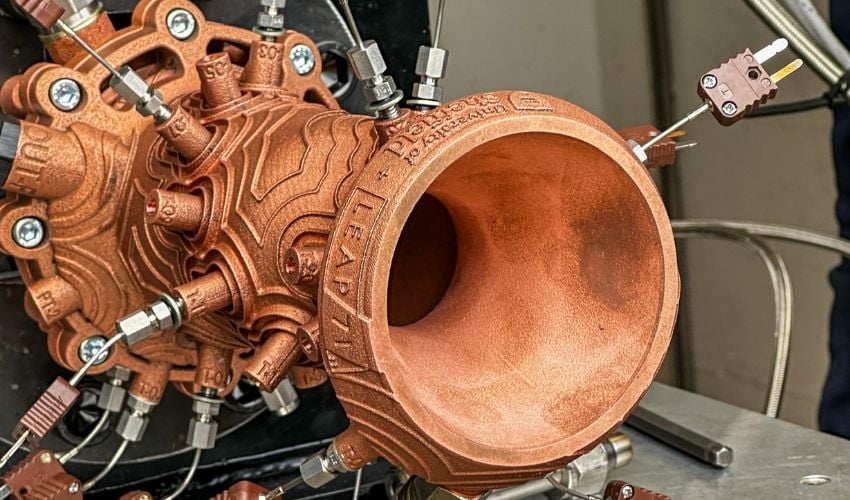
The fact that 3D printing can contribute to groundbreaking innovations and progress in the aerospace industry is underpinned by numerous examples from recent years. NASA and ESA are constantly experimenting with exploiting the potential of 3D printing in space and numerous 3D printing companies have specialized in high-performance applications. Now a new player, artificial intelligence, is entering the stage and is already being touted as the revolutionary of the future. The example of LEAP 71 shows how the combination of AI and 3D printing can lead to advanced approaches and results. The company has succeeded in developing and testing a 3D-printed liquid propellant rocket engine with its AI-based software tool Noyron.
We have previously told you about LEAP 71. The Dubai-based company aims to drive technological progress with the help of computational engineering. To manufacture its products, LEAP 71 relies on highly developed software and additive manufacturing, which was also used in the production of the rocket engine.
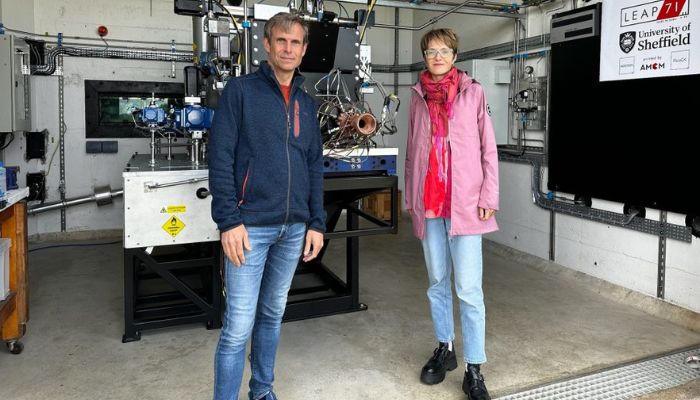
LEAP71 was founded by aerospace engineer Josefine Lissner and entrepreneur Lin Kayser
The aim of the project was to demonstrate the capabilities of the company’s proprietary Noyron software and to test the resulting large computational engineering model of the drive. Noyron uses AI algorithms to automatically implement logical and physical processes in the manufacturing process. Using this software, it was possible to develop the model for the TKL-5 rocket engine – completely digitally and computer-controlled without human intervention.
More from the desk
Six other notes from the rest of the bench.
 NewsThe Biggest 3D Printers at Formnext 2025The halls of Formnext are filled with exciting machines and eye-catching 3D-printed objects. Yet among the many innovations on display, it’s the giant 3D printers that inevitably command attention. These large-format additive manufacturing systems offer massive build volumes, sup
 ApplicationsToyota Europe Pioneers Record-Breaking 3D Printed Die Casting Tool3D printing in the automotive industry has long been celebrated for its role in prototyping. Designers are able to iterate quickly, engineers can test fit and form, and the industry can experiment without cutting steel. However, with Toyota Europe’s latest…
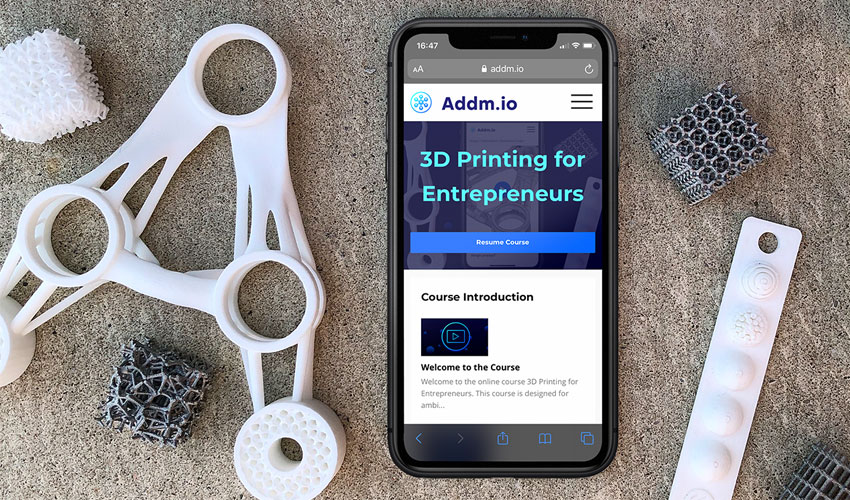 GuidesAddmio, an online platform to learn 3D printingWhile 3D printing is gradually taking hold in our businesses and industries, it is still a technology that is difficult to grasp. Specific skills are required to enter this market, whether in terms of materials, equipment or design. A number…
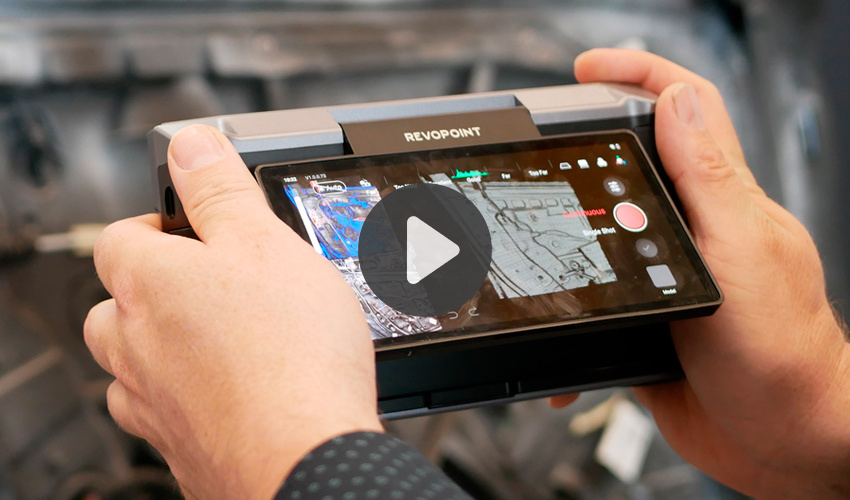 GuidesRevopoint MIRACO, the 3D Scanner for Additive Manufacturing and InspectionRevopoint is a company that specializes in making innovative, professional 3D scanners equipped for high precision. Particularly user-friendly and user-inspired, Revopoint 3D scanners meet numerous needs while maintaining competitive prices. This has led the company to be an indu
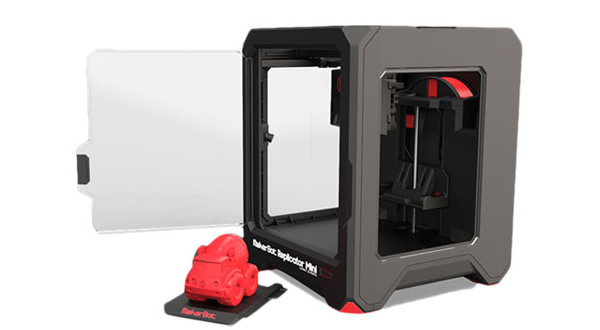 Printers3Dnatives Lab: Our Test of the MakerBot Replicator MiniAfter an announcement made at CES in 2013 by the CEO of MakerBot for their new generation of personal 3D printers, we at 3Dnatives labs have decided to tackle the Replicator Mini. This 3D printer is an entry-level model from this American manufacturer. Before…
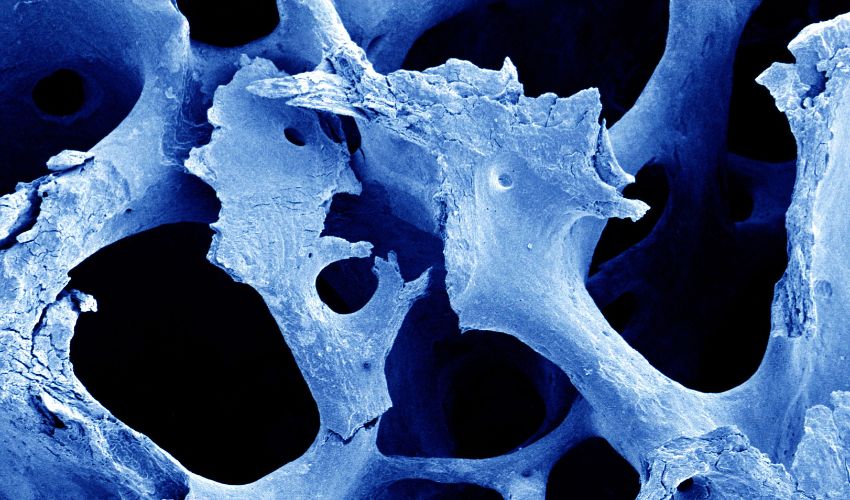 ApplicationsSmart Scaffolds for Strong Bones: The Potential of 3D/4D Bio-Piezoelectric PrintingIn recent years, the marriage of bioengineering and 3D printing has brought remarkable advancements to the field of medicine. One area where these technologies hold immense potential is bone regeneration. Human bones possess a unique property known as piezoelectricity, enabling&h