Applications
Application of the Month: 3D Printed Pen for Diagnosing Parkinson’s Disease
Parkinson’s disease (PD) is a neurodegenerative disorder that affects an estimated 10 million people worldwide, and it is the second most common neurodegenerative disease after Alzheimer’s. Still, for a condition that is so widespread, it is difficult to diagnose. There&hel
- 3 min read
- Applications
- Six more stories
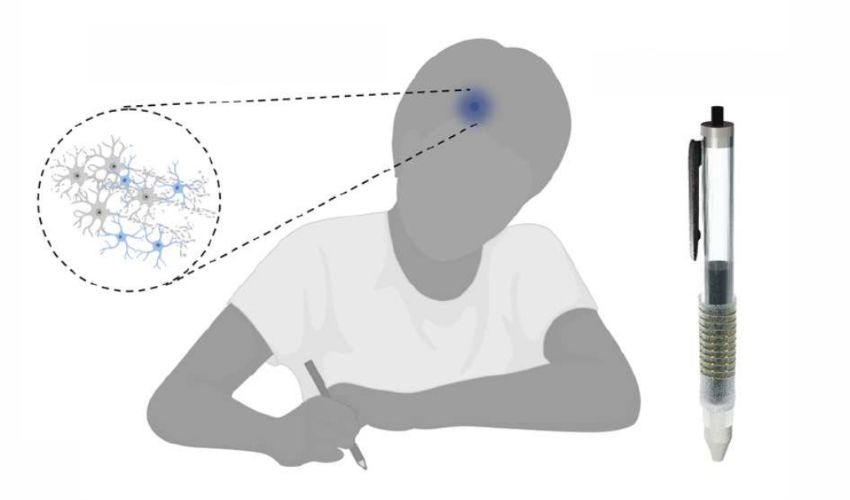
Parkinson’s disease (PD) is a neurodegenerative disorder that affects an estimated 10 million people worldwide, and it is the second most common neurodegenerative disease after Alzheimer’s. Still, for a condition that is so widespread, it is difficult to diagnose. There are no lab or imaging tests that can confirm a diagnosis, although certain tests, like MRIs or blood tests, can support the diagnosis as PD or rule out other conditions that mimic PD. Instead, the disease requires a “clinical” diagnosis, which means that a doctor considers a patient’s history, symptoms and physical exam to determine if they have it. However, these methods are often inefficient and lack objective, quantitative standards.
A team of researchers at the University of California, Los Angeles (UCLA) is trying to develop an alternative: a 3D printed diagnostic pen. Signs of PD look different for everyone, and common symptoms include (but are not limited to) tremors, slowness of movement and rigidity. Handwriting is a process that combines cognitive, perceptual and fine motor skills, all of which are affected by PD. By analyzing handwriting patterns, users could gain critical insights and quantitative biometric markers for diagnosis.
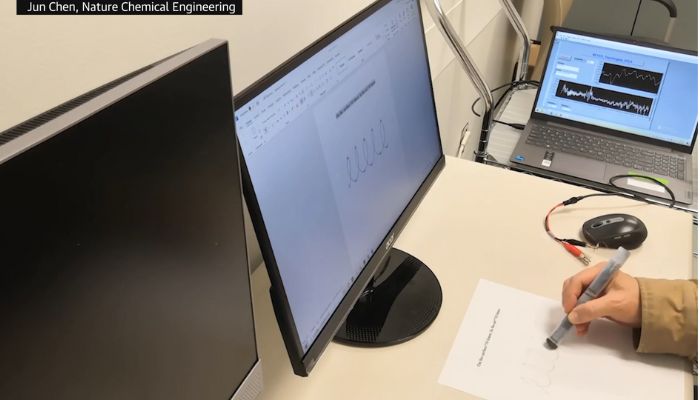
Parkinson’s Disease patient writing with 3D printed pen (Photo Credit: Jun Chen via The Guardian)
A 3D Printed Upgrade
The UCLA researchers are not the first to think of a diagnostic pen for PD. In fact, conventional handwriting analysis tools like digital tablets have been widely used. These tools specialize in tracking handwriting trajectories and analyzing the resulting handwriting traces, but they often overlook the motor symptoms that occur during writing. Additionally, these tools are costly and complex to set up, creating a challenge for broad implementation and use in non-clinical settings. The researchers also had low-income countries in mind, knowing that they face limited access to subspecialty resources for PD diagnosis, as well as an insufficient number of neurologists.
More from the desk
Six other notes from the rest of the bench.
 MaterialsResearchers Develop New Method to 3D Print MagnetsTeams from the Jean Lamour Institute (IJL), the Materials Science research laboratory of the University of Lorraine, have developed a method for producing magnets with a desktop FDM 3D printer. The researchers claim to have succeeded in integrating magnetic properties…
 PrintersAconity3D Announces its New 3D Printer, AconityTWOFounded in 2014, Aconity3D GmbH is one of the most innovative German companies in additive manufacturing with five different 3D printers. Aconity3D specializes in laser powder bed fusion (LPBF), in which metal particles are fused layer by layer by a…
 NewsUS Firm Azure to 3D Print 10 Homes Using Recycled PlasticsCalifornia-based 3D-printing construction start-up Azure Printed Homes (Azure) has been commissioned for a major new undertaking. Real estate company Reinhabit has tasked them with building eco-friendly homes across Southern California, made of recycled plastic. While this is not
 Software3DPrinterOS: A Set of Software Solutions for 3D PrintingToday, let’s take a close look into 3DPrinterOS—a user-friendly software solutions platform tailored for 3D printing enthusiasts. Serving as an open-source operating system for 3D printers, 3DPrinterOS streamlines tasks by eliminating the need to juggle multiple programs an
 Applications3DExpress: Novel 3D Printed Skin with Simulated Blood for Surgical TrainingIn this week’s 3DExpress, we highlight notable developments in the medical sector. In the United States, researchers at the University of Minnesota have successfully 3D printed a new type of skin model to advance surgical training. In Germany, a hospital…
 NewsTop 5 videos: 3D printed steak and moreThis week we found the top 5 videos about 3D printing and the way additive manufacturing is changing production. The technology has infiltrated many sectors, from medical to automotive – check our selection of the week to keep up with the innovations! If you enjoy these, you&hell