Materials
All You Need to Know About PVA for 3D Printing
PVA, or polyvinyl alcohol, is a material widely used in the 3D printing industry due to its ability to dissolve in water. In particular, it is used for the creation of print supports when using FDM dual extruder machines. This…
- 3 min read
- Materials
- Six more stories
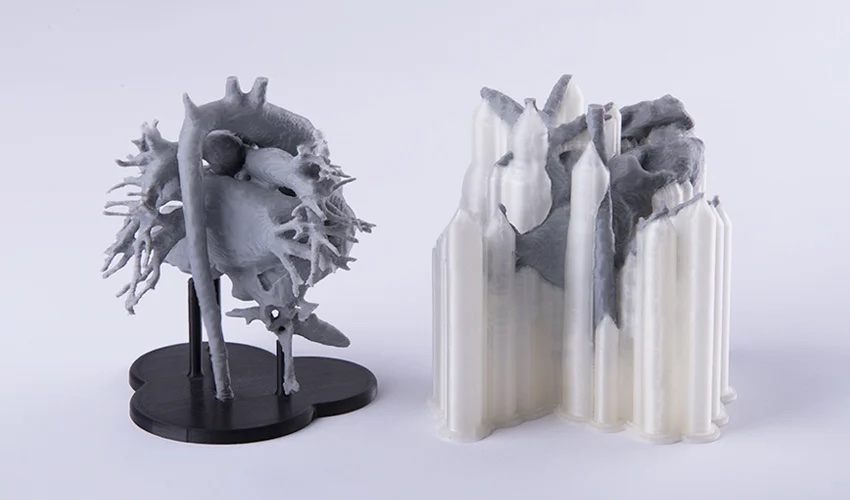
PVA, or polyvinyl alcohol, is a material widely used in the 3D printing industry due to its ability to dissolve in water. In particular, it is used for the creation of print supports when using FDM dual extruder machines. This offers users greater design freedom for parts with complex geometries, without affecting print quality. The more details and cantilevered parts the design has, the more supports the part will require in order to be manufactured. This guide will help you better understand the properties of this material, as well as its role in 3D printing in obtaining the best results in each manufacturing process.
Production and Characteristics of PVA in 3D Printing
On a technical level, PVA is part of the synthetic polymer family, with the particularity that it is biodegradable. It is created by polymerizing vinyl acetate, which is then hydrolyzed to obtain the material in filament form for 3D printing. It has a transparent to off-white appearance and is highly resistant to oil and grease. In addition to having very good adhesive properties similar to other thermoplastics such as PLA, CPE or Nylon, this material has a high tensile strength and flexibility. It is also odorless, non-toxic and, as mentioned, biodegradable, making it safe for humans, animals and the environment.
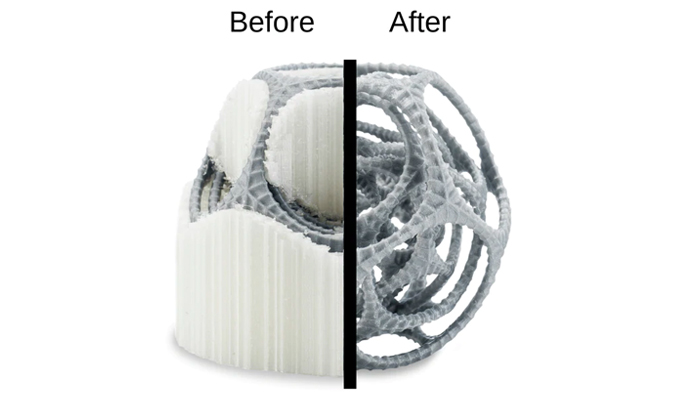
PVA is a soluble material used as printing support (photo credits: Ultimaker)
More specifically, it has a tensile elongation of 360% and a tensile strength of 22MPa. Depending on the humidity, PVA can also become very flexible and elastic, because water is like a plasticizer for PVA. PVA, which is actually brittle, fragile and tensile, becomes more and more elastic when moisture is added from the air or from water, and dissolves completely in water. Otherwise, it has a transparent to cream-colored appearance and is very resistant to oils and greases. It is easy to process in 3D printing because, among other things, it is non-toxic and actually odorless, although a slight odor may be produced during printing. However, for use in additive manufacturing, it is important to note the melting point of 230°C and especially the degeneration temperature of 200°C. At this temperature, PVA begins to carbonize, which can lead to black spots on the printed object.
More from the desk
Six other notes from the rest of the bench.
 GuidesThinking Huts Relies on 3D Printing to Increase Access to EducationThinking Huts is an association that seeks to promote access to education through 3D technologies. By 3D printing schools, it hopes to rapidly multiply the number of available infrastructures, as well as seeking to create jobs locally while promoting more…
 NewsWhat Types of 3D Printing Dyeing Solutions Are There?Beyond its purely aesthetic function, color plays an important role in areas such as consumer goods, interior design, and even medicine. A colored 3D component can be produced in various ways: either directly with a multicolor 3D printer, through hand…
 NewsPhotocentric launches a new research division to develop 3D printed batteriesBased in the UK, Photocentric is one of the leading 3D printer and material manufacturers. The company has been producing photopolymer resins since 2002 and is believed to be the world-leader in Visible Light Polymerisation (VLP) 3D printing technology. Recently, Photocentric has
 NewsTop 5 Videos: Meet the CEO of AnisoprintIt’s Friday and you know what that means. It’s time for our weekly top 5 videos about 3D printing! This week, 3Dnatives was able to meet and talk with Fedor Antonov, co-founder and CEO of Anisoprint, a manufacturer of continuous…
 ApplicationsAston Martin Has Unveiled its 3D Printed BikeThe world of top-of-the-range bicycles has welcomed an unprecedented touch of innovation and luxury with the launch of the J.Laverack Aston Martin .1R. Much more than just a bicycle, it embodies the union of bespoke craftsmanship and cutting-edge technology. The…
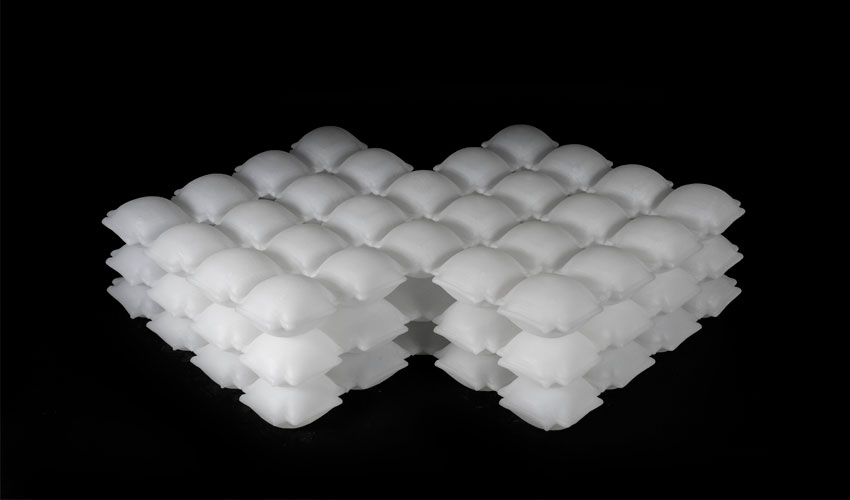 MaterialsMIT and BMW develop an inflatable, 3D printing materialWhile we thought we had seen some crazy 3D printing materials, BMW and the MIT Self-Assembly Lab may have taken the cake after revealing a project that they have been working on for inflatable liquid material. This project has brought…