Materials
All You Need to Know About Kevlar 3D Printing
Aramid fiber is a synthesized polyamide widely used in additive manufacturing and characterized by its high strength. It was first developed in 1965 by chemist Stephanie Kwolek, a pioneer in polymer research who won several patents and awards during her…
- 3 min read
- Materials
- Six more stories
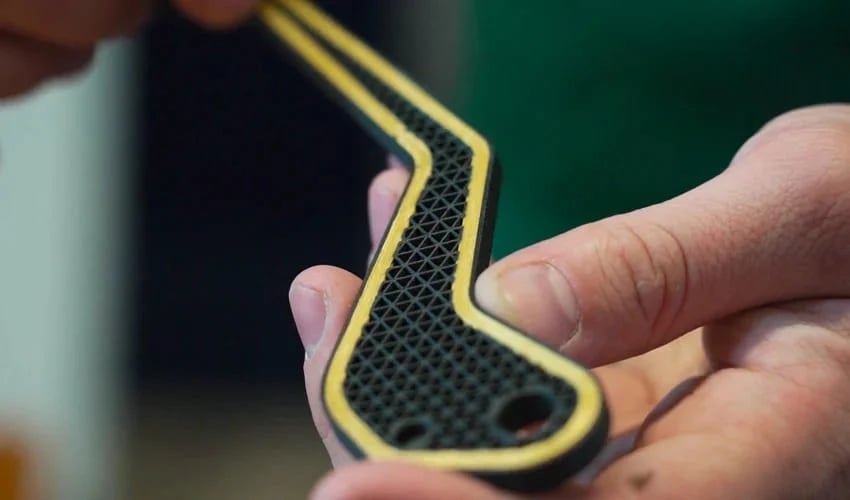
Aramid fiber is a synthesized polyamide widely used in additive manufacturing and characterized by its high strength. It was first developed in 1965 by chemist Stephanie Kwolek, a pioneer in polymer research who won several patents and awards during her career. The term Kevlar® was registered by the DuPont company, for which Kwolek works, and began to be marketed in 1972. Thanks to its interesting mechanical properties, this synthetic plastic is one of the strongest on the market and is used in a wide variety of applications. As well as being compatible with many traditional manufacturing methods, Kevlar is used in 3D printing to create final parts. Find out more about this polyamide and its possibilities in the additive manufacturing industry in this comprehensive guide.
Material Characteristics
Kevlar is a type of plastic which, according to its scientific classification, is defined as a synthetic aromatic polyamide. In other words, it is an artificial substance composed of interconnected molecules. Aramid fibers belong to the family of plastics obtained by polymerization, i.e. the assembly of long chains of molecules. Kevlar fibers, in particular, are arranged in regular, closely interlaced parallel lines, making them extremely strong. There are two types of aramid fiber:
- Kevlar 29, i.e. the fiber as obtained after its manufacture. It is mainly used to reinforce belts or fabrics.
- Kevlar 49: obtained when the fibers are combined with a resin to form a composite material. These fibers require surface treatment to promote bonding with the resin.
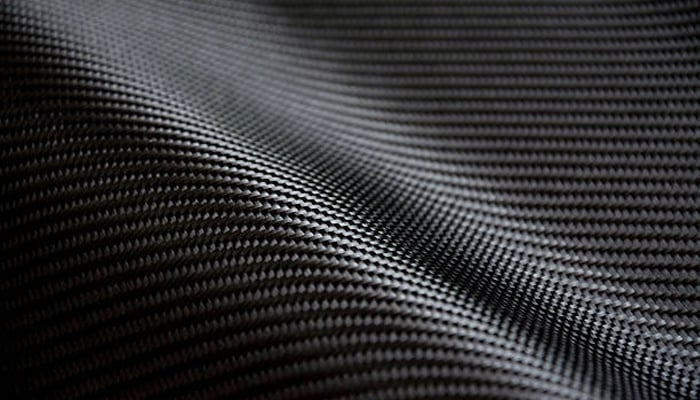
Aramid fiber is characterized by high strength and resistance
Yes, everyone talks about the strength of aramid fiber, but what exactly is it? Kevlar has ten times the tensile strength of steel, thanks to the cross-linking of internal chains by hydrogen bonds. It also offers high ballistic resistance. The fibers are wound so tightly that it is almost impossible to separate them. So when a bullet or projectile strikes at high speed, the fibers trap, absorb and dissipate its energy. At the same time, the molecular chains are perfectly extended and aligned, providing a defensive barrier against cuts and punctures. Finally, the material is intrinsically resistant to heat and flame, making it an ideal choice for protection against thermal hazards up to 425°C.
More from the desk
Six other notes from the rest of the bench.
 SoftwareMyMiniFactory, The Platform For Guaranteed Printable Free STL FilesWhether hobbyist or professional, anyone using a 3D printer is very likely to be using an STL file to print their project. An STL file, along with a 3D slicer, transmits data from a computer to 3D printer hardware. But…
 Guides3D Treats Talks 3D Printing Original DessertsAs we know, food 3D printing is growing rapidly. This manufacturing method involves creating models by extruding food and stacking them layer by layer. Many solutions have been developed based on this technology, the most common being chocolate 3D printers.…
 NewsLearn About Every Aspect of Additive Manufacturing at RAPID + TCT 2024At this point, it should be clear that the upcoming RAPID + TCT 2024 event will be far more than just a trade show with many different event features available with an Expo Pass. But one key reason that RAPID…
 NewsDesktop Metal introduces H13 steel to its range, for hot and cold tooling applicationsThe American manufacturer Desktop Metal announced the arrival of its metal 3D printing solutions to Europe last July and is now expanding its range of compatible materials. It is adding the tool steel, H13. This tool steel is a metal…
 ApplicationsScientists 3D print magnetic liquid dropletsScientists at Berkeley Lab in the US have made a new material that could lead to 3D printable magnetic liquid devices. Today, many essential technologies rely on magnets made from solid materials – for example, magnetic data storage devices or…
 Materials3D Printing Steel: Everything You Need to Know!Steel is a well-known metal in the industrial production and 3D printing sectors. It is an alloy based on iron (Fe) and other elements, mainly carbon (C), but also materials such as zinc (Zn) or silicon (Si). These alloys modify…