News
Algae and Light: The Green Ink Revolutionizing Cultured Meat
In a world where sustainability and innovation go hand in hand, researchers from Pohang University of Science and Technology have made a groundbreaking discovery. By combining the power of algae and visible light, they have developed a bioink that could…
- 3 min read
- News
- Six more stories
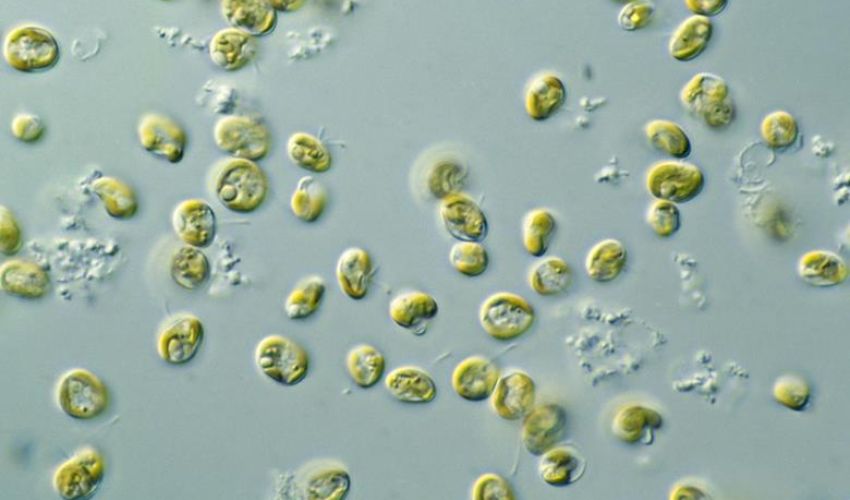
In a world where sustainability and innovation go hand in hand, researchers from Pohang University of Science and Technology have made a groundbreaking discovery. By combining the power of algae and visible light, they have developed a bioink that could revolutionize the production of cultured meat. This eco-friendly ink, derived from alginate, a natural carbohydrate found in algae, holds the potential to enhance cell viability and printing resolution in 3D bioprinting. Let’s delve into this exciting development and explore the implications it holds for both the environment and the future of food production.
Algae, often overlooked for its soft and pulpy consistency, possesses remarkable ecological potential. Not only can it absorb atmospheric carbon dioxide, but it also generates significantly fewer carbon emissions. Recognizing its benefits, researchers have been exploring ways to utilize algae for environmental preservation and sustainable practices. In addition to its applications in cultivated meat production, algae holds promise in the engineering of artificial organs for patients suffering from organ failure.
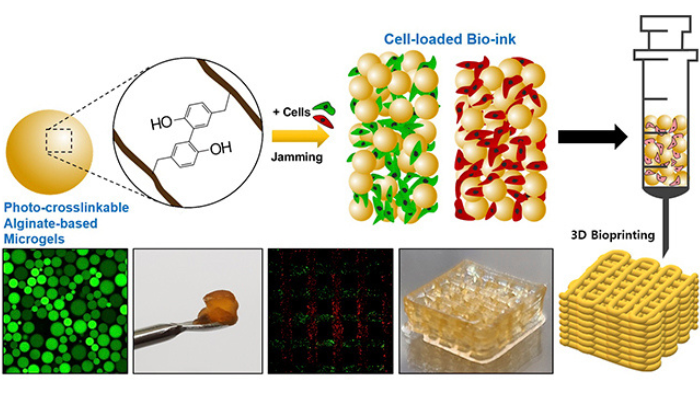
3D printed bioink made from photocrosslinkable natural carbohydrate alginate (Photo credits: POSTECH)
Led by Professor Hyung Joon Cha and his team at Pohang University, this research focuses on enhancing the cell viability and printing resolution of bioinks used in 3D bioprinting. Conventional bioinks have faced limitations, including low cell viability and restricted cell mobility. To address these challenges, the team developed a microgel using a photocrosslinkable alginate derived from algae. This innovative bioink significantly improved cell proliferation, resulting in a four-fold increase compared to traditional bioinks.
More from the desk
Six other notes from the rest of the bench.
 ApplicationsFormer SpaceX Engineers Secure $14 Million for Metal AM Company FreeformIn 2019, former SpaceX engineers created Freeform, a metal 3D printing company that combines artificial intelligence, hardware-accelerated computing, and autonomous factory architecture to produce high-quality metal parts. This week, the Los Angeles-based company announced that i
 Printers#3DExpress: Sintratec Announces Closure Following BankruptcyWe are back with #3DEXPRESS to show you all the highlights of the news from the additive manufacturing sector this week! First, after a decade of business, Sintratec has begun to cease operations as of May 7th, 2024. Next, Massivit takes…
 SoftwareQlone: The 3D scanning smartphone app3D scanning is one of the biggest allies to 3D printing, allowing you to transform real objects into a 3D model without having to work too hard on the design. With the ability to scan from spare parts or a…
 News3DExpress: The New iPhone Air Features 3D Printed USB-C Port3D printing has finally made its way into the iPhone! In this week’s 3DExpress, we’re covering stories that showcase the growing adoption of additive manufacturing: Siemens Energy reported its use of EOS 3D printers, Caracol announced an expanded presence in…
 NewsA team from the Wake Forest Institute for Regenerative Medicine 3D bioprints face mask to heal woundsThe Wake Forest Institute for Regenerative Medicine (WFIRM) in the United-States aims to translate scientific discovery into clinical therapies. Today, this interdisciplinary team is working to engineer more than 30 different replacement tissues, organs and develop healing cell t
 NewsInfographic: The Role of 3D Printing in the Construction SectorWorth an estimated value of $43.49 billion by 2031, 3D printing in the construction sector certainly seems to have a bright future ahead of it. And for good reason, this manufacturing method offers multiple benefits on different levels: a reduction…