News
3DExpress: The New iPhone Air Features 3D Printed USB-C Port
3D printing has finally made its way into the iPhone! In this week’s 3DExpress, we’re covering stories that showcase the growing adoption of additive manufacturing: Siemens Energy reported its use of EOS 3D printers, Caracol announced an expanded presence in…
- 3 min read
- News
- Six more stories
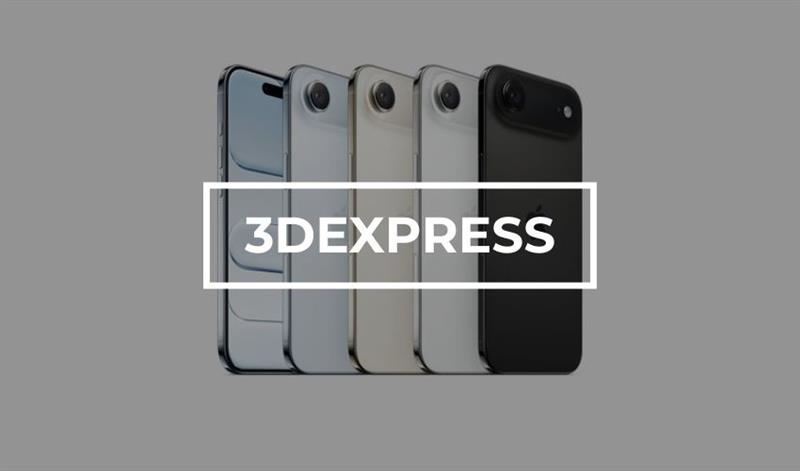
3D printing has finally made its way into the iPhone! In this week’s 3DExpress, we’re covering stories that showcase the growing adoption of additive manufacturing: Siemens Energy reported its use of EOS 3D printers, Caracol announced an expanded presence in North America and SprintRay revealed the acquisition of EnvisionTec’s dental solutions division. To round things out, we take a look at Raise3D’s latest machine. Stay tuned and enjoy the read!
The New iPhone Air Features 3D Printed USB-C Port
Apple has set an ambitious goal: to be carbon neutral across its entire company by 2030. To achieve this, the tech giant is targeting its three largest sources of emissions: materials, electricity and transportation, while also embracing innovative manufacturing technologies. One of the most exciting developments is the integration of 3D printing into its production processes. In its latest announcement, Apple revealed that the new iPhone Air (at just 5.6 mm, the thinnest iPhone ever!) will feature a titanium USB-C port produced with additive manufacturing. The 3D printed design makes the port both thinner and stronger, while reducing material use by 33 percent compared to traditional forging methods. The iPhone Air will also be composed of 35 percent recycled content, including 80 percent recycled titanium and 100 percent recycled cobalt in its battery. Apple is also applying additive manufacturing to other products: the new Apple Watch 11 will feature a 3D printed titanium case, underscoring the company’s growing investment in the technology. With these steps, Apple is signaling its commitment to climate goals but also its confidence in 3D printing as an enabler of greener, more resource-efficient consumer electronics.
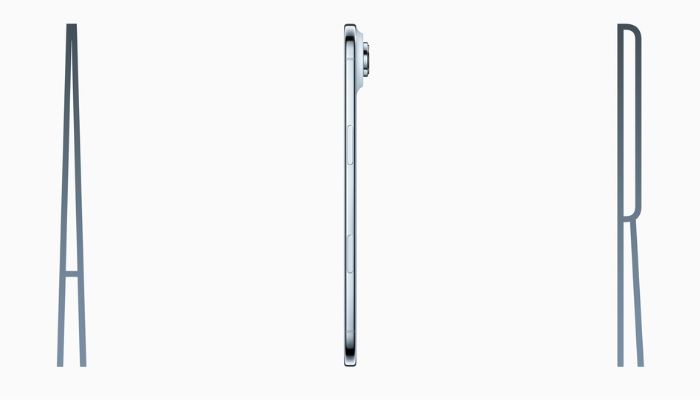
Apple’s new iPhone Air is the thinnest iPhone ever, at 5.6mm thick.
Siemens Energy Uses EOS 3D Printers
Siemens Energy is increasingly relying on 3D printing technologies to make the maintenance and repair of gas turbines more efficient and cost-effective. To this end, the Swedish company is now using a modified EOSINT M 280 metal 3D printer from German manufacturer EOS. The focus is particularly on heavily stressed components such as burner tips, which are exposed to extreme temperatures of over 1000°C in the hot gas flow path of the turbines and therefore wear out regularly. In the past, damaged parts were replaced by laborious cutting and subsequent welding – a time-consuming and costly process. With the 3D printer, the process can be completed directly using additive manufacturing. The system has been specially adapted for this purpose to be able to process larger components (up to 800 mm in length) and is equipped with optical measuring systems, cameras, and appropriate software for precise monitoring of the process. And it’s worth it – repair time can be reduced by up to 90%, which drastically reduces downtime. In addition, older components can not only be repaired, but also specifically improved and brought up to the latest state of the art!
More from the desk
Six other notes from the rest of the bench.
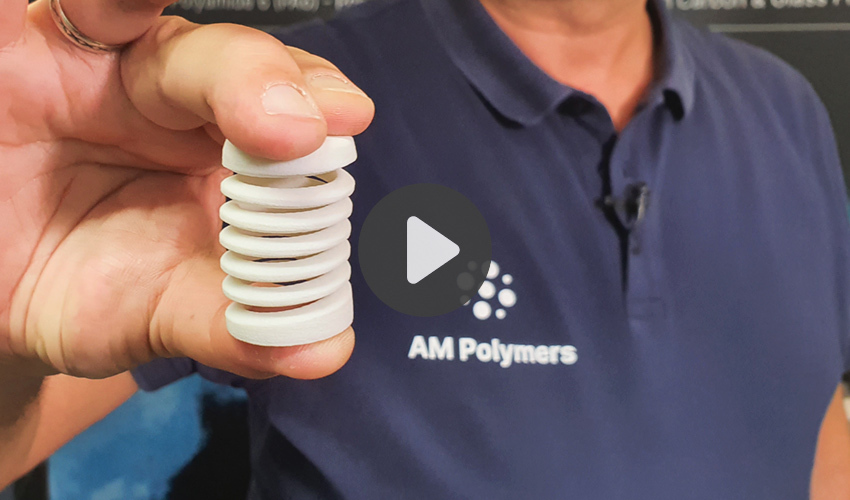 NewsAM Polymers and its Broad Range of Innovative MaterialsSince the company was founded, AM Polymers has made a name for itself far beyond the country’s borders in the field of plastic powders for SLS and HSS processes. Thanks to its extensive knowledge, the team is constantly working on…
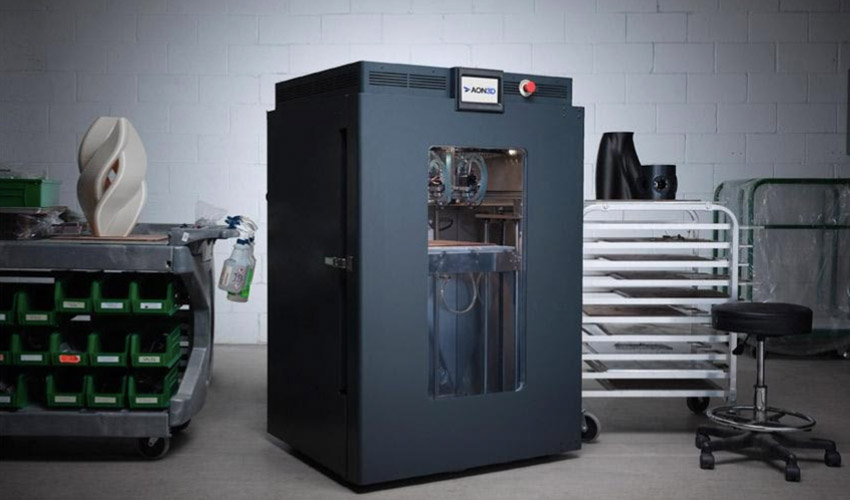 NewsAON-M2 2020, a high-temperature machine compatible with hundreds of materialsCanadian manufacturer AON3D has just launched a new industrial machine, AON-M2 2020, compatible with a wide range of thermoplastics including high performance materials such as PEEK, PEKK and ULTEM. Equipped with a fairly generous build volume of 454 x 454…
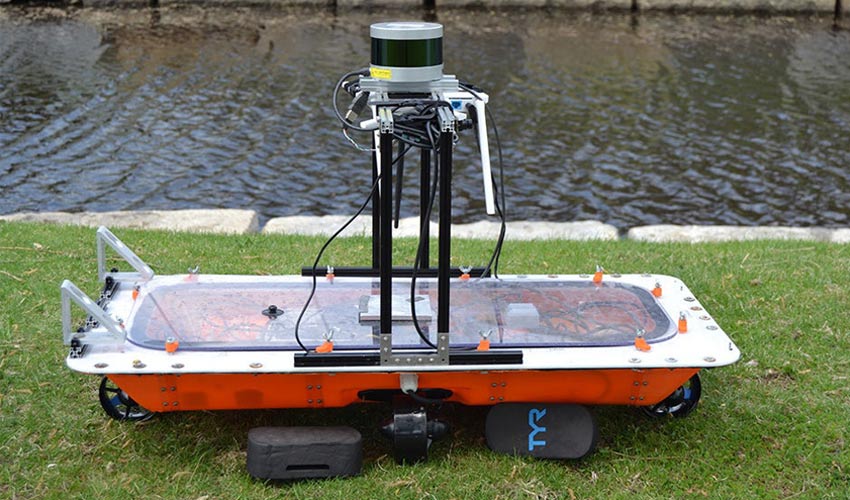 ApplicationsRoBoat 3D printed autonomous boats in AmsterdamA team of researchers at MIT’s Computer Science and Artificial Intelligence Laboratory (CSAIL) are working with the Institute of Advanced Metropolitan Solutions in Amsterdam on a project called RoBoat. The goal is to create a system of autonomous boats that…
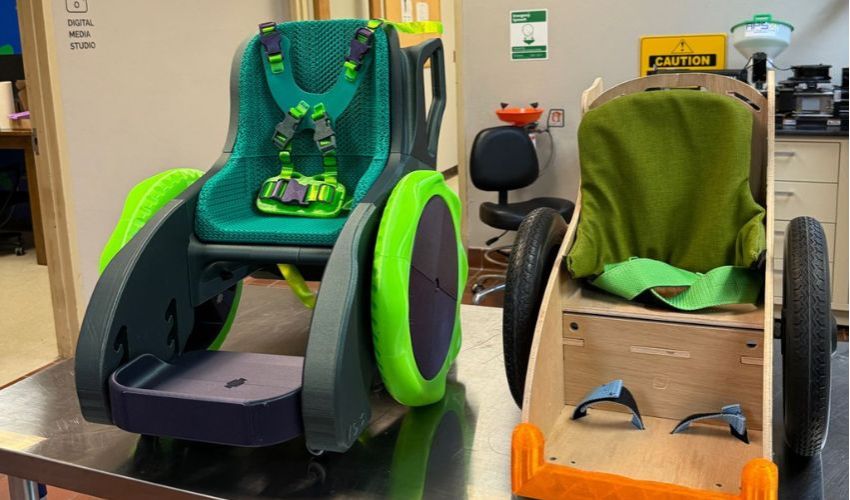 ApplicationsThe First Fully 3D Printed Wheelchair for ChildrenImagine building a wheelchair using a 3D printer, without needing any tools for assembly. Now, imagine that this wheelchair is not a standard model, but is specially designed for children. MakeGood, a New Orleans-based organization specializing in the design of…
 NewsTop 5 Videos: 3D printing prosthetic arms, and moreThis week we found the top 5 videos about 3D printing and the way additive manufacturing is changing production. The technology has infiltrated many sectors, from medical to automotive – check our selection of the week to keep up with the innovations! If you enjoy these, you&hell
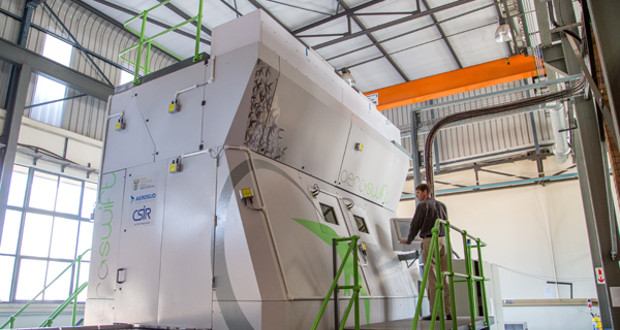 PrintersThe biggest metal 3D printer will soon be making its way to the market3D printing has been increasingly developing itself in South Africa, where they have been working on different complex projects over the recent years. In 2011, a government-supported project called Aeroswift was launched in collaboration with Aerosud (an actor in additive manufac