Guides
Additive Assurance Talks Ensuring Part Quality in Metal 3D Printing
Metal additive manufacturing is being used by many advanced industries thanks to the ability to create complex and customized parts. However, to ensure feasibility and quality, it is essential to validate the parts obtained. This is an essential step to…
- 3 min read
- Guides
- Six more stories
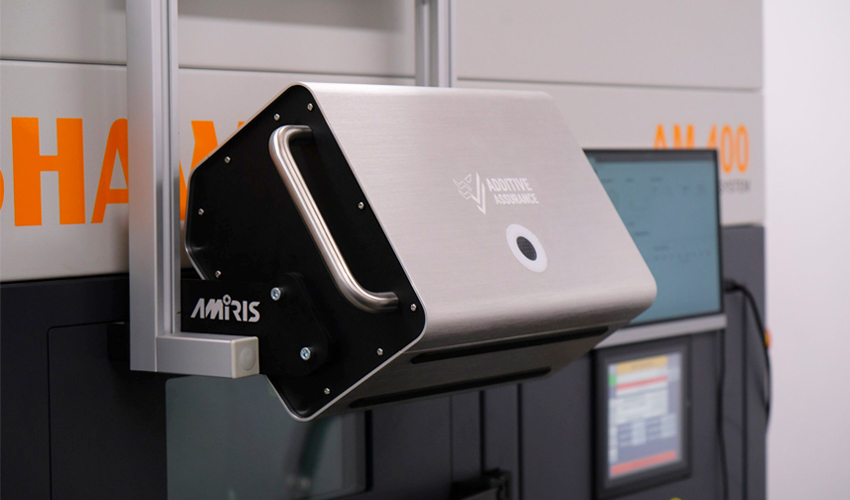
Metal additive manufacturing is being used by many advanced industries thanks to the ability to create complex and customized parts. However, to ensure feasibility and quality, it is essential to validate the parts obtained. This is an essential step to avoid defects and ensure optimal performance. In turn, certifications ensure that specifications and mechanical properties are consistent in each production batch, providing confidence to end users. Thanks to these processes, users are assured of the quality, durability and reliability of components, facilitating their integration into diverse applications, from medical and aerospace to automotive and industrial sectors. This contributes to the consolidation of metal additive manufacturing as a viable option in Industry 4.0. One of the companies at the forefront of this technology is Additive Assurance, with its AMiRIS solution. We spoke with its founders to learn more about their activity.
3DN: Could you introduce yourself and tell us your connection to 3D printing?
I’m Marten Jurg, an additive manufacturing engineer and CEO of Additive Assurance. With my co-founder Andrey Molotnikov, we started Additive Assurance to solve what we saw as the most important limitation in 3D printing: part repeatability and consistency. We’ve been pushing the boundaries of metal additive manufacturing for more than a decade. I started working in additive manufacturing (AM) through research R&D projects for aerospace systems integrators, and later took on projects in other sectors, such as energy and medical devices. From this experience, qualification and certification have always been very much in the forefront. While it’s great to be able to manufacture complex geometries, if you can’t certify them for use, they’re useless.
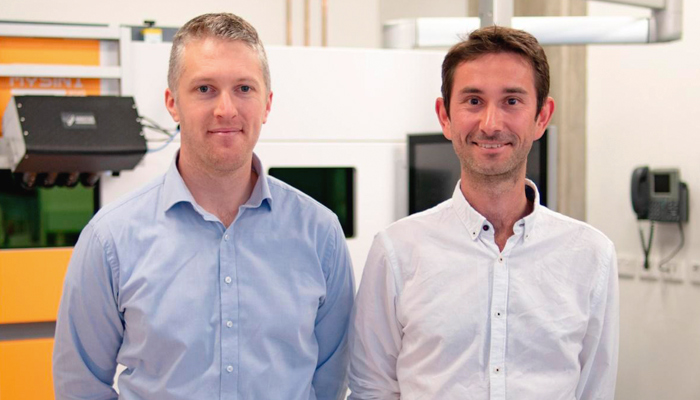
Additive Assurance co-founders Marten Jurg (left) and Andrey Molotnikov (right).
When we started, we were investigating the fatigue properties of L-PBF parts for aerospace applications, where the impact of stochastic defects can create a significant reduction in part design life, and the potential of AM designs. We saw that the stochastic nature of AM drove up costs and posed a barrier to adoption. We realized that if we could ensure part consistency through inspection, we could help reduce costs and unlock large-scale production.
More from the desk
Six other notes from the rest of the bench.
 MaterialsEngineers Have Developed an Ultra-Fast Opaque Resin 3D Printing ProcessAt EPFL in Switzerland, engineers from the Laboratory of Applied Photonic Devices (LAPD) have developed a resin 3D printer capable of designing objects in a few seconds. Based on a volumetric printing technology, it can produce parts with an opaque…
 SoftwareDassault Systèmes’ on-demand manufacturing service becomes accessible through SOLIDWORKS applicationsIn 2018, Dassault Systèmes, the leading company in 3D design and engineering software, launched its global online manufacturing ecosystem, the 3DEXPERIENCE Marketplace. Make, one of the marketplace’s three services alongside Part Supply and Engineering, is an on-demand manufactur
 ApplicationsU.S. Navy Partners With Hunt Valve for 3D Printed Submarine ComponentsThe United States military has begun to modernize its fleet across all branches with the adoption of 3D printing technology. In a major overhaul for the U.S. Navy, Hunt Valve, the Fairbanks Morse Defense subsidiary, has recently been awarded a…
 Printers3Dnatives Lab: Testing the UNIZ3D Slash+ 3D PrinterIn 2016, the manufacturer UNIZ3D made itself known by collecting the sum of half a million dollars on Kickstarter for a high-speed resin 3D printer named Slash. Their secret? Use an LCD rather than a laser, and use an optimised cooling system (called…
 MaterialsORNL and IperionX Are Developing Low-Cost Titanium Alloys for AMIperionX has announced that it is collaborating with Oak Ridge National Laboratory in order to further develop low-cost titanium alloys for additive manufacturing. As part of a U.S. Department of Energy (DOE) approved user agreement, the two will be working…
 Guides3D Printed Houses: A Closer Look at Completed Projects from Around the WorldAs you may know, additive manufacturing is becoming increasingly important in the construction market. The new technologies make it possible to create more complex shapes, build walls faster, and reduce labor costs. Many construction companies have already started to 3D…