News
Abu Dhabi Partners with Archireef to Use 3D Printing for Coral Reef Restoration
The United Arab Emirates recently announced an exciting partnership that embraces cutting-edge 3D printing technology to help protect the country’s fragile marine ecosystem. The UAE is home to the largest coral reef in the region, called the Ras Ghanadah protected…
- 3 min read
- News
- Six more stories
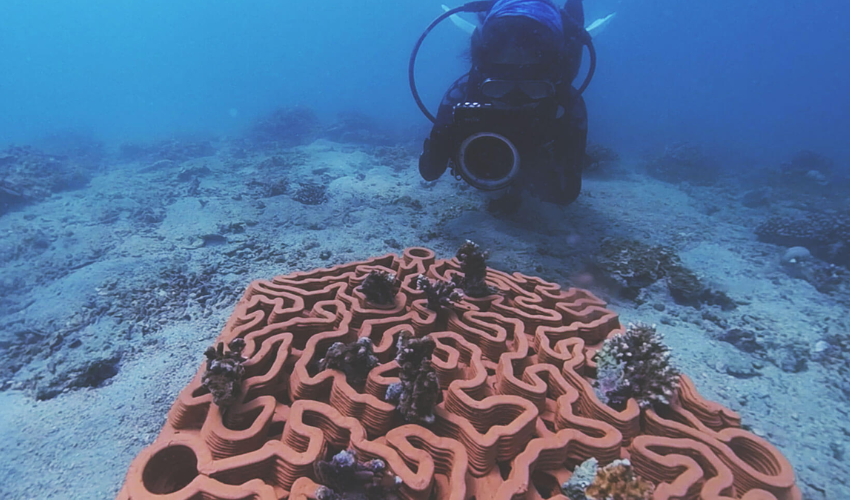
The United Arab Emirates recently announced an exciting partnership that embraces cutting-edge 3D printing technology to help protect the country’s fragile marine ecosystem. The UAE is home to the largest coral reef in the region, called the Ras Ghanadah protected area. The wildlife area spans nearly 55 square kilometers and contains 7.1 square kilometers of coral. The city government signed a memorandum of understanding with Archireef, a climate technology company specializing in nature-based solutions to help restore coral reefs and enhance coastal biodiversity across the country. This marks one of the most ambitious efforts within the region to merge additive manufacturing with large-scale environmental restoration.
The partnership was officially formalized during the 2025 World Conservation Congress in Abu Dhabi. At its core, the agreement serves as a shared vision to help rehabilitate coral habitats through advanced engineering and sustainable materials. Archireef, in particular, utilizes 3D printed terracotta reef tiles to help replenish lost coral due to global warming and other factors. These tiles will play a central role in the effort and are designed to mimic natural coral structures. Given its organic material composition, the tiles themselves will create a stable and healthy environment for new coral fragments to grow.
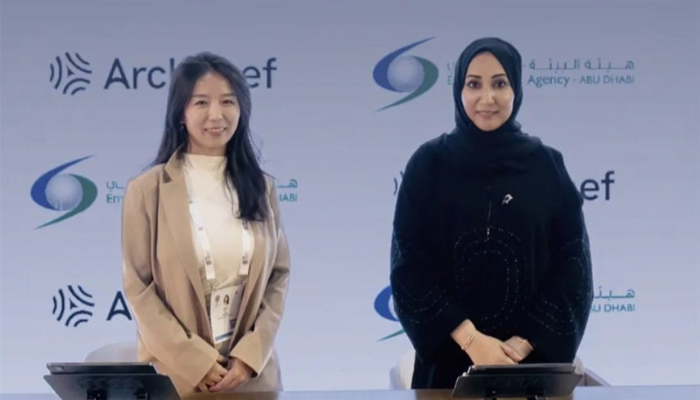
A photo from the signing of the memorandum between Archireef and the Environmental Agency of Abu Dhabi during the 2025 World Conservation Congress. (Photo Credit: Environmental Agency Abu Dhabi)
Archireef’s reef tiles are produced using 3D printing technology that allows for precise, biomimetic shapes inspired by natural coral formations. They are made from non-toxic terracotta clay and offer an eco-friendly alternative to conventional artificial reef materials. Their unique geometry prevents them from sinking into the seabed and provides the stability needed to support marine life. With a coral survival rate of around 95 percent, the tiles have already outperformed traditional restoration methods in pilot projects across the Middle East.
More from the desk
Six other notes from the rest of the bench.
 NewsAmazon buys 3D body scanning start-up Body Labs for $50-70MBody Labs have announced that Amazon have acquired the start-up for an undisclosed amount. TechCrunch however have reported that the figure Amazon paid is between $50-70M. Body Labs are a start-up from New York that incorporate body scanning into 3D…
 NewsHP BioPrinter; the dispenser that will bioimpress antibioticsWe have seen the US giant go way opening multiple sectors within the additive manufacturing from 3D color printing to 3D metal printing. Just recently they announced their new HP Metal Jet plans coming up. But it is not their only announcement this year. They…
 ApplicationsMILAM 2025 Brings Together Stakeholders in Both Additive Manufacturing and DefenseWhen we think about the sectors that are being shaped by additive manufacturing, defense is undoubtedly one that comes to mind. This is especially the case in the United States, where the Department of Defense (DoD) has been leading the…
 News#TALK3D: Interview with Ramón Pastor, President of the IAM3DHUBThe adoption of additive manufacturing by companies in a variety of sectors has grown considerably in recent years. Even so, many still have doubts in terms of its implementation, for example which technology would be best for each application and…
 ApplicationsApplication of the Month: 3D Printed Titanium Tank from South Korean ConsortiumA group of South Korea’s leading companies and research institutions is driving a major breakthrough in space technology. The Korea Institute of Industrial Technology (KITECH), Korea Aerospace Research Institute (KARI), KP Aero Industries, AM Solutions, and Hanyang University hav
 NewsThe 3D Printers That Stood Out at TCT Asia 2025TCT Asia 2025 ended last week! And what a show it was. While there, we saw some incredible applications while also learning about the most important trends in additive manufacturing in China. But that was not all! We also had…