Applications
A Major Milestone: DoD Launches Rocket with 3D Printed Motor
The United States Department of Defense (DoD) is no stranger to additive manufacturing. They have used AM to produce everything from hypersonic weapons to 3D printed barracks, and just this October, they awarded $4.5 million to ceramics 3D printing development.…
- 3 min read
- Applications
- Six more stories
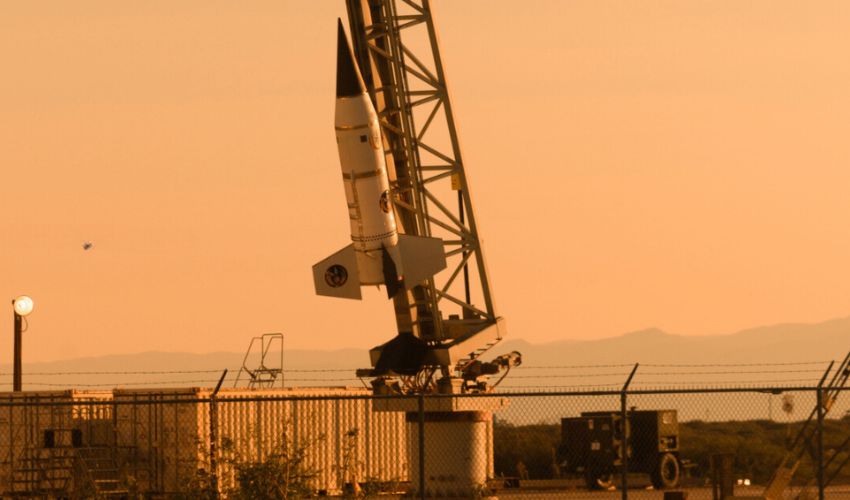
The United States Department of Defense (DoD) is no stranger to additive manufacturing. They have used AM to produce everything from hypersonic weapons to 3D printed barracks, and just this October, they awarded $4.5 million to ceramics 3D printing development. Now, with a new program called TACTILE (the Tactical Launch Effort program), they have been addressing the rising demand for low-cost, long-range suborbital energetics that can be rapidly produced. The Defense Innovation Unit (DUI), a unit within the DoD, launched the program, which aims to leverage advancements in dual-use commercial technologies for suborbital missions and ballistic targets by using additive manufacturing.
Unlike orbital spaceflight, when a spacecraft stably circles the earth at least once, suborbital spaceflight is when a spacecraft goes into space without completing an orbital revolution. Instead, the spacecraft is carried back to Earth, because it does not have enough velocity to escape into orbit. Why are suborbital spaceflights useful? They can be optimal for experimentation in low-gravity environments, testing spaceflight technology and of course, space rides for tourists.
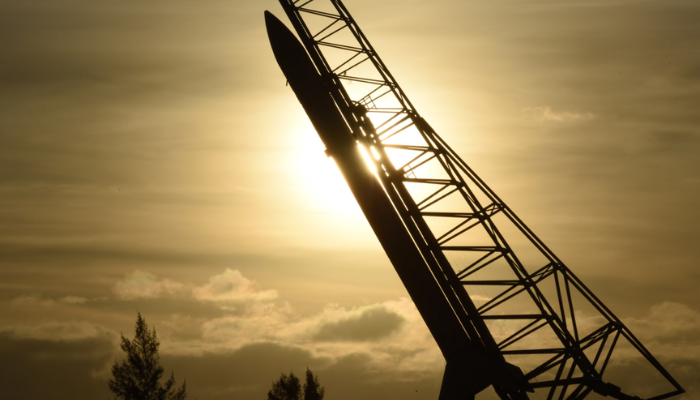
A rocket from X-Bow Systems (Photo credits: X-Bow Systems)
One of the primary challenges of expanding suborbital launch capabilities is moving beyond reliance on liquid and cryogenic rocket fuels. These fuels produce large amounts of energy but require complex infrastructure and are costly to handle. Additionally, their volatility poses safety risks. That’s why the TACTILE program is turning to solid propellants created through advanced manufacturing.
More from the desk
Six other notes from the rest of the bench.
 MaterialsTop 5 Videos: Mimaki & Open BionicsThis week’s Top 5 Videos showcases some of the most unbelievable 3D printing updates we’ve seen in recent times. These include incredibly detailed full-color 3D prints by Mimaki, amazing 3D printed prosthetics by Open Bionics, and Qlone’s 3D scanning app…
 NewsTop 5 Videos: A Closer Look at 3D Printed HousesIt’s Sunday again! We hope you had a successful week and that you also found some time to enjoy the nice summer weather! As always, we have collected the top 5 videos about 3D printing for you to enjoy. We…
 News#TOP5 videos: 3D Printed Skaterbot and much more!We found the TOP 5 videos of the week about 3D printing and the way additive manufacturing is shaping and changing our society. 3D printed skaterbot, micro structures, biomedical implants, metallic dental parts and more! If you enjoy these, you can…
 MaterialsResearchers develop 3D printing resin from vegetable oilWith global concern for fast depleting natural resources and environmental pollution growing, sustainable economy has been a hot topic in recent years. More and more companies are starting to feel the need to invest in circular economy development, and the…
 NewsUltiMaker Tells Us What to Expect From the New Merged Company at RAPID + TCT 2023RAPID + TCT 2023 has officially closed its doors. But if you were not able to attend the largest additive manufacturing event in North America, never fear! 3Dnatives was live from the floor of the show to bring you all…
 NewsTop 5 Videos: A 360º View of Additive Manufacturing With Excelencia-Tech GroupWelcome to our compilation of this week’s top 5 most compelling 3D printing highlights. We kick off this week’s edition with our very own video, as Excelencia-Tech Group provides an in-depth look at their expansion into the additive manufacturing industry.…