Applications
UT Austin Researchers Create Functional, 3D Printed Knee Joint
This summer, the University of Texas at Austin published an exciting innovation in 3D printing, which has the potential to revolutionize the next generation of medical devices and flexible electronics. Researchers at the university, funded by the US Department of…
- 3 min read
- Applications
- Six more stories
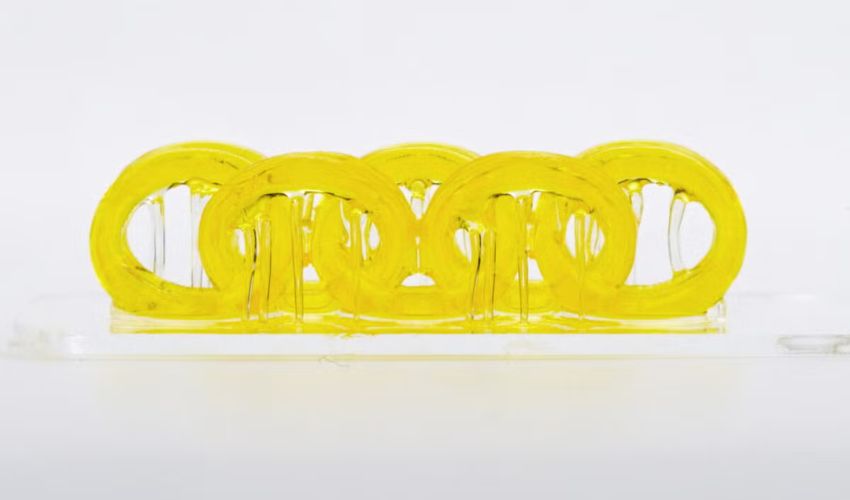
This summer, the University of Texas at Austin published an exciting innovation in 3D printing, which has the potential to revolutionize the next generation of medical devices and flexible electronics. Researchers at the university, funded by the US Department of Defense, the National Science Foundation and the Robert A. Welch Foundation, have developed an innovative method which, inspired by a combination of natural materials such as bone and cartilage, enables hard and soft structures to be seamlessly integrated into a single printed object. This has made it possible to create a fully functional knee joint mini-model from a 3D printer.
The new 3D printing method does not use traditional filament, but a special liquid resin that reacts to two light pulses. Ultraviolet light produces hard, plastic-like sections in the hardening process, while violet light produces elastic, rubber-like areas. In this way, transitions from hard to soft can be achieved within a single component.
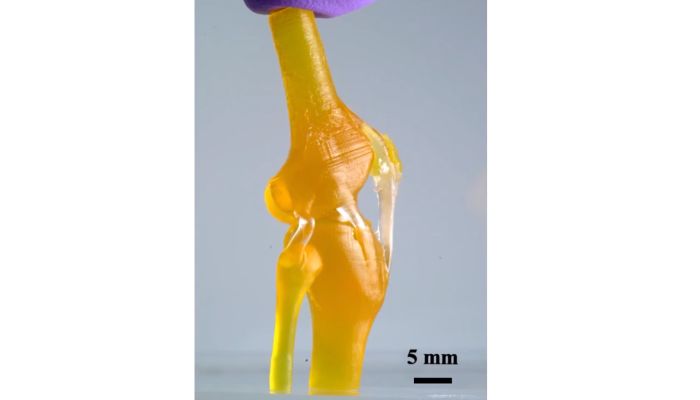
The artificial knee joint was the researchers’ first attempt to apply the method in practice.
Chemically cross-linked molecules prevent contact points from breaking or becoming structurally weak. As Zak Page, assistant professor at UT Austin, explains: “We built in a molecule with both reactive groups so our two solidification reactions could ‘talk to each other’ at the interface. That gives us a much stronger connection between the soft and hard parts, and there can be a gradual transition if we want.”
More from the desk
Six other notes from the rest of the bench.
 ApplicationsBeehive Industries Awarded $29.7 Million Contract by U.S. Air Force for Frenzy Engine DevelopmentSee the left-most engine in the photo above? That’s the Frenzy 8, printed by Beehive Industries, and the first engine to test (FETT) in the series of iterations. Continue right, and you’ll see the evolution of the Frenzy 8, ending…
 NewsLEGO Joins Women in 3D Printing to Encourage More DiversitySpaceships, castles, cars… one thing is sure, LEGO has played a special role the childhood of many children! And while the brand is known for making children’s dreams come true, they also are working to improve the daily life of…
 Applications350 Prosthetic Hands Donated to Ukrainian War VictimsThe war in Ukraine began on 24th February 2022 with the Russian invasion of the country. Since then, millions of lives have been affected and countless citizens and soldiers have suffered serious injury resulting in amputation. This is tragic, of…
 ApplicationsWEBINAR: The Role of FDM 3D Printing in Automotive and MotorsportsWhen it comes to automobiles and especially motorsports, speed is key. As such, teams and manufacturers are constantly looking for ways to optimize weight on their vehicles. Enter 3D printing. Additive manufacturing is quickly being adopted in the automotive sector,…
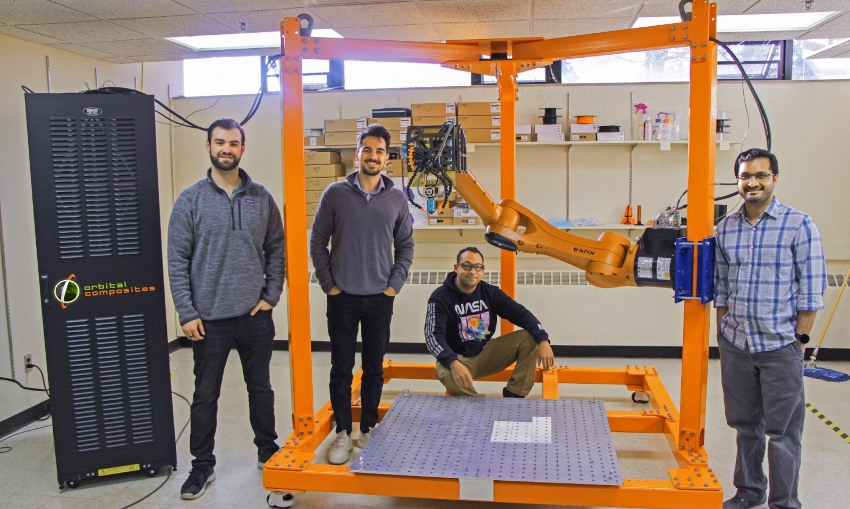 NewsUniversity of Minnesota Duluth Receives Orbital Composites Robotic 3D PrinterOrbital Composites, a provider of advanced carbon fiber and robotic 3D printers designed for space additive manufacturing applications, has just announced that it has shipped one of its Robotic 3D printers to the University of Minnesota Duluth (UMD). The printer,…
 NewsHow can students and teachers benefit from 3D printing in schools?At Macquarie University in Australia, a team of researchers conducted a one-year study. Here they researched the benefits of 3D printing in schools. As well as 3D design in the Makerspaces of primary schools. More than 500 students were observed and…