News
8 Reasons Why Additive Manufacturing Complements Traditional Technologies
In the world of manufacturing, the integration of new technologies has been a pillar to maintain competitiveness in the increasingly demanding and dynamic global market. The adoption of new tools often seeks to improve efficiency, reduce time and costs, and…
- 3 min read
- News
- Six more stories
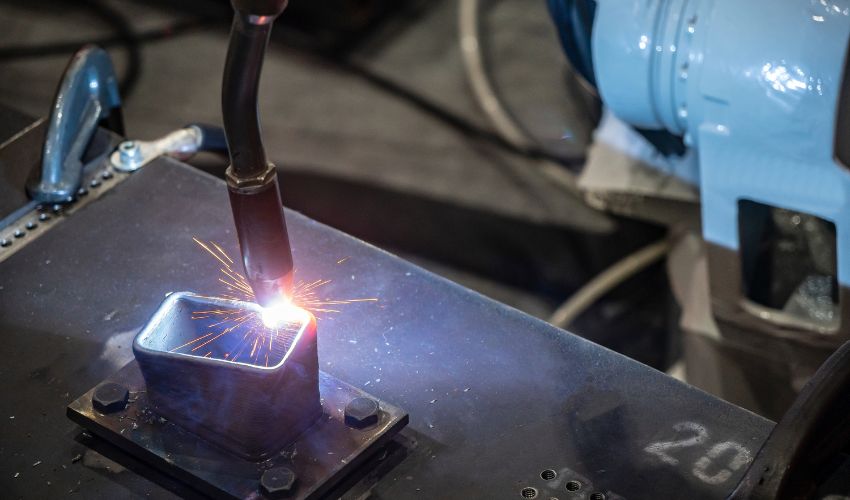
In the world of manufacturing, the integration of new technologies has been a pillar to maintain competitiveness in the increasingly demanding and dynamic global market. The adoption of new tools often seeks to improve efficiency, reduce time and costs, and improve manufactured parts. Additive manufacturing, for example, is being integrated as a transformative technology in industries with an entrenched use of traditional processes. Whether as a complementary tool or integrated into hybrid systems, additive manufacturing is compatible with conventional methods.
Traditional manufacturing remains the method of mass production, however, it faces challenges related to sustainability, flexibility in design and efficiency in the use of materials. Despite this, its ability to produce large volumes at low cost remains unsurpassed in many cases. The need to innovate and adapt to modern demands is driving the adoption of technologies that perfect processes, such as additive manufacturing. Recognizing the importance of getting the best of both worlds, here we explore 8 reasons why additive manufacturing complements other production methods.
1. Rapid Prototyping
Rapid prototyping benefits traditional manufacturing methods on several levels. For one, iterations serve to validate designs before mass-producing final parts. Rapid prototyping is especially useful in industries such as automotive and aerospace for aerodynamic and performance testing. 3D prototypes can be tested in wind tunnels or simulators to evaluate performance before the final part is manufactured using conventional materials and processes. Additionally, 3D prototypes can be used to validate traditional manufacturing tools such as molds for injection molding, patterns for casting, or critical components in machining.
More from the desk
Six other notes from the rest of the bench.
 News#3DExpress: A New Oil & Gas Additive Manufacturing Center in NigeriaOnce again, we are back with #3DEXPRESS to show you all the highlights of the news from the additive manufacturing sector this week! First, a new oil & gas additive manufacturing center has been developed in Nigeria as a way…
 NewsScientists develop new method to 3D print magnetic microstructuresResearchers from the University of Grenoble have developed a new way of 3D printing microstructures deformable with an external magnetic field. In fact, using the two-photon polymerization (2PP) 3D printing technology from the French company, Microlight 3D, the scientists created
 ApplicationsBioprinting Under Pressure: 3D Printing Lung Models to Study the Effect of Extreme EnvironmentsWhen pilots and astronauts go into flight, their bodies are pushed into environments far more extreme than anything experienced on the ground. To better understand how humans respond under these intense conditions, researchers at Texas A&M University, supported by the…
 ApplicationsThe US Air Force contracts Optomec for $1 millionThe US Air Force continues to invest in 3D printing technologies. In addition to forming partnerships with leading AM manufacturers such as GE and developing materials themselves, as it was the case with reinforced ceramics for 3D printed sensors, the…
 PrintersINTAMSYS on their industrial 3D printing solution for HPPs & vision of the marketINTAMSYS, based in Shanghai, is an industrial-grade 3D printer manufacturer and additive manufacturing solutions provider of PEEK and high-performance functional materials. In the AM field, many applications require the use of high-performance functional materials because of thei
 NewsEU Parliament to Consider Right to Repair Through 3D PrintingIn an effort to address the enormous amount of annual waste produced in the European Union in the form of usable consumer goods, the Internal Market and Consumer Committee of the EU Parliament (IMCO) has been campaigning for the right…