Software
#3DStartup: Handddle Structures and Industrializes the Uses of 3D Printing
Handddle is a French startup that has developed a software solution and a 100% configurable manufacturing microfactory, allowing additive manufacturing users to structure and industrialize 3D printing processes and functions. Based in Bordeaux, the startup supports professionals
- 3 min read
- Software
- Six more stories
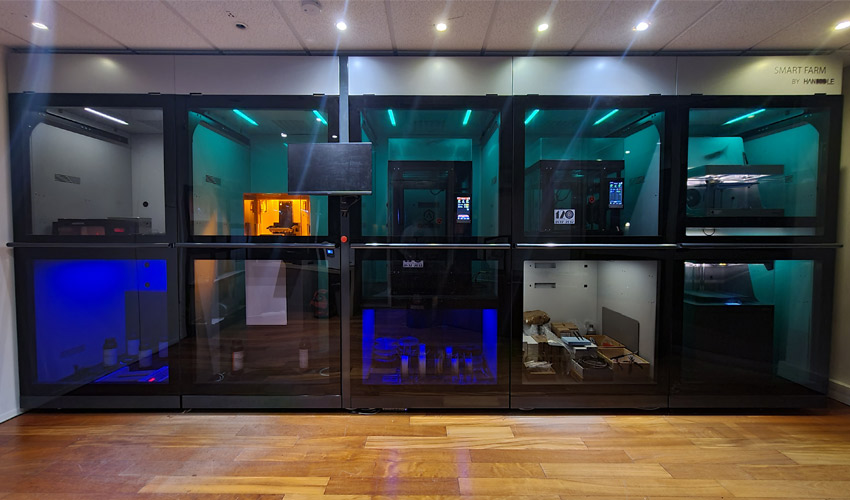
Handddle is a French startup that has developed a software solution and a 100% configurable manufacturing microfactory, allowing additive manufacturing users to structure and industrialize 3D printing processes and functions. Based in Bordeaux, the startup supports professionals in the development of in-house 3D printing, seeking to automate the manufacturing steps and offer maximum repeatability. Its SmartFarm microfactory has a volumetric capacity of 70.63 cubic feet (2 m3) and a floor space of 10.8 square feet (1 m2), allowing you to centralize your machine park as well as your post-processing solutions. It also ensures that your materials are stored in the best conditions (humidity control, good temperature management, etc.). We met Thomas Bourgoin, one of the three founders of Handddle, to learn more about this solution and the startup’s future projects!
3DN: Can you introduce yourself and your connection to 3D printing?
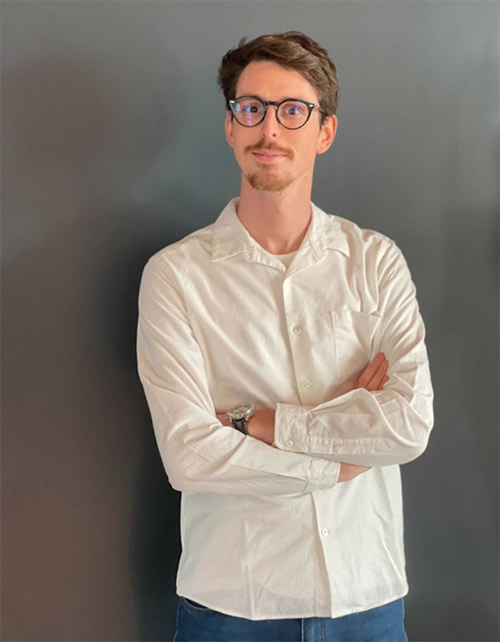
Thomas Bourgoin
Hello, my name is Thomas Bourgoin, I have a technical background in mechanical engineering. Very early on, I became interested in new manufacturing methods and additive manufacturing led me to collaborate with various market players, such as Prodways or BCN3D. It is with these collaborations and with my passion for the subject of 3D, that I developed a certain expertise, which today allows us to innovate on this continuously developing market.
3DN: How did you get the idea to create Handddle?
Handddle is the result of a strong observation: many small uses have been born or are beginning to be born in recent years, but too few of them are scaled up, and we remain on a very “gadget” use of 3D in companies. Additionally, we saw that it is quite simple to acquire a 3D machine, but that it is much more complicated to integrate it into one’s processes like any other tool used on a daily basis. There are several reasons for this. First, the fact of finding oneself with a manufacturing machine on one side and raw material on the other, scattered, without organization and without any framework. The second, a direct consequence of the first, is not having the tools to make AM an established production tool. All this made us converge on the Handddle solution, which, by proposing neither machine nor material, comes to help structure and industrialize the technology’s various uses.
More from the desk
Six other notes from the rest of the bench.
 MaterialsFillamentum Opens Up a Rainbow of Possibilities With Newest PETGOne of the benefits of FDM printing is the wide range of filaments that are available (depending on the printer used). Even so, it goes without saying that one of the most popular is PETG, being one of the most…
 NewsCOBOD printer used for India’s first 2-Story 3D printed buildingL&T Construction has announced that it has developed India’s first 3D printed two-story building. The building was created using a COBOD printer and is the second Indian 3D printed house, the first was a single storey house also built by…
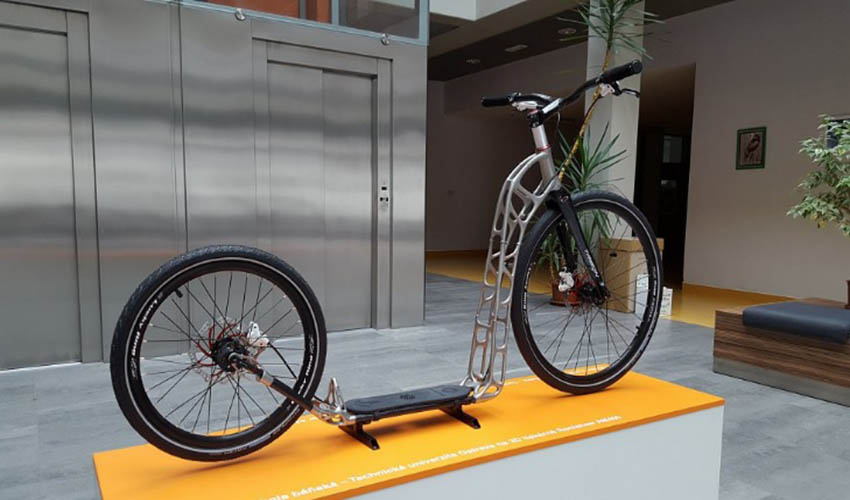 Applications3D Printed Scooter: collaboration between Czech researchers & Renishaw3D printing has been used to produce vehicles to offer cost-effective, eco-friendly and lightweight solutions to the automotive industry. Additively manufactured vehicles are not widely available yet as the technology is still developing and improving every year but many projects
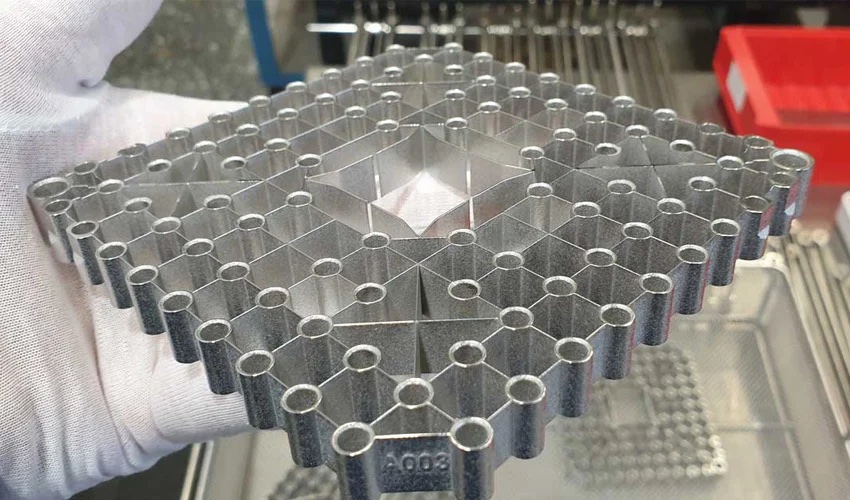 NewsFirst 3D Printed Stainless Steel Fuel Component Installed at the Forsmark Nuclear Power PlantFounded in 1958, Framatome is a French multinational nuclear company that began using 3D technologies in 2015. It recently announced the development of its first 3D-printed, stainless steel fuel component. These upper tie plate grids designed and manufactured at a…
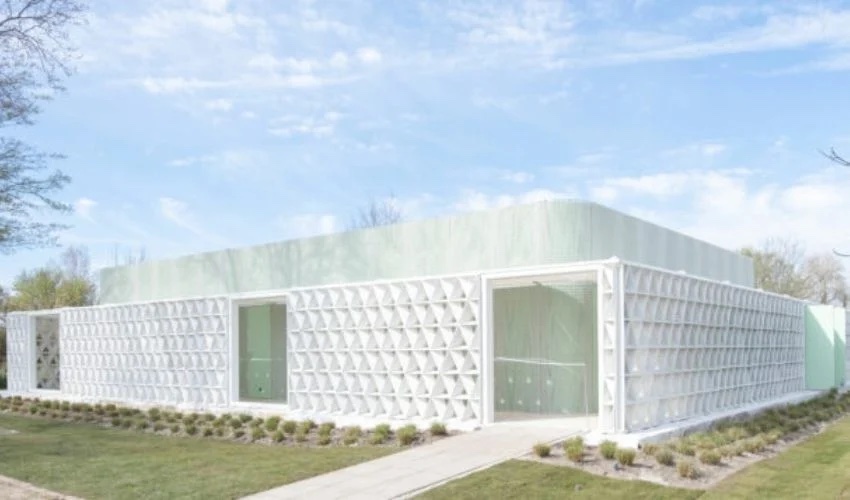 NewsAectual 3D Prints a Wall for the United Arab Emirates PavilionIf you’re interested in 3D printing and its environmental benefits, you’ve probably heard of Aectual. The company which is based in Amsterdam, is widely known for producing applications designed from recycled plastic. Recently, the company again caught a lot of&hellip
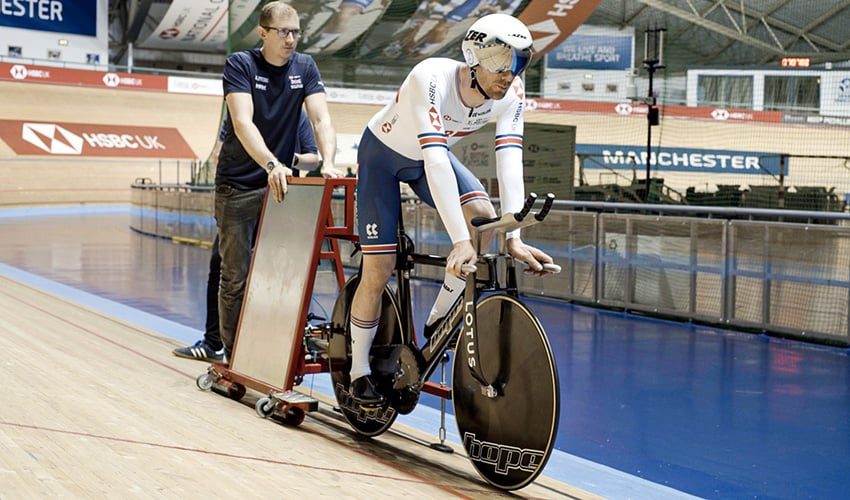 NewsRenishaw and British Cycling on Track for the 2024 Olympic GamesIn 2019, British Cycling, the cycling federation of Great Britain, turned to Renishaw, a metal 3D printing specialist to help design lightweight, high-performance parts for athletes’ equipment. With this collaboration, the goal was to create faster bikes for the track&helli