Applications
#3DExpress: The 3D Printed Train Station in Japan Is Finished!
There was plenty of news this week on the additive manufacturing market! And we’ll start with the progress of a project we already reported on a few weeks ago: in Japan, the 3D printed structure used as a shelter in…
- 3 min read
- Applications
- Six more stories
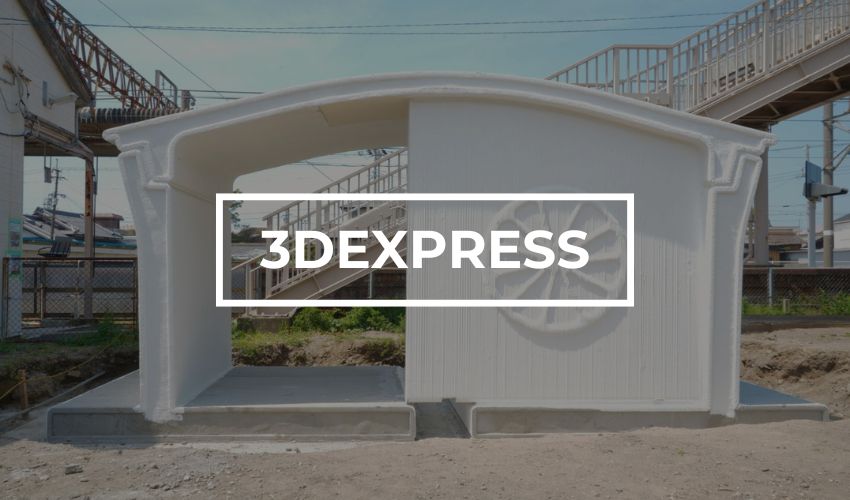
There was plenty of news this week on the additive manufacturing market! And we’ll start with the progress of a project we already reported on a few weeks ago: in Japan, the 3D printed structure used as a shelter in a train station has been finished! The teams spent six hours assembling the various 3D-printed concrete parts. Next, learn how 3D printing is helping veterinarians before taking a trip to the mountains, where the Indian Institute of Technology in Hyderabad has succeeded in designing a 3D-printed military bunker at an altitude of over 3,300 meters: a world first! Finally, we’ll close with two news items from the art world, and see how 3D printing is revolutionizing it.
Japan’s 3D Printed Train Station Is Finished
We announced it a few weeks ago: Japan has turned to concrete 3D printing to modernize some of its stations and offer shelters made using a 3D printer. And the project is moving ahead fast! Indeed, this week we were able to see the first images of the structure located in the city of Arida, in Hatsushima station. The 10-square-meter, 2.6-meter-high shelter was created using a solution from manufacturer Serendix. According to the project teams, it took less than a week to 3D print the various blocks of the shelter, which were then assembled on site in less than 6 hours. The façade features reliefs depicting symbols of the region, such as mandarins and fish. That means that the 3D printed train station is more or less finished, the aim now is to install a ticket machine in the structure – scheduled to open in July 2025. You can see the installation in the video below:
More Hands-On Training for Vets
It’s important for future veterinarians to get hands-on experience before entering the profession. This is why Oklahoma State University’s College of Veterinary Medicine recently offered its students a 3D-printed horse skeleton to facilitate hands-on practice. For this, the faculty called on Edmon Low Creative Studios. Its director, Shannon Austin, explained, “They specifically mentioned that animal skeletons are difficult to obtain and prohibitively expensive, and they inquired if I would be able to help them out by 3D printing a model.” She adds that the job wasn’t all smooth sailing, including deciding whether to print in one go or in several parts to be assembled. She says that printing took three days, and removing the supports took four hours. The parts were then assembled with hot glue. Shannon Austin concluded, “This model will allow vet students to be able to not just learn about equine morphology by simply looking at pictures in a textbook or on a screen, but instead they will now be able to physically manipulate and observe the intricacies of the animal’s skeletal structure in a literal hands-on way.”
More from the desk
Six other notes from the rest of the bench.
 NewsSmart Design & Gantri Join Forces to 3D-Print Lighting Designed for the Home OfficeSince the start of the pandemic, the daily life of the majority of professionals has been turned upside down. Many people now work from home to avoid contracting or transmitting viral illnesses. With so many people across the globe being…
 NewsSinger Rosalía Stuns in Original 3D Printed DressLast week, the British Fashion Awards (BFA), an annual ceremony celebrating the best of Britain’s designers, took place in London. Described as London’s answer to the New York Met Gala, the event is highly anticipated within the fashion industry worldwide.…
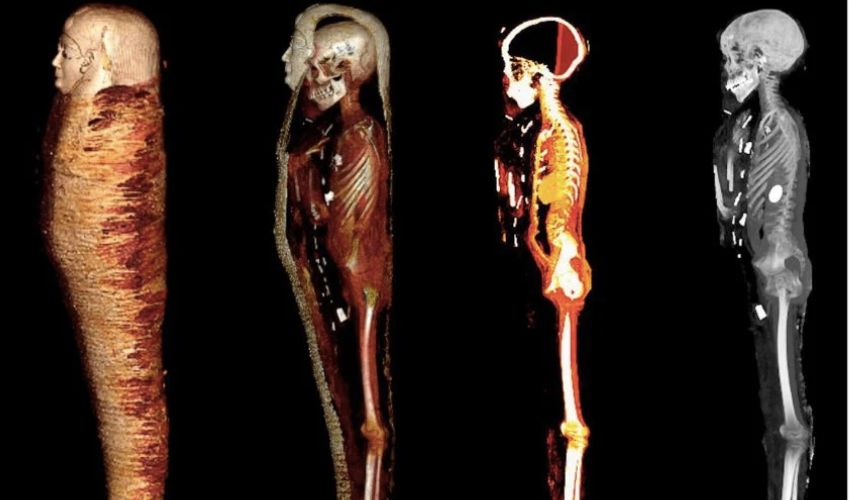 NewsMummy Research Used 3D Printing to Reveal Archaeological SecretsIn ancient Egypt, preparation of the dead was an important occasion, one which would allow the person to pass into the afterlife. Embalmers performed mummification of deceased people, protecting the body from the decay of the human or often animal…
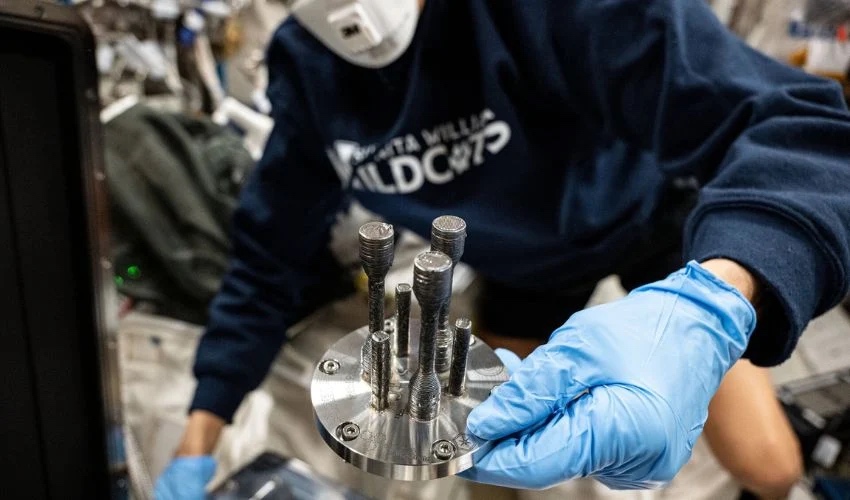 ApplicationsFirst Metal Part Successfully 3D Printed on Board ISSIt’s official, a metal part has been 3D printed for the first time in orbit, and more specifically on board the ISS in a team effort between the European Space Agency (ESA), Airbus and its partners! And if the news…
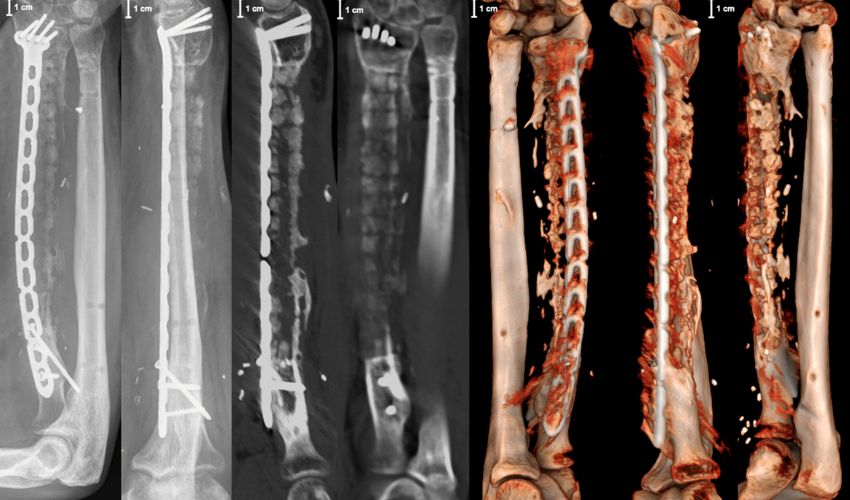 Applications3D-Printed Scaffold Used in Treatment for Patient With Gunshot WoundSometimes it seems that the uses of 3D printing in the medical field are growing by the day. Beyond surgical planning and training, increasingly additive manufacturing is being used for implants and in surgical procedures to heal traumatic injuries. The…
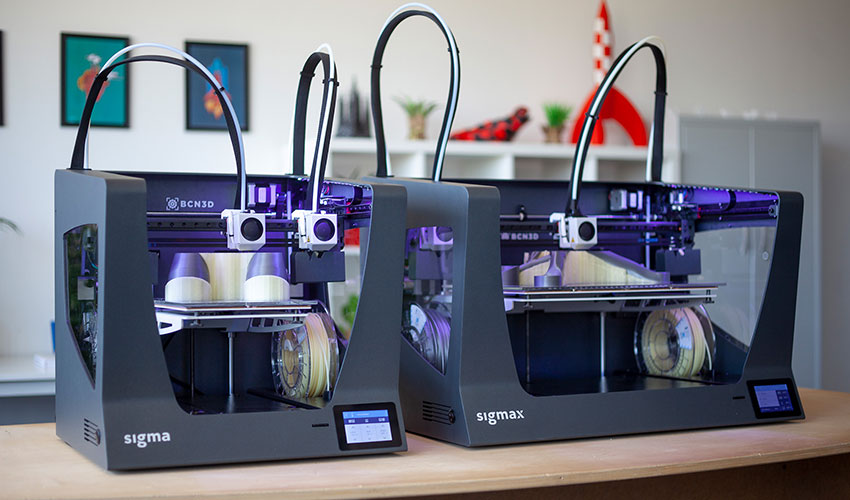 NewsBCN3D announces $3M in funding to boost its leadership in the IDEX 3D printing technologyThe last few months have been full of novelties for the Spanish company BCN3D. After the launch in 2018 of their new 3D printers, the Sigma R19 and the Sigmax R19, they are starting 2019 just as strong. In fact,…