Guides
3D Printing vs COVID-19: The Most Exceptional Initiatives of the Pandemic
For years to come, 2020 will likely be remembered for the dramatic changes and loss of life that accompanied the pandemic. This year the 3D printing sector prevailed, first adapting, and shortly thereafter becoming a powerful force in the fight…
- 3 min read
- Guides
- Six more stories
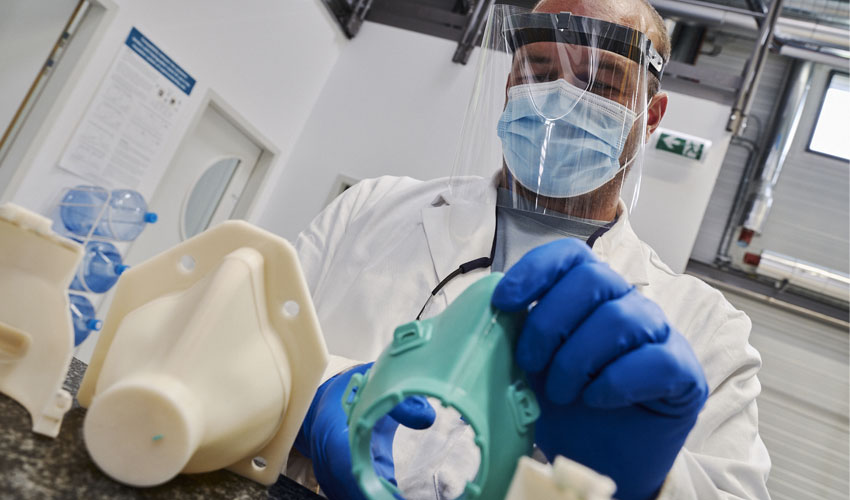
For years to come, 2020 will likely be remembered for the dramatic changes and loss of life that accompanied the pandemic. This year the 3D printing sector prevailed, first adapting, and shortly thereafter becoming a powerful force in the fight against COVID-19. From large industrial companies to small users of the maker community, people from across the sector joined the fight to bring the health crisis to an end. The applications of 3D printing technology proved profoundly important in this battle, and as this year draws to a close we wanted to look back at some of the most exceptional responses to the pandemic from the additive manufacturing industry. Here are some of the industry’s most outstanding innovations, divided into applications for the medical sector and solutions to prevent contagion in society.
3D printing for hospitals and health centers
Isolation rooms made with concrete
The first application of 3D printing in the fight against the COVID-19 occurred in late February when the Winsun company created isolation rooms using concrete extrusion. The aim of this initiative was to isolate people who had symptoms or tested positive for coronavirus. In the absence of space in China’s hospitals, additive manufacturing was the fastest way to reduce the spread of the virus in the country. The isolation rooms had an area of 10 meters squared and a height of 2.8 meters. Each isolation room was constructed in under two hours using a robotic arm mounted on rails installed around the construction site deposited successive layers of concrete ensuring structural stability.
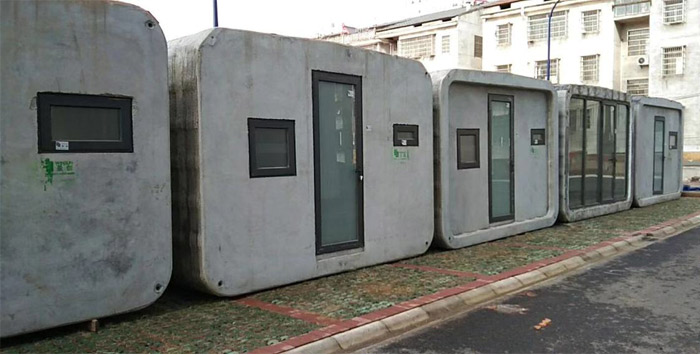
Concrete isolation rooms in Xianning, China.
3D printed respirator valves
When the coronavirus first reached Europe, Italy was one of the most affected countries. Many hospitals were overcrowded and lacked sanitary equipment needed to save the patients in the most severe condition. Upon learning that a hospital in Chiari had a shortage of ventilator valves, the Italian company Issinova, took the problem into their own hands. Realizing that 3D printing was the most efficient solution, Issinova began to additively manufacture the necessary amount of valves for the health centers that needed them. Later, the manufacturer Photocentric also launched mass production of respiratory valves for several countries. Thanks to their resin machines and their high manufacturing speed, they were able to develop more than 40,000 valves per week using 3D printing.
More from the desk
Six other notes from the rest of the bench.
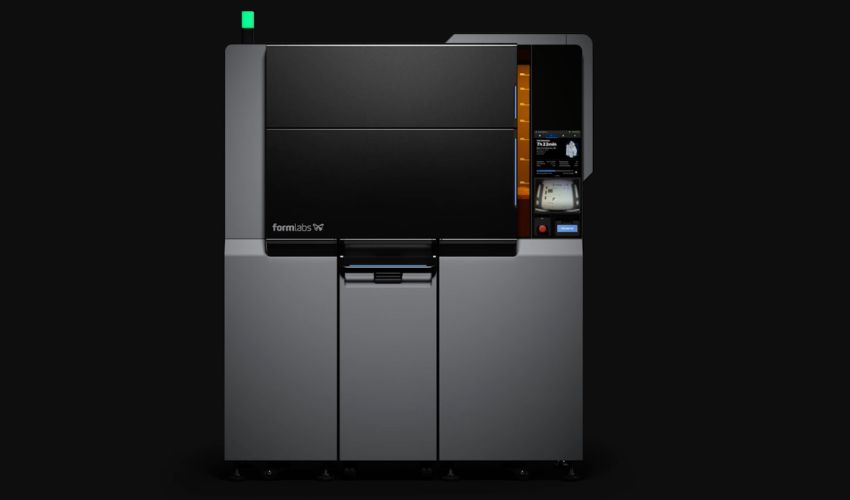 PrintersFormlabs Releases the Fuse X1: Low-Cost, Industrial Large-Format SLS 3D PrintingToday, Formlabs announced the release of a new large-format SLS ecosystem that delivers same-day production-quality parts at 50% lower cost and 3x the throughput of competing systems. The ecosystems are being sold starting at $84,999, and are currently available for…
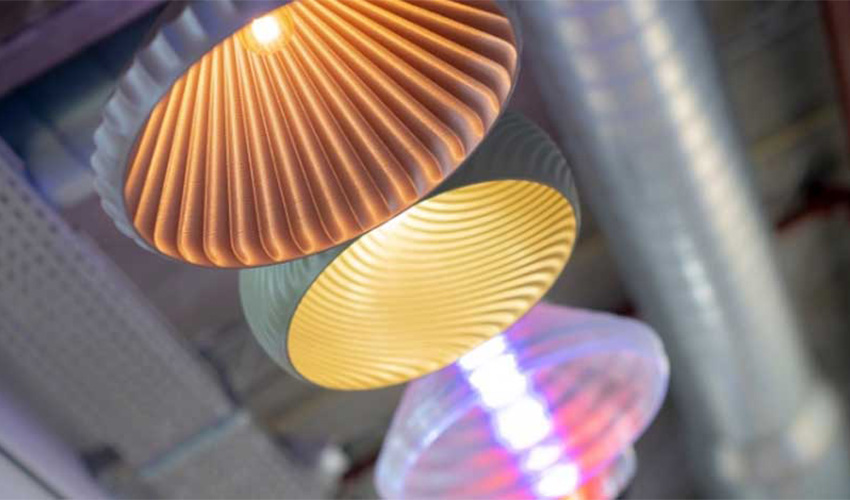 NewsIndian Manufacturer, Signify, Makes 3D Printed Luminaries to Reduce its Carbon FootprintKnown for its use in the automotive, aerospace and architectural sectors, 3D printing is now present in many fields. And the interior design sector is no exception. To decorate our homes and obtain functional objects, additive manufacturing offers several advantages.…
 Guides#3DStartup: Personomic Offers Customized Bicycle GripsToday, 3D technologies play an important role in the production process of many industries. This is because 3D scanners and printers make it possible to achieve what would have been unthinkable just a few years ago: mass customization or the…
 Software#3DStartup: Spare Parts 3D on their 3D Software to Digitalise Spare Parts EasilyOver the last two years, Spare Parts 3D has worked at developing a 3D software to digitalise spare parts and establish a qualified network of production in over 70 countries across the world, therefore building a strong notoriety in the…
 PrintersPrototype 3D Printer Capable of Working with Lunar Regolith DevelopedAdditive manufacturing in the aerospace sector is growing steadily. Now, Chinese scientists at the Tiandu Laboratory have achieved an important technological breakthrough in this field. The team developed a prototype 3D printer capable of using lunar regolith as a construction&he
 Applications3D Printing: The New Tool Available to DoctorsIt is accepted that additive manufacturing disrupts many modes of production, although it is still difficult to compete for the moment with certain conventional methods, the main reason being speed is still considered too slow. 3D printing of large series…