Applications
3D printing accelerates supercar design and production
In the automotive industry, additive manufacturing has established itself as a technology for prototyping and tooling applications. Car manufacturers can create prototypes to check fit and form before going further in the design process, and they can also create low-cost…
- 3 min read
- Applications
- Six more stories
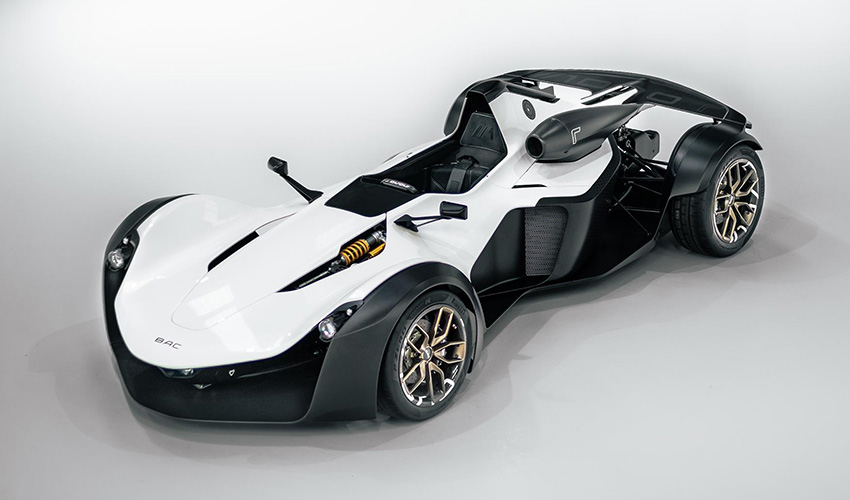
In the automotive industry, additive manufacturing has established itself as a technology for prototyping and tooling applications. Car manufacturers can create prototypes to check fit and form before going further in the design process, and they can also create low-cost tooling such as grips, jigs and fixtures, needed during production. Nevertheless, the technology has been gaining greater adoption in series and customised end-part production, particularly for motorsports and luxury vehicles. It enables to create specific vehicle components that are custom and lightweight, especially convenient when the cost of such components is justified by an improvement in vehicle performance. As a result, a growing number of automotive players are investing in 3D printing technologies, and leveraging their benefits.
In the UK, Briggs Automotive Company (BAC), the British manufacturer behind the BAC Mono and BAC Mono R single-seater supercars, has announced its continued adoption of 3D printing. The company said it is partnering with 3DGBIRE, the professional 3D printing expert based in the UK, and using Ultimaker 3D printers, to integrate the technology smoothly in its production workflow. Founded in 2009, BAC’s Mono and Mono R supercars offer performance and a unique aesthetic. These luxury cars have been designed to be a canvas for customer personalisation, for which additive manufacturing is perfect.
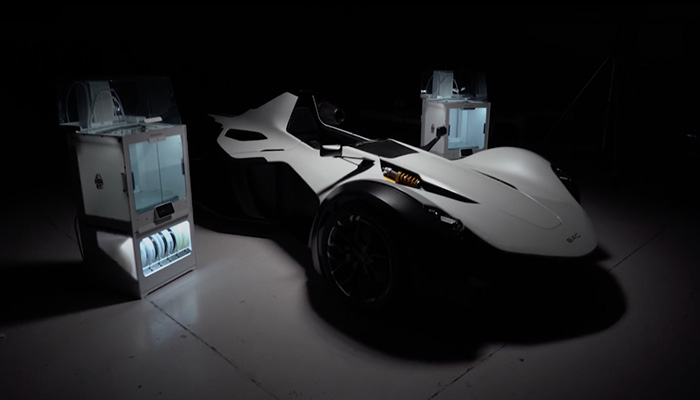
BAC, 3DGBIRE and Ultimaker made 40 3D printed parts for the Mono R supercar
Together with 3DGBIRE and Ultimaker, BAC is investing in the technology to create higher-performance, lighter and more advanced parts for its Mono R supercar. The aim was to reduce the design-to-manufacture timeframes of complex geometrical components and bring production in-house. Daniel Abram, General Manager at 3DGBIRE, explains in more detail: “The introduction of 3D printing into the car production process has proven to be beneficial at numerous stages. From R&D and prototyping, to manufacturing aids, to the production of end use parts, 3D printing is saving businesses like BAC money and slashing lead times.”
More from the desk
Six other notes from the rest of the bench.
 ApplicationsKAV Has Launched a Kickstarter Campaign For 3D Printed Bike HelmetsFor quite a few years now, 3D printing has been used in sports. Used for various applications, mainly to manufacture protective gear, additive manufacturing has repeatedly demonstrated the vast possibilities that it can offer to athletes. In American football, cycling…
 GuidesToolkit3D: The Automation Platform Unifying Design and Manufacturing WorkflowsWhen it comes to manufacturing, many tools are required: design software, quality monitoring software, machines, scanning applications, etc. However, these solutions are often disconnected, presenting a challenge for users. The workflow elements do not communicate with each other
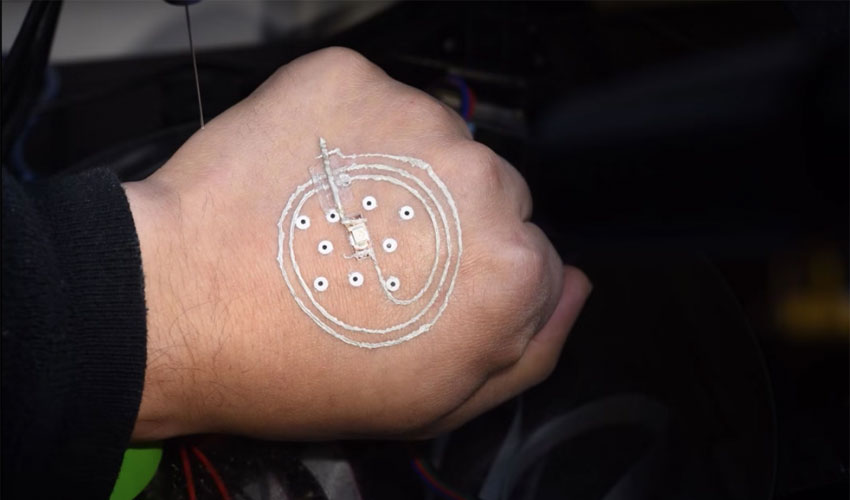 Applications3D printing of electronics directly on the skinUniversity of Minnesota researchers have reportedly successfully printed 3D electronics directly on human skin. They claim to have produced functional electronic components on the back of their hands with a low-cost, portable desktop 3D printer. A most surprising advance, the&hel
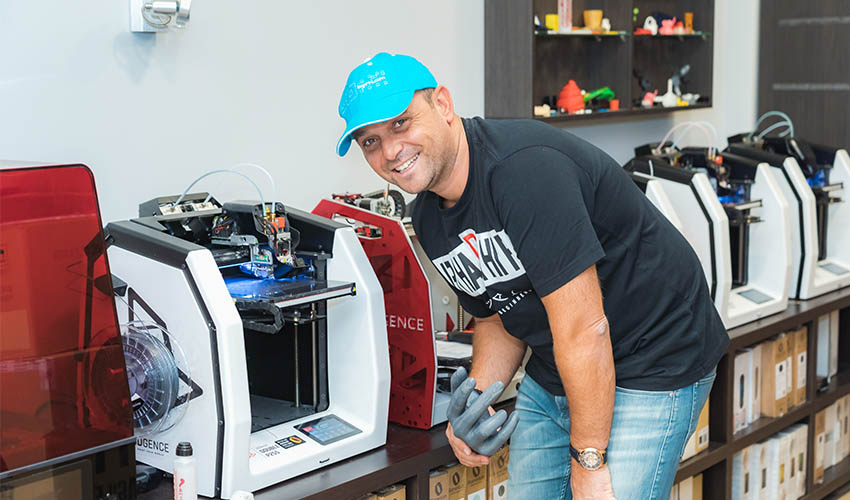 Guides3DBGPRINT gives access to 3D printing technologies in Europe3DBGPRINT was founded by Yordan Angelov, who, after spending his early career in marketing and sales in big software companies in Bulgaria decided to found a consultancy business in additive manufacturing. Therefore, 3DBGPRINT was founded in 2013 to inform, educate…
 News10 Reasons to Adopt 3D PrintingToday, many companies in the manufacturing industry still use traditional production methods. That being said, what is known as the fourth industrial revolution is becoming more and more of a reality, leading to the adoption of new methods of creation…
 NewsWhat to Expect at ADDITIV Polymers World 2025Polymers remain at the heart of additive manufacturing, and their role is rapidly expanding. Once used mainly for prototyping, they’re now powering end-use parts and large-scale industrial applications. That’s why we’re bringing them back into focus at the third edition…