Materials
3D Printing Used to Create Titanium Alloy With Highest Strength to Weight Ratio
One of the key to modern manufacturing is research and development into materials. Especially in industries like aerospace, materials that are both lightweight and extremely strong are critical for the parts that need to be made. Indeed, material research for…
- 3 min read
- Materials
- Six more stories

One of the key to modern manufacturing is research and development into materials. Especially in industries like aerospace, materials that are both lightweight and extremely strong are critical for the parts that need to be made. Indeed, material research for additive manufacturing in and of itself is a rapidly expanding field. In the latest news, engineers at Monash University used 3D printing techniques to create an ultra strong commercial titanium alloy, allowing applications in a number of critical industries.
Titanium is one of the strongest materials available and as such is often used for end-use parts. Titanium alloys, wherein titanium is mixed with another metal to provide additional properties including flexibility, strength and malleability, are particularly prized for their strength to weight ratio. But research is constantly being done to improve them. In the study “Ultrastrong nanotwinned titanium alloys through additive manufacturing,” the engineers showed how they were able to use additive manufacturing to create a titanium alloy with the highest specific strength (strength to weight ratio) .

Titanium, both in its pure and alloy form, is used for applications in a variety of fields including aerospace thanks to its high strength-to-weight ratio (photo credits: Lupus in Saxonia, CC BY-SA 4.0 , via Wikimedia Commons)
Using Additive Manufacturing to Make a Titanium Alloy
It is important to note that, as might be expected, it is not an easy nor straightforward process to create titanium alloys. Rather they require a number of complex techniques including casting and thermomechanical processing. And though this does not mark the first time that 3D printing has been used not just to create parts but also the alloys themselves, often commercially available alloys made using it do not have the satisfactory properties. The researchers, lead by Professor Aijun Huang and Dr Yuam Zhu from Monash University used a 3D printing to manipulate a novel microstructure which resulted in an unprecedented mechanical performance for the alloy.
More from the desk
Six other notes from the rest of the bench.
 News3D Hubs predicts 2020 additive manufacturing trendsThe leading online manufacturing service, 3D Hubs, has recently released its 3D printing trends report for 2020, giving its insights on the evolution of additive manufacturing, and where the AM market is headed. Looking back at the last decade, it’s…
 NewsSketchfab: The Platform To Visualize And Download 3D ModelsSTL files are a key part of the 3D printing process, and today Many websites exist today to download them for free. The Sketchfab platform is one of the best known, mainly because of its wide variety of content and…
 NewsSolo 8, an affordable robot dog?More often than not robotics and 3D printing are a combination that guarantees success. The capabilities provided by robotics together with the reduced production time and costs of additive manufacturing make it an efficient solution for many application areas. This…
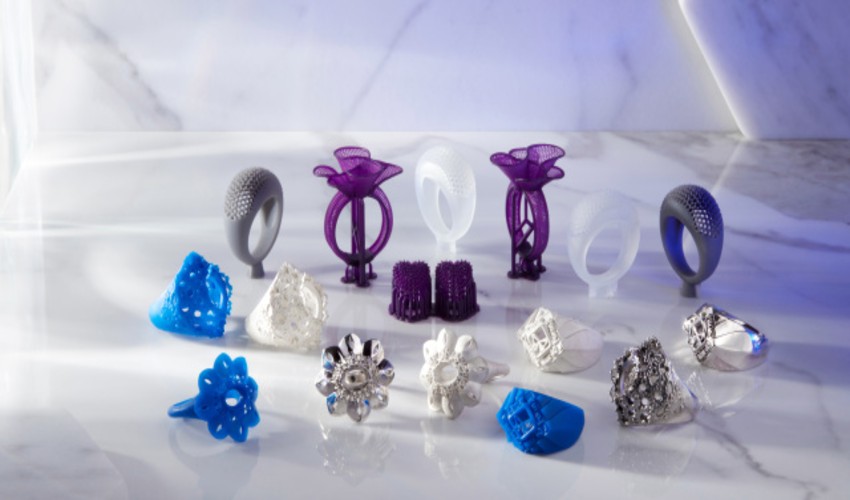 MaterialsCastable Wax 40 Resin: the new resin from FormlabsFormlabs has added a 30th patented material to its catalog! During the Consumer Electronic Show (CES) in Las Vegas, which took place virtually this year, the American manufacturer presented its new resin intended for jewelers: the Castable Wax 40 Resin. To develop…
 NewsTop 5 Videos of the Week: the 3D printing trends for 2020 and much more!This week we found the top 5 videos about 3D printing and the way additive manufacturing is shaping our society. The technology has infiltrated many sectors, from medical to automotive! Check out our selection of the week to keep up with the innovations! This week we…
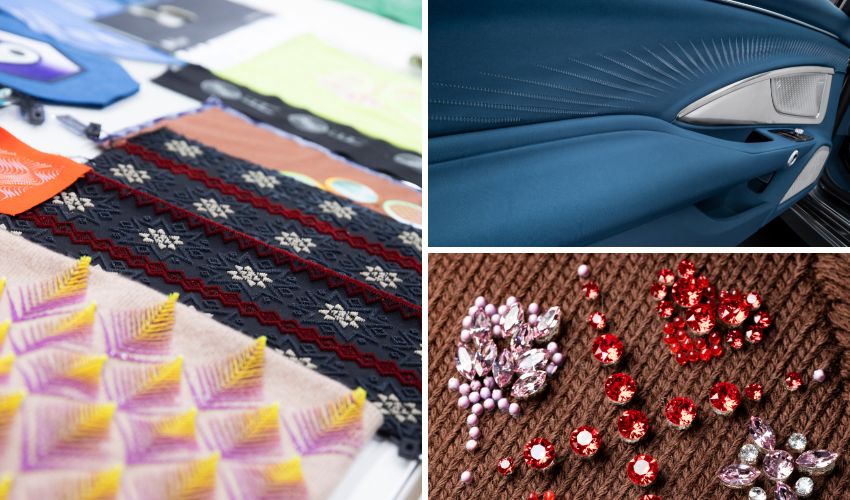 GuidesD-House Urban Laboratory on Using 3D Printing for Luxury BrandsA study by the Additive Manufacturer Green Trade Association (AMGTA), conducted in Italy in collaboration with Dyloan Bond Factory and Stratasys, highlighted that the use of 3D printing in the fashion and luxury sectors could lead to considerable time and…