Applications
MIT Researchers Use 3D Printing to Democratize the Production of Electrospray Emitters
Researchers at the Massachusetts Institute of Technology (MIT) have created low-cost electronic nozzles, called triaxial electrospray emitters, via 3D printing. Traditionally, producing these devices requires days inside a multi-million-dollar semiconductor “cleanroom”
- 3 min read
- Applications
- Six more stories
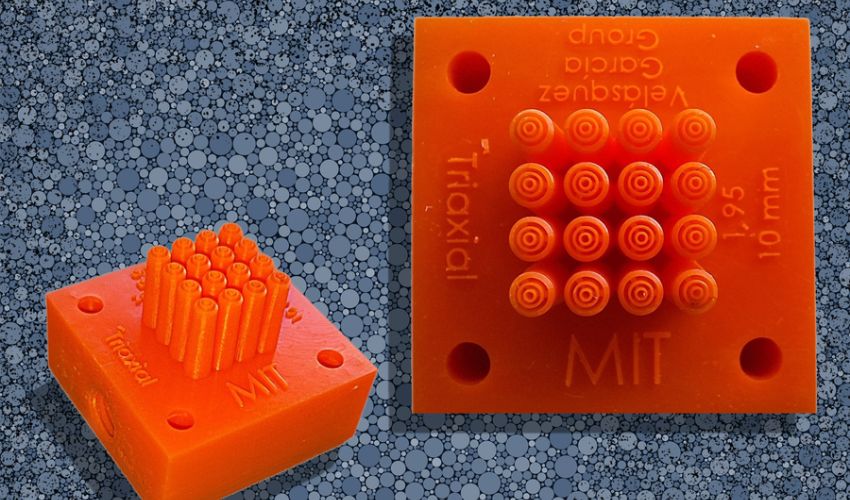
Researchers at the Massachusetts Institute of Technology (MIT) have created low-cost electronic nozzles, called triaxial electrospray emitters, via 3D printing. Traditionally, producing these devices requires days inside a multi-million-dollar semiconductor “cleanroom” (the same high-tech facilities where computer chips are made). Now, the MIT team hopes their 3D printable design will democratize the process. But what exactly do these devices do, and why are they important?
To understand the value of electrospray emitters, you first have to understand how they work. Imagine a standard spray bottle. When you squeeze the trigger, it forces liquid through a tiny hole, creating a mist of droplets. An electrospray emitter is like an advanced, microscopic spray nozzle. But instead of using physical pressure to squirt liquid, it uses electricity. By applying a high voltage to the liquid as it flows out of a microscopic tip, the electrical force pulls and shatters the liquid into a steady stream of tiny, identical droplets. Because it uses electricity, it can make droplets much smaller, faster, and more uniformly than a normal mechanical nozzle.
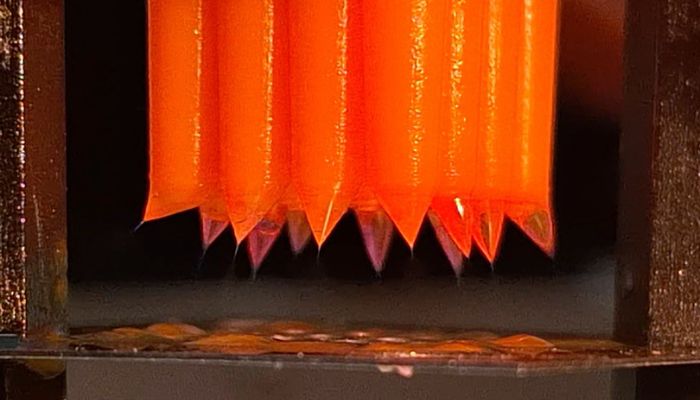
A close-up look at the electrospray nozzles
The Role of 3D Printing in Triaxial Emitter Production
The device that the MIT team designed is unique: the researchers could not find any previous reports of a miniaturized triaxial electrospray array in the open literature. The electrospray array is about one square centimeter and contains a network of internal, coiled channels feeding 16 perfectly uniform nozzles. “Triaxial” refers to each nozzle having three concentric nozzles, that are nested inside one another. When this device runs, it shoots out three non-mixable liquids at the exact same time, forming a perfect layered droplet.
More from the desk
Six other notes from the rest of the bench.
 NewsAddressing the problem of food waste with 3D printed clay containersDuring the lockdown caused by the global COVID-19 pandemic, Lea Randebrock did not waste time on despair but was busy making her contribution to a more sustainable way of life. The young designer wanted to address the problem of food…
 Printers3D Scanned, Tailor-Made Helmets for Motorcycle RacersCan 3D scanning technology enhance the construction of helmets for motorcyclists? That question is being asked at the Prototyping Laboratory of the Miguel Hernández University Science Park (PCUMH) located in Elche, Spain. With advances in metrology and 3D scanning, this…
 NewsNew 3D Printed Gripper Can Work Without ElectronicsOne area where it is expected to increasingly see the presence of 3D printing is in soft robotics. Indeed, the use of additive manufacturing allows for the design of complex and interesting robotics for a lower cost, making it attractive in…
 NewsThe Role of 3D Printing in Ocean ConservationThe health of our oceans is critical to the well-being of our planet, yet they face increasingly significant challenges from various sources in this modern age: climate change-induced warming and acidification, plastic pollution choking marine life, habitat destruction, rising se
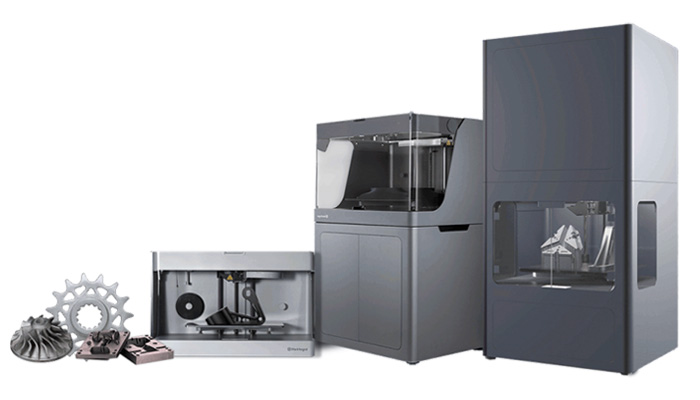 PrintersMarkforged launches two new industrial printers: the X3 and X5In less than 3 years, American 3D printing company, Markforged, has managed to position itself as one of the leaders in the 3D printing industry, with their main mission being to make additive manufacturing more accessible to people and industries. Today,…
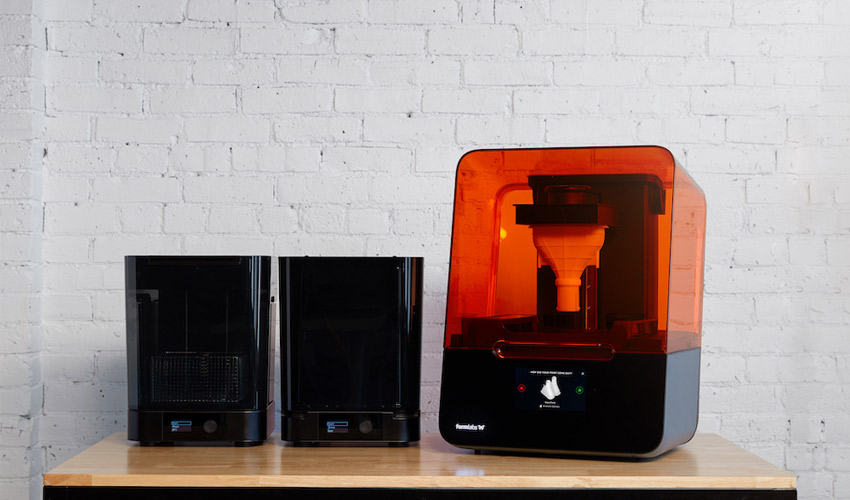 NewsHow is Formlabs strengthening its presence in Europe?The American manufacturer Formlabs is one of the historical players in the 3D printing market, particularly in the stereolithography segment. Today, the company employs more than 500 people in 7 offices worldwide and has already produced more than 40 million…