News
3D Printing Could Help Fight Coastal Erosion
Coastal erosion is defined as the loss or displacement of land along the coastline. The main causes of this natural phenomenon are the depletion of soil organic matter (sand, rock) as well as the degradation of soil structure or problems…
- 3 min read
- News
- Six more stories
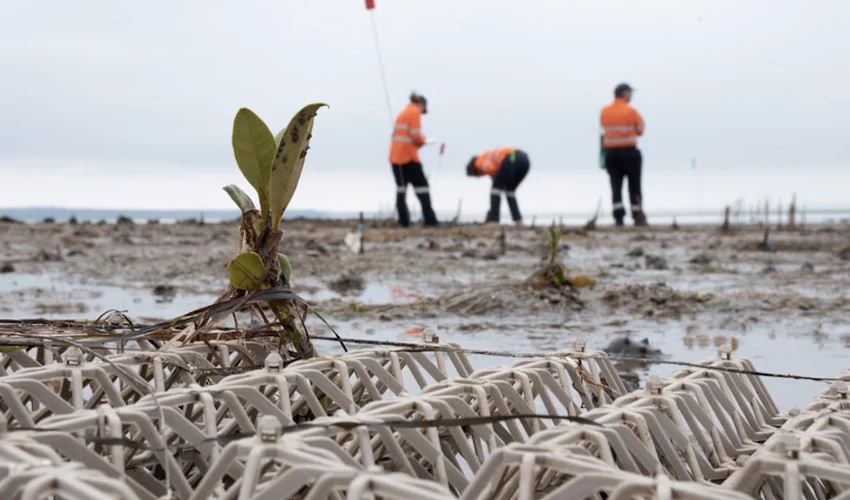
Coastal erosion is defined as the loss or displacement of land along the coastline. The main causes of this natural phenomenon are the depletion of soil organic matter (sand, rock) as well as the degradation of soil structure or problems of salinization and acidification. And it’s a huge issue worldwide, one that is only growing due to climate change. In fact, according to the U.S. Climate Resilience Toolkit, in the US alone coastal erosion is responsible for about $500 million per year in coastal property loss with average coastline recession rates between 25 and 50 feet per year not uncommon in parts of the country.
In order to fight against coastal erosion, there are a number of different initiatives that have been put in place. One of them integrates the 3D printing process for the manufacture of biodegradable structures. In collaboration with BESE, Australian researchers from the Blue Carbon Lab at Deakin University are using this technology to support the growth of species in wetlands, and thus fight against coastal erosion. The idea is to place mangrove seeds in 3D printed mesh frames in Port Phillip and Western Port Bay, Australia.
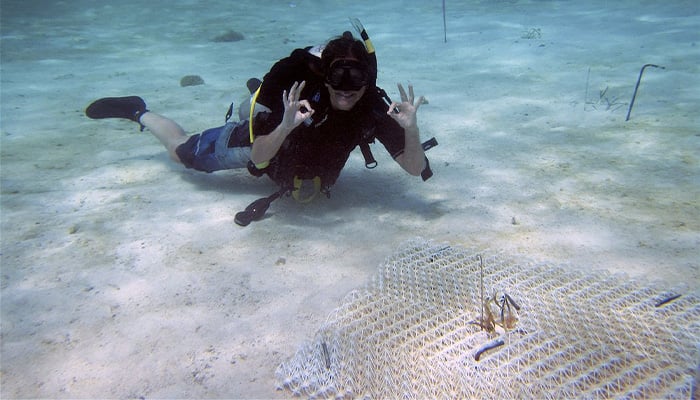
Structures help promote mangrove growth (photo credits: BESE)
Fostering Coastal Ecosystems Through 3D Printing
Called BESE-elements®, the 3D printed structures are made from compostable potato starch derived from industrial waste. And though no information was given on the technology used, with this type of material, FDM 3D printing certainly seems like a possibility. These mesh frames were produced by BESE, a company that specializes in designing products for natural habitat restoration. They degrade naturally after 2 to 10 years, depending on the ecosystem in which it is used. The structures were designed to promote root growth of mangrove seeds. Because of their lattice shape, they slow down the movement of water, allowing the soil to better recover and accumulate water. In addition, the structures stabilize the plant to prevent it from detaching from the soil.
More from the desk
Six other notes from the rest of the bench.
 NewsBen Serotta and APWorks Team Up to Create Personalized, 3D Printed BikesBen Serotta, a renowned figure in the cycling industry, is making waves in the road bike scene with his exceptional designer bikes. Teaming up with APWorks, a prominent player in the additive manufacturing (AM) field, they aim to revolutionize the…
 News3Dnatives’ Parent Company SPE to Merge with Plastics Industry AssociationThe Society of Plastics Engineers (SPE), which has been the parent company of 3Dnatives since 2023, announced today that their Board of Directors has voted to join forces and merge with the Plastics Industry Association (PLASTICS). This union of two…
 ApplicationsCarbon Expands 3D Printing in Dentistry with Dual-Cure FP3D MaterialAt LMT Lab Day Chicago 2025, Carbon unveiled FP3D, a new resin designed for flexible, removable partial dentures that could mark a turning point for digital dentistry. The material is the first in the dental sector to use Carbon’s dual-cure…
 NewsIris van Herpen Brings 140 Haute Couture Pieces to New YorkIris van Herpen’s retrospective exhibition arrives in New York after stops in Paris, Brisbane, Singapore, and Rotterdam, marking its first visit to North America. From May 16 through December 6, 2026, the Brooklyn Museum will host “Iris van Herpen: Sculpting…
 NewsWhat to Expect at Formnext 2023?Formnext 2023 is just around the corner! With the largest additive manufacturing conference in Europe opening its doors on Tuesday, November 7th and running through Friday, November 10th, it is safe to say that the entire 3D printing community is…
 GuidesWhat Are the 3D Printing Applications in the Oil & Gas Sector?The oil & gas sector is one of the largest industries in the world as it is a critical part of the energy sector with about 4.2 billion metric tons of oil produced globally in 2021. Though due to climate…