Applications
Researchers from Oxford and Bristol 3D print high-resolution tissue
At the University of Oxford, researchers have discovered a new way to 3D print living tissue with lab-grown cells. While there have been other successes of 3D printing tissue, such as in Sweden, this latest development in England could pave…
- 3 min read
- Applications
- Six more stories
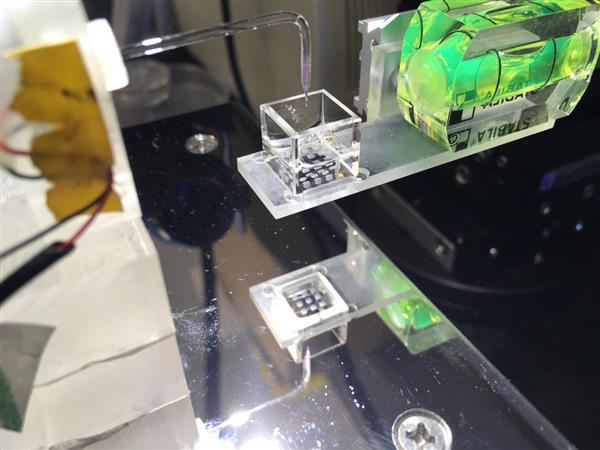
At the University of Oxford, researchers have discovered a new way to 3D print living tissue with lab-grown cells. While there have been other successes of 3D printing tissue, such as in Sweden, this latest development in England could pave the way for regenerative medicine and enable the creation of complex tissues and cartilage.
Led by Chemical Biology professor Hagan Bayley, the research team was made up of an interdisciplinary team from Oxford’s departments of Chemistry and Physiology, Anatomy and Genetics and the Center for Molecular Medicine at Bristol.
The 3D droplet bioprinter that was developed by the Bayley Research Group at Oxford photo// Alexander Graham
In a new paper published in the Scientific Reports Journal, the team used human embryonic kidney cells (HEK) and ovine mesenchymal stem cells (oMSCs) in order to demonstrate how a range of both human and animals cells can be printed into high-resolution tissue constructs.
More from the desk
Six other notes from the rest of the bench.
 ApplicationsSwedish researchers may have found a way to 3D bioprint human cartilage tissue3D bioprinting is beginning to come into a world of its own with companies, researchers and startups alike, looking for the latest innovations and developments to help transform the health world as we know it. Adding to this list of innovators…
 MaterialsKamui Cosplay 3D Prints A Fallout Pip-Boy DeviceAs a huge fan and avid player of the action role-playing game Fallout, Svetlana Quindt decided to recruit her design partner Benni Schwarz, and his brother Jacob, to help create a 3D printed replica of the video game’s most recognizable…
 ApplicationsHRE develops the world’s first 3D printed titanium rimHRE is a US manufacturer of aluminum rims for racing and luxury cars. Since its creation in 1978, the company has been designing customised solutions that emphasise aesthetics and performance. It recently turned to additive manufacturing and more specifically to GE…
 ApplicationsNew Zealand researchers 3D-print corneas from fish scalesResearchers at Massey University have successfully made a new 3D-printer. This printer is special: it can 3D-print new corneas, which can then be used to transplant them into humans. The best part? The printer creates these new corneas from fish scales.…
 NewsTOP 5 videos of the week: 3D printed eyewear and much more!We found the TOP 5 videos of the week related to 3D printing and collected the additive manufacturing here. Share your videos and comment on the article below or on the 3Dnatives’ Facebook or Twitter account. Hope you’ll enjoy and…
 NewsOpen-source 3D printed VR gloves for only $22Lucas VRTech is a young YouTuber who made a pair of 3D printed VR gloves VR for just $22. Called LucidVR, the gloves are completely open-source and were dreamed up during lockdown – Lucas just wanted to keep himself busy…