News
Harvard Develops Multi-Material Rotary 3D Printing for Soft Robotics
Additive manufacturing is becoming increasingly popular in robotics because it enables the design of flexible, customized, and more efficient devices. As new materials become compatible with a wider range of 3D printing processes, the possibilities continue to expand, making it&h
- 3 min read
- News
- Six more stories
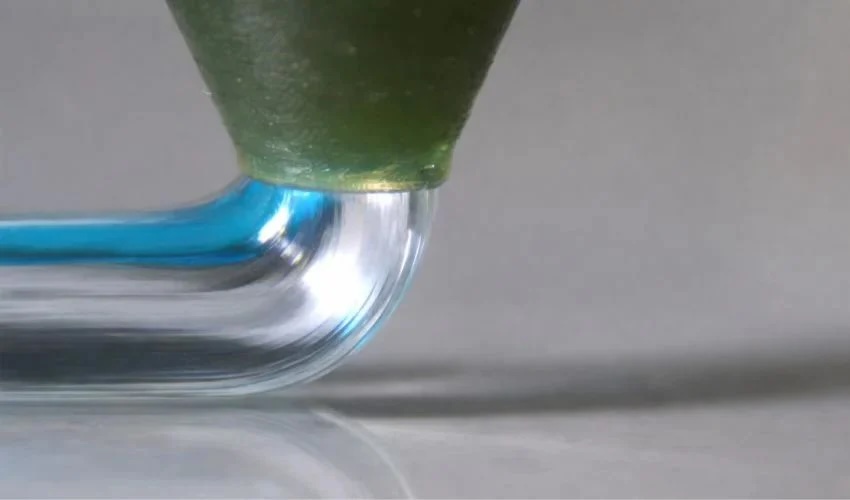
Additive manufacturing is becoming increasingly popular in robotics because it enables the design of flexible, customized, and more efficient devices. As new materials become compatible with a wider range of 3D printing processes, the possibilities continue to expand, making it possible to create flexible and even biocompatible robots. At Harvard, a team of researchers is focusing on 3D printing soft robots that can change shape, bend, and deform when inflated with air. Here’s how it works.
The concept is simple: the team developed a multi-material rotary 3D printing process that enables them to deposit multiple materials through a single nozzle along a precise path. The nozzle rotates as it extrudes the gel-like material. This motion not only allows for rapid material switching but also makes it possible to create both simple and highly complex shapes.
First, the team designs an internal channel made of poloxamer, a polymer commonly used in hair gels. By adjusting the 3D printer nozzle, its rotation speed, and the material flow rate, they were able to precisely control the shape, size, and orientation of each channel.
More from the desk
Six other notes from the rest of the bench.
 NewsScientists Use 3D Printing to Filtrate Contaminated WaterGraphene has been considered a wonder material since its discovery in 2004. An allotrope of carbon that consists of a layer of atoms arranged in a two-dimensional honeycomb lattice, it has been used more and more often for the production…
 Applications#3DExpress: Partnership Seeks to Further Silicone 3D PrintingIn this week’s 3DExpress, start off with a new French partnership between Lynxter and 3Deus that could help advance silicone additive manufacturing in the industrial and healthcare sectors. Then learn about Creality’s latest launch and how the combination of chocolate
 PrintersLab 3Dnatives: UP Mini 2 3D Printer TestTierTime has been in the 3D printer market with both industrial and desktop 3D printers since 2003. In May 2012, the Beijing-based company unveiled the UP Mini desktop printer, later named the ‘Best Overall Experience 3D Printer’ by Make Magazine. TierTime…
 NewsUniversity to Offer BSc in Additive ManufacturingAs the additive manufacturing sector grows and produces increasingly refined products, the shortage of trained individuals will become more of an issue, even a limiting factor for the potential of the technology. To combat this, higher education facilities are teaching…
 NewsInternational Research Collaboration for Manufacture of Plastics and PolymersInternational collaboration is a cornerstone of almost all scientific research; the opportunity to share techniques, expertise, and ideas is essential to discovery and development. To no surprise, 3D printing is no exception to this rule. In a recent example of…
 NewsVolvo 3D Prints Seawall Tiles To Save Oceans from Plastic PollutionThe Swedish car manufacturer, Volvo has partnered with the Sydney Institute of Marine Science and Reef Design Lab to develop the “Living Seawall”. This living seawall is in fact made up of 50 3D-printed tiles that mimic the root structure…